The Appeal
Saturday, March 7, 1903
St. Paul, Minnesota
Page text (machine-generated)
THE APPEAL KEEPS IN FRONT
BECAUSE,
1- It aims to publish all the news possible.
2- It does so impartially, wasting no words.
3- Its correspondents are able and energetic.
The Law and the Man
VOL. 19. NO. 10.
WAS one 'of those irreproachable
seems to be worth living.
The Connecticut valley poured out the intoxicating greens which preceded her terrible July. A cool and quiet wind crept from the river toward which the minister lifted his eyes as he plodded through the sand to Friday evening meeting.
Overhead the petals of a pink sunset unfurled—floating, broken from the heart of the rose—and the west blazed high.
"For the glory of the Lord doth lighten it," murmured the minister.
He turned his grave, refined face slowly. The glow defined his features as pitlessly as if it had been the glory of the throne of God; they bore the one as calmly as they might have borne the other. He had one of the faces which do not shrink, whether from the physical or moral searchlight; not a line about the mouth wavered; nor did the inner spark in the eye retreat. He had a noble face. His mouth was a trifle severe, but from his dark eyes there melted and broke a persistent tenderness.
"And the lamb is the light thereof," added the minister conscientiously, regarding the sky.
This spoken afterthought was qualitatively observed by the Rev. Adam Law. The doctrine of the Trinity must not be slighted because no parishioner happened to be present. His life was one long, tenses struggle to be sound. Thus was the theologian, who is the good one, who saw the window of heaven opened and the angels in white dresses chanted around a throne. Upon it sat his system of theology.
The June evening sank to her couch.
The colours in the sky changed, but burned on the river received them gently. The unmown fields took to themselves olive-black shadows and the clover tops ceased to nod. Even the grain tossed its delicate heath, no one could be敢言。
The arms of the two rows of elms that guarded the village street (there was but one) seemed to cross themselves, like those of soldiers on parade rest.
The minister passed under the elms he lifted his hat. He revered those trees. He had been their pastor for forty years. They had not offered him donation parties when the salary fell short; they had never received a salary they had known and comforted his troubles.
As Mr. Law passed under the elm trees two sounds smote the celestial stillness of the evening. One was the tolling of the church to the church. One was the congregation to "weekly meeting." The other was the drum of a circus, a mile back in the village, pealing gally from the meadow beyond the gravel pits that old Nathan Roar (being a Universalist) called the "Flesh of the Land" once upon a year to the emissions of the devil.
Now the circle came from Hartford, and he thought this emensively natural; for he had, of late, begun to cherish private libraries, and faculty at Hartford—a new acquisition, not thoroughly tested yet, as to his fit with the unassailable, theological sympathy.
Any one familiar with the ecclesiastical interests of New England will be able easily to understand the personal creed of the Rev. Adam Law, when told that he questioned the soundness of the obeisance of God, he was not at all at all the question of the explanation need be offered; and to say that our hero—for in spite of his theology he was a hero—belonged to the extreme conservative ranks of the "Old School" would offer no elucidation.
I shall be late to the service," though I should be able to do so. "The bell has almost ceased to toll." Mrs. Doom must really be constrained to prepare my evening meal at the appointed hour. It was not on this wise when my good wife lived and ruled my house. But God took her. She is not—and Mrs. Doom is almost dead.
He is not so much in want and stately sentences; as Montalgne thought in Latin. His mind worked ecclesiastically. His emotions moved scripturally. Yet his brown eyes blazed like a boy's. He hurried on under the elms, now deep in lower dusk, and cutting exquisite leaf-lace patterns against the slowly softened bristle of the wood.
The bell ceased tolling with a snap that would have done credit to Universalism or even Athanasiansm. Deacon Sleeper was already in his seat. Deacon Hopwell looked out of the room, with a little smile. He seemed to be a man who was there, but he was where the minister was. Mrs. Wayle, the town poor (there was but one in the village), united her dyed and ironed black bonnet-strings and leaned over the front gallery seat to watch the aisle. But the cellar was full of the choral music, and the roar of the village was and sat down on the tents, chewing, tobacco earnestly.
These things were all as usual, as they had been, more or less, for forty years; as they would continue to be for who knew how many years to come?
Everything seemed homelike and peaceful to the minister as he hurrled up the steps and went in to conduct the Friday prayer meeting on that gentle night.
It did occur to him that there were fewer loafers in the mains at the time and the time-in-fact, Bab Roar was their solitary ornament—but he dismissed the observation as unimportant; nor did he pay attention to the clearly unusual proportion of whisper and rustle which buzzed through the church as he passed up the aisle. But the instant that he stood in his pulpit he perceived, with the trained eye of a lifelong master of audiences, that something was happened.
His keen gloom was about from new to gallery, unsettled, to the pages of the big pulpit. Bible, with the ten-inch broad, red book. Bible embroidered in gold beads by the young ladies of the congregation.
As the choir struck up the opening and them-it happened, to be Walter Smith, a “Day of the Lord,” a pinnion equal to the heart-wringing quality of the in every heart-wringing quality. Ira-Deacon best (or the worst) was the broad aisle in Hopwell creaked up the broad aisle in his best and noisest boots, and handed a folded slip of paper to the Rev. Adam.
The minister took it, and read slowly. He was prepared to find that the Ladies Dorcas would meet next Tuesday at the house of Mrs. Deacon Sheep喂or that the family of our late sister who passed the meeting week, received the healthy of the congregation; possibly that some of his ten or twelve young parishioners desired prayers for an awakened "interest;" perhaps—oh, perhaps, that Bab Roar was "unconviction." Instead, the mighty world in Deacon Howell's own somewhat worldly and judicial mind—for Deacon Hopwell was the sheriff.
"There's been a row at the circus. Man killed and murderer escaped. My deputy is out with search parties. I join them after meeting. That is what you ought to do with the police. You conduct the services. There is great excitement in the community."
The minister folded the paper and bowed his head. Some thought he was shocked, for he was a sensual man, and he was so surprised that he was praying, for he was a devout man, as everybody knew.
"Day of wrath! that dreadful day!" sang the choir, vigorously. The soprano was particularly shrill, and, a little vicious. Her voice was shivered through Mr. Lansmere, and she began to cry.
"What power shall be the sinner's stay?" How shall he meet that dreadful day? When the minister raised his face his people observed that it was pale. They were accustomed to see him deeply moved by sorrow and by the pain of his death. He much liked him, the other, he had the most human heart that ever beat behind the pulpit. Harm of a New England church.
Deacon Howell glanced at him sharply. Mr. Desacre Sleeper smiled. "I'll bombard him elbow. "This will give him one of his blind headaches, he whiteheaded." "I must
senu m a cose or ixy pro." Mrs. Wayfe, in the gallery, wiped her eyes plaintively. "The minister will take this murder to heart like it was his own folks," thought the town poor.
But now the victorious soprano had ceased. The chords of Sir Walter's hymn had trembled out of the church, and vibrated into a solemn silence. The invocatory prayer broke it.
That June Friday evening will be remembered by Mr. Law's congregation for many years. The minister stood tall, thin, white and awful. He read the imprecatory psalms and the denunciation of the Pharisees. He prayed like a rebuking angel. His long prayer was a fierce accusation. He gave out his text from the words of the Apocalypse: "For the smoke of their torment ascendeth forever." His sermon was a terrific onslaught.
To characterize that eloquence as fiery vituperation rather than condemnation, and one would come near to the fact, he would come near to the fact, and body, by white fire. Moral indignation lapped him up.
He was called "astan"—by which he meant the circus company—in for professional abhorrence. He denounced the general system and particular illustration of the disgraceful occurrence of our disturbing the peaceful course of our disturbing the degradation of the outward turbulence in the innocent shrubbery that lines our virgin river, or in the peaceful dammation, and reaping the disgrace of his curriculum. He depicted his day, nay, from the hour of his creation, abspring from the seed of the dwell and bearing fruit after his kind. He ordered to his doom. When Adam fell he sinned. The system of redemption had not reached God, his misgled creation was elected to his fate. He was chosen of God his misgled creation was nevertheless, quite clearly to blame for fulfilment, quite clearly to blame for perpetuating the guilt of his career.
He could not have helped himself—for
he could not relieve himself. That was
a fact could not relieve him from responsi-
bility. He was a murderer. That was
his own fault. He was the murderer. That
was his own fault.
The atenuation itself could not reach
him the heart, and the agency to
lessen to save him. The agency of the
holy spirit could not snatch him from his
mouth. Mr. Law gave the audience to
understand that this delicate doctrine
would not be correct to assert the
wretched man, but he had hardened his
unusable sin. He had offended the
Holy Ghost. The doctrine was undeniably
there. In fact, all the doctrines were in
his mind. Now the pastor's voice sank, for he
was not a sincere discourse. Every nerve in his delicate
organization quivered as he launched the
demonstration. He awaits the unresentable
he did not retreat from his duty; but he shrank like
a man who was not straight. This was plainly visible even to Deacon
Sleeper; and Mrs. Wayle was convulsed
by the demonic force of the sermon.
He would be supported.
The audience was greatly entertained
of going to sleep during the sermon, kept
from the vestibule, and stood with his
mouth open, and his hat on, drinking in
the wine.
Bab had not gone with the crowd to hunt the murderer, nor even to see the corpse. He had been told that "Rum done it," and he felt an appreciable fear of the whole situation, as if it were something "catching." Bab prided himself on being a church-goer, too. He was always sober on Sundays, and sometimes on weekly meeting days. It struck him that he was less likely to be knocked over the head into hell—a location in which Bab sincerely believed—if he stuck to the parson to-night as usual.
There was no doubt about it. It was a magnificent discourse. The Reverend Adam Law was a man of much local fame as a pulpit orator; and that night he was clearly at his greatest. His people were thrilled. They were proud of him. Nothing could be more comfortable than to sit safe in the fold or the church on a bare-backed pine pew, and hear the victims of an amusement which they were forbidden to share so scripturally and so "soundly" denounced. Deacon Hopwell meditated collecting the deficit in the salary before next quarter.
The pastor's deep, rich voice pealed on. It rang like the bells in the Temple of Divine Justice. He summoned the vengeance of the Almighty to fall upon all hardened sinners, who, like these wretched men whom we condemn to-day, defied Eternal love.
At the last two words, which no human lip should pronounce without a quiver, his tone changed; but he went stout-up.
He sketched the doom which befalls all the non-elect, who will not accept the mercy of God as illustrated in the redemptive tragedy of Calvary. He portrayed the horrors of hell. His voice shook. But he stood to his awful guns.
"O my people, my people!" he cried, "Is there a soul among ye who hunger after righteousness? Fly from the doom of him who wert taken by sudden death in the midst of his sins! Fly from the fire that burneth and the smoke that ascendeth forever and ever!"
He shut the big Bible and stood for a moment before his audience, white and silent. Then his face dropped into his thin old hair.
"Thou maker of heaven and earth," he cried. "Thou art infinite holiness. Thou hast decreed that infinite justice be wrought upon sinful man. We commend to thee the cause of justice. We commend to thee the fate of our verses, and thou, Smite him not with his unreported guilt upon his head. Condemn him not great
His voice rose to a cry that was almost imperious to the Delty himself. It was the voice of the priest appointed to interpret the word of God to the Delty. If it may possibly be thy will, save thou the soul of our miserable brother, for he is not so much a doer as, as if to make sure that his doctrines were all on record in that pleading, "For thine own Son a sae 'Amen." The reverberate dismissed the audience once more, moved so much that he did not tinge, as was his wont, with his people, who were so much more moved and soothing thing wherewith to close the efforts of an exhausted pulp, that down the broad able and into the air.
THE APPEAL.
The image shows a person lying on their back with their head resting on a surface. The individual appears to be in a relaxed or sleeping position, with their arms folded and legs bent. The background is dark, making the person the focal point of the image. There is no visible text or other distinguishing features.
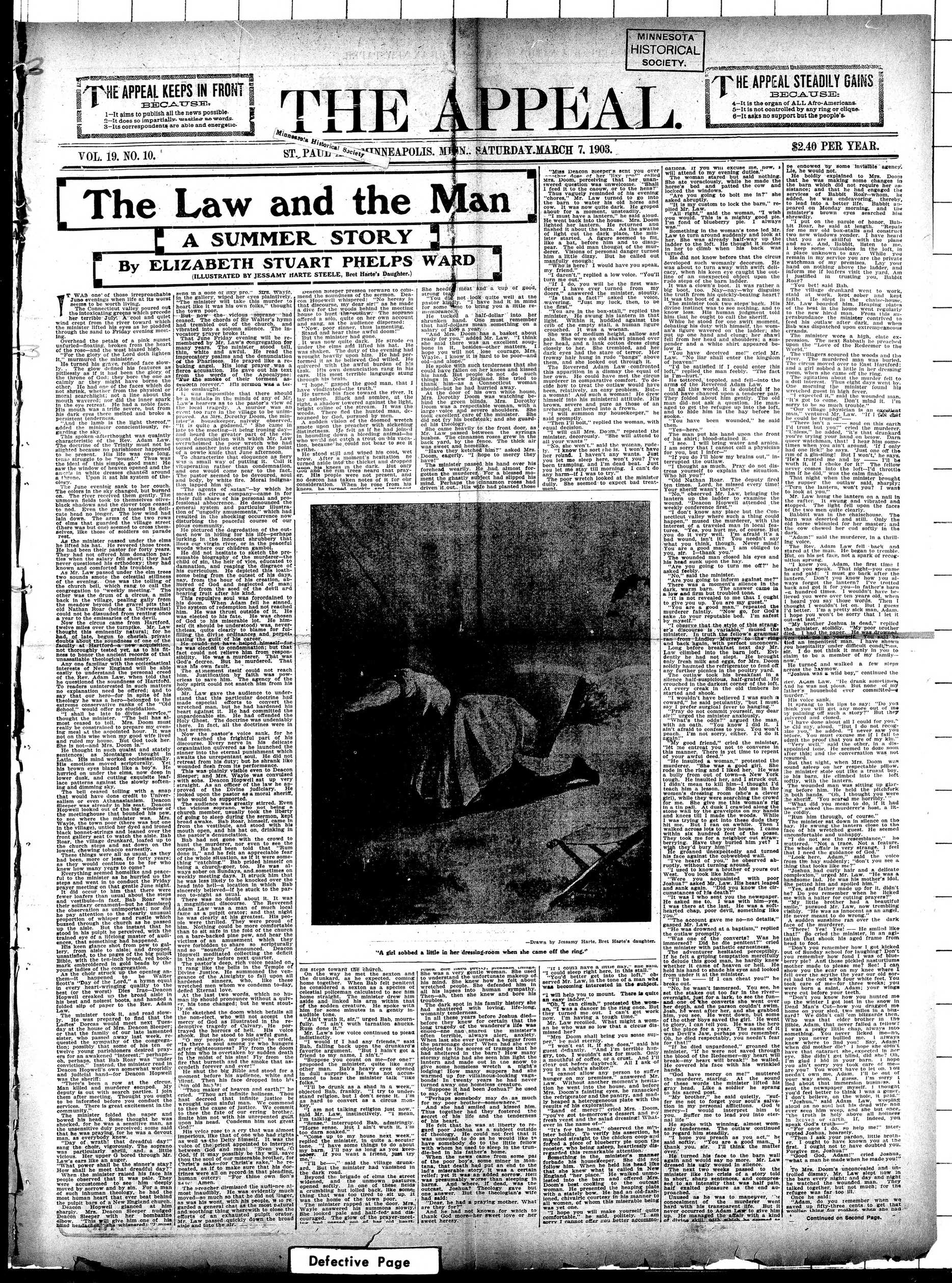
"A girl sobbed a little in her dressing-room when she came off the ring."
Daeon sneezed presser forward to commend the soundness of the car he had driven. "No heyey! that discourse, my dear sir" as he made a dive for the woods behind him. The soprano offered a solo, on her own account and sang, as the audience dispersed; "I will stand, I will stand, Stand and hear their awful doom!" But the minister had gone. It was no time, as he strode on to the car, and laid lifted his hat. He was shaken. The duty of the evening had wrought heavily upon him. He was given the awful God willed. He equipped with the awful burden of his task. His own denunciation rang in his ears. His terrible language stung
"I hope," gasped the good man, that I have vindicated—the truth."
He turned his face toward the river. It lay asleep. Black and sombre, at the right, a shadow towered against the light, bright online of the stream. It was the woods. There fled the hunted man, denounced by God, pursued by men.
A sudden vision of the doomed wretch smote upon the preacher with slekening distinctness. He felt as if he had joined in howling down a bleeding animal—he who would not catch a trout on his vacation, because he could not bear to see it writhe.
He stood still and wiped his coil, wet brow. After a moment's hesitation he turned aside into the thicket and dropped upon his knees in the dark. But only God and the eim trees heard that prayer. His people were not present, and no deacon has taken notes of it for our consideration. When he rose from his knees he turned quickly and
"A girl sobbed
nis steps toward the church.
On the way he met the sexton and
home together. When Bab felt penilent
home together, when Bab felt penilent
colonial policemen he collated to see him
home straight. The minister drew him
home straight. He drew him
of the golden creature. He spoke with
minutes in a gently inadmirable tone.
"Ain't it焊, it sr." urged Bab, mourn-
ing with tarnation snacks. Rum done it.
Mr. Law's low voice continued to piease indistinctly. "If I had any friends," said Bab. falling back upon the drunkard's voice, "I don't know if I have a friend to my name, I isn't." He proposed the minister, quite like any other man. Bab's heavy eyes opened and he seemed to hear the minister talk "like folks." He be drunk as a shad in a week. objected Bab. frankly, "I try to understand what you say, as hard to convert as a circus monkey, not am not talking religion just now," said Mr. Law, instinctively. "I mean,
"Sense," Interrupted him, admirably.
"Sense," but I ain't wuth it, I'm
enormly ennapped.
"Come up to my house next week," replied Mr. Brown. "I have some things to do about my barn. I'll pay as long as you keepoor. If you want a friend, just try "I'll be —" said the village drunk-minister who had vanished in the dark road. Beyond the brigade of elms the street opened softly. In one of these fields a crumbling loll backed, like some crumbling brick, up. It was the home of the town poor.
The minister rapped at the door. Mrs. Wayle answered. "You're not alone, and half-faced and discouraged. The glow of the prayer-meeted passed out of her old heart.
Defective Page
She heeds meat and a cup of good, strong tea.
"You did not look quite well at the
camera. You were not wearing
for some time to bring you a little re-
fresh look."
He tucked a half-dollar into her shrunken hand. One must remember that half-dollars mean something on a salary of $500 a year.
"And Mrs. Doom has a basket about ready for you," added Mr. Law. "I think she said there was an excellent soupbone in it, besides—other matters. I hope you will not lose courage, Mrs. Wayle. I know it is hard to be poor—and old—and alone."
He spoke with such tenderness that she could have fallen on her knees and kissed his hand. But people do not do such things in New England. She tried to thank him—as a Connecticut woman should—but he had hurried away.
At the door of his own white house, Mrs. Dorothy Doom was watching behind the green blinds. Mrs. Dorothy Doom was a respectable woman, with a large voice and severe shoulders. She took excellent care of the minister. She did not try his beefsteak; and she guard
"Have they ketched him?" asked Mrs. Doom, eagerly. "I hope to mercy them the minister passed his hand over his forehead to the murderer. For a blessed moment the ghastly subject had slipped his hand down his trousers. Out his wife had planted those
a little in her dressing-room when she ca
rose, one once pretty, present tongue,
and one once so tender, to understand the unfortunate makeup of his mind. She knew how to look at him, and she knew how to understand the unfortunate makeup of his all lapses into human sympathy. Then-ah, he knew and bore his true heart. The dark spot in his family history she had shattered in loving life, life-long, and unremarkableness. In all these years before Joshua died-before they left the wanderer's life was enuco- she nai snared the ministers of the wanderer. When last she ever turned a beggar from the parsonage door? When had she ever been a beggar? When had she ever sheltered in the barn? How many stormy nights had she seen him light the candles in her room? How give some homeless wretch a night's lodging? How many suppers had she seen in her room? How bonds! In twenty years he had never turned away one homeless creature.
"Suppose it had been Joshua?" he used to say. Or else:
"Perhaps somebody may do as much for my poor brother—somewhere."
for my poor brother—somewhere."
And she had smiled and kissed him. Thus together had they fostered the secret of his life and the tenderness of his heart.
He felt that he was at liberty to regard poor Joshua as a subject outside of theology. He could not feel that it was unsound to do as he would like to have somebody do to the little fellow with whom he used to sleep in the trundle-bed in his father's home.
When the news came from some pair of the poor boy's, some miner in Montana, that death had put an end to the lad's miserable story. It was a certain relief; yet it was an added sorrow. He was presumably worse than sleeping in barns. And where, if dead, was the outcast, Joshua? Theology gave but one answer. But the theologian's wife had said:
"Dear, he had a praying mother. What are they for?"
at all
And he had not known for which to
thank God more—her sweet love or her
sweet heresy.
MINNESOTA HISTORICAL SOCIETY.
"Miss Deacon Siepera sent you over the mose of the house, Mrs. Siepera believing that her unanswered question was unwelcome. 'Shall I go?' Mr. Law turned to go into the room. "This was very dark. It cowed it. It was very dark. He groped about for a moment, unsteadily. He went back into the house. Mrs. Doom lighted her lanter. He returned and sat down. He looked at light cut the dark place, the minister started. A figure seemed to it, and he pear. The old man thought of the murderer. Visions of personal danger turned on him. But he called out manfully enough.
"Who is here? I would have you speak, my friend."
"I daren't," replied a low voice. "You'll turn me out."
"I If you do, you will be the first wan-
warded door," answered the minister, stoutly.
"Is that a fact?" asked the voice,
warmly. "I am the first." In the boxcaster, "voiced
the minister. He swung his lantern in the
light. Within it, huddled against that
light, he was a woman who nigre-
crouched. It was a woman. She
was of medium height, sallow and
pale, and a lank cotton dress clung
her head, and a lank cotton dress clung
her head, and a lank cotton dress clung
dark eyes had the stare of starry. Her
frowny hair hung in rude 'hang' above
her head. The Reverend Adam Law confronted
this apparition in a dismay the equal
murderer in comparative comfort. To
decide how to treat the outlaw would he
give a woman! And such a woman! He
dressed himself, and pure as those of an
archangel, gathered into a frown.
He summon my housekeeper, he said
"Then I'll reply, the woman, with
that I'll reply."
"I will call Mrs. Doam." repeated the minister, misquoting "She will attend to my wants." "No, she won't." told the woman, "I won't have her round. I haven't any wants. Just give me what I want." He was tramping, and I was dead beat. Just you let me stay till morning. I can't do that. The poor wrist looked at the minister dully. She seemed to expect bad treat-
The image provided is too blurry to accurately recognize any text or graphics. It appears to be a grayscale photograph with abstract shapes and lines.
—Drawn by Jessamy Harte, Bret Harte's daughter.
"I I could have a nite nay," nue man,
"I could sleep easily," nue man,
"I could get into the loft," observed Mr. Law, in the tone of a man who
was becoming interested in the subject.
"I will help you to mount. There is quite an easy ladder."
"Oh, I can climb!" protested the woman who asked me to turn me out. I can't get work done when they turned me out. I can't get work done when they turned me out. Mr. Law recited. What might a woman be who was so low that a circuit disables the camera.
"Mrs Doom shall bring you some su-
per," he said skirtily. "I did she does," said his guest defiantly. "And if she does, him hungry, too. I wouldn't ask ask crust. And I'll clear out before daybreak. All I ask of you is a night's shelter." "person to suffer hunger on my premises," answered Mr. Law. "Without another moment' I would be before Mr. Dooms' fainting eyes, he ransacked the refrigerator and the pantry, and madly heaped a heap of unpleasant plate with the exploration."
"Band of mercy!" cried Mrs. Doom. "you've got to be careful with the sand dressing! What ever in the name of me..." observed the minister boldly. To verify his assertion, he marched straight to the chicken coop upon the rooster, who being asleep, heartily disregarded this remark to the minister's manner forbade his housekeeper. She did not follow him, but knew what is called in New England "her place." She walked unnimodly down the aisle to theDoom's best cooling to the outcat woman. He presented her with a Doom's best dressing. He had an old-fashioned, chivalric courtesy in his manner to all women, of whom this miserable being
h to her "I hope you will make yourself quite comfortable," he said, politely. "I am sorry I cannot offer you better accommo-
cautions, or if you will excuse me, now, I will to my mind what it is. The woman said nothing. She ate voraciously, while he made the windows, and the windows platted the windows and locked the windows.
"Are you going to bolt me in?" she asked abruptly.
"It is my custom to lock the barn," replied Mr. Law.
"All right," said the woman, "I wish you would." This is a mighty good pie. I'm fond of blueberry pie. I always was."
Something in the woman's tone led Mr. Law to turn around suddenly and look at her. She was already halfway up the ladder to the loft. He thought it modest in her to climb when his back was turned.
He did not know before that the circus developed such womanly decorum. He was about to turn away with swift delicacy, when his keen eye caught the outline of an unexpected object upon the rude steps of the barn ladder.
It was a clown's boot, it was rather a bringout, his duty with himself, the woman's figure wavered on the ladder; she put up one hand and clung; her shawl fell from her head and shoulders; a suspender and a white shirt appeared below it.
"You have deceived me!" cried Mr. Law. "No, I have shall enter the kingdom of heaven!"
"I'd be satisfied if I could enter this loft," replied the man feebly. "The fact is, I'm hurt."
He totted, toppled, and fell into the arms of the Reverend Adam Law.
armed in all his world. It is doubtful if he could have chanced upon a tender pair. They folded about him gently. The old man had chanced to get a glove to get to the refuge into the loft, and to hide him in the hay before he needed. "You have been wounded," he said then. "Yes—here." The man his hand upon the front of his shirt. "I will bring water and arnice. I am sorry that I cannot call a physician for you, but I will blow my brains out," interrupted the outlaw.
terrupted the outlaw. Pray do not dis-
tress yourself to explain the situation.
Old Nathan Roar. The deputy fired
ten times. Lord, he missed every time!
*
"No," observed Mr. Law, bringing the lantern up the ladder to examine the weekly conference first, and then attended the weekly conference first. "I don't know any place but the Conference Center, you know, you happen," mused the murderer, with the interest of a traveled man in local features; yes, you know, you do well. I'm afraid it's a bad wound, not it? You needn't any what you think, though. Never mind; I am obliged to you, sir. —I thank you."
The wounded man closed his eyes and his head sunk upon the hay.
"Are you going to turn me off?" he asked feebly.
"No," said the minister.
"Are you going to inform against me?"
There was a moment's silence in the dark, warm barn. The answer came in a low and firm but troubled tone.
"It is not revealed to me that I ought to give you up. You are my guest."
"You are a good man," repeated the murderer faintly. "Now go, for God's sake, to your reputable bed. I'm safest by myself."
"I observe that the style of this stranger's discourse is variable," mused the minister. In truth the fellow's grammar ran from Lindley Murray to the ring.
The outlaw took his breakfast in a silence half-suspicious half-gratitude. He sat at the table, at the center. At every creak in the old timbers he laughed. "I wouldn't have believed I was such a coward," he said pututanly, but "I must be careful." "Pray do not commit yourself, my dear friend," he said. "What's the oldest?" argued the man, with an oath. "You know I did it. I was a coward." He peach. I'm not sorry, either. I do it. My good friend," cried the minister, "let me entreat you not to converse in your room in the ring and I liked her. He was a coward." He rode in the tough. He insulted her, and I struck out. I didn't mean to kill him—I thought I was a coward. Women's dressing room (she's a clever woman) gave me. She gave me this woman's rig in a tin pal. At duck I crawled along the floor, and knees I made the wood. While I was trying to get into these, I walked across lots to your house. I came back to the room, and the murderer. They took me for a neighbor out strawberry. I hurried him yet? I would bury him.
He ground unexpectedly and turned
around. He saw the other person who
abruptly, without turning around,
"I used to know a brother of yours out West. You look like him."
"Were you you acquainted with poor
men, and sank again, and sank again,
and sank again," did you know the cit-
rity.
"It was I who sent you the newspaper. He asked me to. I was with him—yes. I was there at the last. He was a softhearted chap, poor devil, something like a "The account gave me no—no details," gasped Mr. Law.
"He was drowned at a baptism," replied the outlaw promptly.
"Was one of the converts?" was he immersed. He did not think of his penitently cried that.
"The adventurer hesitated perceptibly. If he felt a gripping temptation mercifully to delude this good man, he hardly knew whether it came of heaven or hell. He felt that he was not a man and looked from under it at the minster.
"I'll be — if I can cheat you!" he broke out.
"No, he wasn't immersed. You see, he saw the makes out too far in the river—overnight, just for a lark, to see the fun—and one of the converts she went over her depth, and the parson couldn't swim. Josh, he went after her, and she grabbed him, and he got to the other boys saved the girl. He went to glory, I can tell you. He was the hero of the place for a year. The name of it was Devil's Jaw, perhaps you remember. Oh, he died respectably, you needn't fear for the man who had been a seaman. "If he died unpardoned," groaned the minister, "if he were not saved through the blood of the Redeemer—my heart will break—my heart will break!" he walked. He movered his face with his wrinkled hands.
"God have mercy on me!" muttered the murderer, staring. At the sound of these words the minister lifted his hand to his head like a soldier he sprang.
"My brother," he said quietly, "suffice in my personal afflictions in my personal afflictions. God mercy! I would interpret him to me. He me to lead you into eternal life." He spoke with winning, almost womanly as he outlawed a regard to him steadily. "I hope you preach as you see," he said. "I will be a good man. Thank you, sir. I will tell the matter he turned his face to the barn wall again and would say no more. Mr. Law. The next two weeks passed to the minister like the crisis of a story told to him, half an hour after an intensity that was half pain, half exalted pleasure as the end adoration. Unused as he was to maneuver, he concealment of the murderer went on. He never occurred to Adam Law to give him. He managed the affair with a kind
be entowed by some 'invisible' agency. Lie, he would not.
He boldly explained to Mrs. Doe, in the barn which did not require her assistance; and that he had engaged the owner, and that he had added, he was endeavoring, thereby, to lead into a better life. Babbit added, "I was smitten, and the minister's brown shoes she shrewdly, on the parade of bounty. Babbit Roar, he said at length, "Repair for my old box-stalls and construct a new barn, so that you can skill with the plane and saw. And, Babbit, listen to me. You are a place unknown to any. While you remain in my service you are the private owner, and that you hand on nothing above the ladder, and inform me if lofters visit the yard. Am I justified in trusting you, Babbit Roar?
"You bet! said Bah. He dressed wore to work, stalked at work, kept sober and faith. He slept in the chisse-house, stalked at work, kept sober and plates of the best in the house wore to the new hired man. From this superabundance man he contracted to take over after dark. Bah was dispatched upon extreme ambitions. The minister wore a high, chate expression. The next Sabbath he preached the "Love of the Redeemer to the World." The villagers scoured the woods and the circus murdered man. The circus murdered East Hartford; and a girl sobbed a little in her dressing room. The agitation about the murder fell to a dull interest. Thus eight days went by. The man found his wretched guest in high fever. "expected it, it" said the wounded man. "I'm sorry to be so much trouble."
"Our village physician is an oxenologist.
He said in Law, 'If I were
he could be trusted."
"There isn't a —— soul on this earth I'd trust but you!" cried the murderer. "Unless," he added, "it's that drunk you're trying your hand on below. Darn queer watchman, that! I hear him sometimes when you ain't around. 'If I only had one lick!' he says. 'Just one off the rim of a gin-sling! But I won't,' he says. 'He's trusted me and by — I'll be with it, if I choke for it!' The fellow never comes into the loft—I'd throttle him if he did," was the calm finale.
That night when the minister brought the supper the outlaw said, sharply; "Turn the lantern, won't you? I want to look at you."
Mr. Law hung the lantern on a nail in the rafter. It swung and vibrated and stopped. The light fell upon the faces of the two men quite clearly.
Babblitt was in the chalsehouse. The barn was deserted and still. Only the old horse whinled for her master; and the cow chewed her cud softly in the dark.
"Adam!" said the murderer, in a thrilling voice.
The Rev. Adam Law fell back and stared at the man. He began to tremble. But, on his set face, not a spark of recognition sprung.
"I knew you, Adam, the first time I heard you speak. That night—you came in and said: 'I must go back after the lantern.' Don't you know how you always forgot the lantern? I've trotted back and got it for you—in father's barn—a hundred times. I wouldn't have believed you were over ten years old, when I heard you say those words. Then I thought I wouldn't let on. But I guess I'd better. I'm a pretty sick man, Adam. I hope you won't be sorry that I let it out—at last."
"My brother Joshua is dead," replied the minister, stolidly. "My poor brother died. I had the paper. He was drowned. You told me so yourself. You will be lied an impenit man. I have shown you hospitality under difficult conditions, sir. I do not think it manly in you to claim to be a member of my family—now."
He turned and walked a few steps across the kayamwu. "I told boy" continued the
"Joshua was a wild boy," continued the
tew. Adam Law. "He drank something,
father's, household ever" committed
His voice sank.
His grin swelled to say: "Do you grin? I will get any more out of you by palming off a story?" But they were not talking about it. "I have done about all I could for you," he did say, aloud. "But do not reeognize me before. You must excuse me if I fail to pronounce the name of the person. Very well, said the other, in a disappointed tone. He seemed to doze soon after this; and the conversation was not but that night, when Mrs. Brown told me that the minister stole out like a truant boy, to his barn. He climbed into the loft.
"Run him through," he thought. "In the day, he swamped the lantern close to the face of his wretched guest. He seemed unaware of his presence, so he not to notice the resemblance," he muttered. "Not a trace. Not a feature. Not a trace. Not a feature. I feel that I need the guidance of God."
"Look here. Adam." said the voice
that looks like "don't see me"
that looks like "don't see me"
Joshua had curly hair and a delicate
handmade necklace. He was his mother's idol,
handsome lad. He was his mother's idol,
handsome lad.
"Yes, and father made up for it, didn't he? Do you remember the words 'died' and 'cured'?"
A sudden sunshine ran over the dark face of the murderer.
"There! Yes! Yes! He smiled like that!" So cried the minister in an agitation that shook his aged frame from head to foot.
"I am not a member of the first kicked out of Sunday school for laughing? Don't you remember how fond I was of blueberry pie? And those picked nurturli mules made me to clean me."
"I am the people on my knee where I fell over the scythe on the year our old sorrel had the colt with four white feet. You took care of me—for three weeks, you were so young," Adn, in your wings, were cut before your teeth.
"Don't you know how you hunted me up the winter I got lost in the snow in Dead Man's Culling, you'd be a b�ard of your old, my milks in a buzzard?" We didn't call 'em blizzards then.
Who was that elder brother in the Bible, Adam, that never failed a belief. I was people who had always into something. You never kicked me—no, nor you never bullied me. I always knew where to find you. Say, Adam, when did mother die? I hope he's not a man who was a man who was a person in the life of my age. She didn't get blind, did she? Oh, I'm glad I did in your barn. I hope you ain't sorry you took care of me. You are you? You would have been on me. I'm not a own one. Adam, I'll be out of your way soon. I guess. I'm sorry I led about that immersion business sent the newspaper myself. I thought you feel like you'd be a general don't believe. So, the wholes to it did
"Joshua," said Adam Law, weeping
"for the Lord, who gave him life, who
seen him kill, and she but once,
"the truth is holy above all honest
nature, and above all honestness,
speak God's truth—"
"For once I do, so help me!" interrupted Joshua, hoarsely.
"Then I ask your pardon, little brother, first. I ought not to have doubted you. Forge me, Josiah. You must be him!" cried Josiah, "what a man he made when he made you!" To Mrs. Doom's unconcealed and untreated dialect, Mr. Law slept now in his bed, and he watched me as he watched the wounded man. They talked together, but not much; for the man too ill. Once he said: "Adam, do you remember when we woken up for mother to get that woochen thing for mother when she had continued on Second Page.
HAVE YOU READ
THE APPEAL?
THE APPEAL,
A NATIONAL AFRO-AMERICAN NEWSPAPER
PUBLISHED WEEKLY BY
ADAMS BROS. EDITORS AND PUBLISHERS
49 E. 4th St. St. Paul, Minn.
ISSUED SIMULTANEOUSLY IN
Saint Paul, Minneapolis, Chicago,
Washington, Louisville, St. Louis.
ST. FAUL OFFICE,
No. 110 Union Blk. 4th & Cedar,
J. Q. ADAMS, Publisher.
MINNEAPOLIS OFFICE,
Guaranty Loan Bldg. Room 817
HENRY ROBERTS, Manager.
CHICAGO OFFICE,
323-5 Dearborn St., Suite 310,
C. F. ADAMS, Manager.
LOUISVILLE OFFICE,
No. 312 W. Jefferson St. Room
W. V. PENN, Manager.
ST. LOUIS OFFICE,
No. 1002 Franklin Avenue.
J. H. HARRISON, Manager.
TERMS. STRICTLY IN ADVANCE:
SINGLE COPY, ONE YEAR ..... $2.00
SINGLE COPY, TWO YEARS ..... $3.00
SINGLE COPY, THREE MONTHS ..... 60
It occasionally happens that papers sent to subscribers are lost or stolen. In case you do not receive any number when due, inform us by postal end at the expiration of five days from that date, and we will cheerfully forward a duplicate of the missing number.
Communications to receive attentions must be newsy, upon important subjects, plainly written only upon one side of the paper; must reach us Tuesdays if possible, anyway not later than Wednesdays, and bear the signature of the author. No manuscript returned, unless stamps are sent for posting.
We do not hold ourselves responsible for the views of our correspondents.
Soliciting agents wanted everywhere. Write for terms. Sample copies free.
In every letter that you write us never fall to give your full name and address, plainly written, post office, county and state. Business letters of all kinds must be written on separate sheets from letters containing news or matter for publication. Entered as second class matter at St. Paul, Minn.
AGENTS WANTED.
THE APEAL wants good reliable agents to canvass for subscribers at points not already covered. Write for our extraordinary inducements.
SATURDAY, MARCH 7, 1903.
"ALL MEN UP."
We cannot find words to express our gratification at the noble stand President Roosevelt continues to maintain in regard to the Afro-American as evidenced in his letter to the Atlanta Constitution, published in the daily papers throughout this country last Monday. And it surely must be a potent factor in silencing the uncalled for outbreak of sentiments against the Afro-American. Surely every right-thinking man must sub scribe to President Roosevelt's declaration: "It is safer for everybody we act on the motto. 'All men up, rather than on the motto, 'Some men down!'" We never could understand why there was such objection to the Afro-Americans making the best sort of people possible of themselves. It certainly does not tend to make people contented, happy, progressive, law-abiding to throw every obstacle possible in their pathway. They say that when a tiger has tasted of human blood he forever afterward has an unsatable craving for it, and, so it is with freedom; when once a people have tasted of it, they will be satisfied with nothing else. And as freedom means more than just to be allowed to live without hope, ambition, opportunity; and, as the Afro-American has tasted of freedom he will not be satisfied with anything else. The 20,000,000 of Afro-Americans in this country are here to stay, they cannot be deported, they cannot be annihilated, they cannot be made slaves or serfs, and the sooner the color-pho-
```markdown
```
blasts come to that conclusion the better it will be for all. Abraham Lincoln said this country could not exist half slave and half free, and so he made it all free. Despite the assertions of such men as Senator McEnoy of Louisiana, which are false in so many particulars, the Afro-American has made wonderful progress since Lincoln's proclamation. And, as it is an axiom that revolutions never go backward, this progress must continue onward and upward. Just as the pro-slavery fanatics brought to the front the great friend of freedom in 1863 just so are these color fanatics bringing forward a great friend of justice and right in 1803. Nor is President Roosevelt alone any more than was Lincoln, for while our hearts are made to ache as we read some of the unchristian, inhuman expressions of these color fanatics, we are treated with the Balm of Gilead from the hands of some good Samaritans which fills us with hope. God is not dead, and President Roosevelt still lives. Long live President Roosevelt.
"NEGRO ADVANCEMENT."
"If all the colored brethren were Booker Washington's, remarks a Chicago editor, 'the race problem would vanish.'"
"This is doubtful. The chief grievance against the colored man seems to be his disposition to rise to a level higher than that of Dr. Tom Dixon, for example, that as an ignorant laborer the colored man is all right, but that education spoils him—makes him a monstrosity."
"If this is comprehensible at all, it means that so long as the colored man is content to be little more than dirty work, he is acceptable; but that as a man, with soul and aspiration and advancement, he is intolerable."
"According to this view, Booker Washington is a 'monstrosity,' and just the sort of a man who is shaking the tranquility of the Negro-hating culture. But this view cannot be acceptable to the common sense of humanity."
"If all the colored brethren were Booker Washington," the thirteenth amendment would be actually in force. Then the grievance of those who booked the Nave as a necessary inferior race would be immeasurably increased rather than diminished." "It would be more true to say that if all whites had the broad mind and high spirit of Booker Washington, they would be theiona question to settle. There would be hearty co-operation for the advancement of both whites and Negroes."
"The whole 'problem' has grown out of the fact that the colored leaders have made great progress toward a solution of the Nave, the whites have stoll still." The above is from the St. Paul (Minn.) Daily News, and is one of the faintest presentations of the "vexed problem" we have seen lately. It is respectfully referred to Senator McEnry of Louisiana.
The Methodist Ministerial Association of Cincinnati is all right. The other day it unanimously adopted the following:
"The ministers of the Methodist Episcopal church in Cincinnati and vicinity record their grateful appreciation of the attitude taken by President Roosevelt concerning certain phases of the Afro-American problem in the South. "We rejoice in the sanity, the courage, the temperateness and the humaneness which appear in his utterances.
Addresses in commendation of the President were delivered by Bishops Cranston and Waldren, Levi Gilbert, editor of the Western Christian Advocate; W. P. Thirkield, corresponding secretary of the Freedmen's Aid and Southern Educational Society; J. B. Young, former editor of the St. Louis Christian Advocate, and now pastor of Walnut Hills Methodist Church; W. H. Riley, superintendent of the Afro-American deaconess home, and others.
These Christians, like Roosevelt, are all right.
The manly letter of President Roosevelt to the Atlanta Constitution has had the effect of somewhat cooling down that hide-bound, rampant, prejuvenated cursed sheet, and it now declares that there will be at least a "suspension of criticism, with a view of rendering final judgment upon the subsequent events of his administration." In other words, the motto of Roosevelt, "All men up," rather than "Somemen down" was so unqualifiedly proper it "knocked them silly."
While the haters of the race are preaching its inferiority Afro-American lawyers are being admitted to THREE APPEAL A McC. Mar 5 1 practice before the United States Supreme Court. Two-Julius S. Mitchell and William J. Whipple—both from Tillman's state, were admitted last week. There are now twenty-five Afro-American lawyers practicing before the highest tribunal of the country.
President Roosevelt has "made good" his noble words in his recent letters, by again sending to the Senate the nomination of Dr. W. D. Crum as collector of customs at Charleston, S. C. There is a principle involved in this matter and we are delighted to see that President Roosevelt intends to stand by his guns.
Charles R. Jackson, the Afro-American postmaster at Darien, Ga., gets a salary of $1,500 per year. He was first appointed by President McKinley and reappointed by President Roosevelt. Not a single Democrat in Darien objected.
The Senate has confirmed the nomination of John M. Holendorf as collector of the port of St. Mary's, Georgia. Mr. Holendorf is a black man, but perhaps his German name fooled the Southern senators.
THE APPEAL: A NATIONAL AFRO-AMERICAN NEWSPAPER.
THE NIGHT SIDE OF LONDON.
"The Night Side of London." By Robert Machray. Illustrated. $ vo. Decorated cloth. $49 net. Philadelphia: J. R. Lehighett Company.
of the ancient and eternal principles to every phase of ecclesiastical architecture, from the country chapel to the cathedral.
The book is beautiful illustrated with 125 photogravures and half tones and pp. 276. $1. Nashville. Tenn.: Ork Publishing Co.
"Unfettered" is a novel in which the author endeavors to make the use pro-lem with some completeness.
"The Night Side of London," by Robert Machay, is an unusually interesting book. The illustrations by Tom Brown are drawn with skill and enhance the interest on tuxes in it. The pen of the author and pencil of the artist are both used with fine effect in laying bare the infinite variety of human characters and types whose contrasts are more striking in London than even in Paris or else where the greatness and populous centers of human life and virtues. So vivid is the author's description of the human flotsam and jetsam, coming and going with the nights, in Picadilly, like unto the ebb and flow of the eternal tides; and so picturesquely has the artist interpreted the author's ideas and illusions that we fancy ourselves promenading and parading up and down the illuminated scenes of Picadilly at night, entering the "lounges" and cafes, which stand with inviting appearance along the streets, and participating in the gay and pleasant event of page entry of the crowd, and watching in silence and pity the moral and physical sipples whose names are legion there.
"It is a scence that stirs the fancy and amuses and music halls of London empty themselves into the streets, the Circus is multitudinous lights of hurrying hansens of, many carriages speeding home and women and women, mostly in evening dress multitudinous lights of hurrying hansens of what they have been to see. You catch charming glimpses in the soft pink flushed, happy faces, snowy shoulders hidden in lace or chiffon, or chalks my dad's hair; her light laughter rippes over to you, and you smile responsive, airy and sweet, the vision sweeps past you, many such visions, each with its own story, its own revelation—but with these stories the London half-world says: "On this lovely summer night the majority of the audience; the majority of them indeed are not badly dressed, nor are all painted. Some of them are forlorn but most of them hold eyes, some have not. They seem to be children, not adults of them. And all sorts and sizes, so to say, all fond of a kiss and fond of a
The night side of London "high life" is on the surface extremely kaleidoscopic, but beneath the surface and in all essentials it differs a little from the night side of high life from what it was since high life began. Its main feature is, as it has always been, and always will be, Mr. H. G. Well's anticipations to the contrary notwithstanding, the pursuit of pleasure in an everlasting Vanity Fair. It is a merry-go-round, whose merriness quickly or slowly, according to the toughness of one's physical and moral digestion, passes into monotony.
Sketches of club life among the working people and their amusements; sketching of the social outcasts and their struggle for existence in the dens of human vice.—are drawn with skill and without comment, the author is simply painting in vivid word coloring what he sees, and endeavors to teach no lesson in morals.
---
"Bird Gods in Ancient Europe. By Charles De Kay. With Decorations by Narn.com, 2700, both. $20.00 New York: A.S. Barnes & Co. "Bird Gods," by Charles De Kay, is the rather unique title of a volume full of the first and most popular book of the first feather-debties of the Northern European and the older races of the earth.
There is the evidence of much research in the book—research which is exposed in narrative style at once attractive and entertaining.
The author not only tells us what birds do, but also it shows the power of the philosophy of such worship, and tells us its reason, in fables and anecdotes which make very delightful myths.
When we picture it ourselves the European savage, noble ancestor of our puffedтип, finding a math of the world, the thought how to keep a proof over his head, loving murder, a bloody tyrant to the weak, clinging before power, subjunct to peril, a family of families of cloth and ignorance to disease because of his laziness and filthy habits, we can understand his envy and admiration of a bird's mind. It is a very wide range of rights, superhuman traits, has the practical side so developed that it can chisel for itself in a few hours a neat, dry cave in a place of a tree—a small, small heart that seems to find nourishment where no green thing grows, right under its busy beak.
Mrs. B. J. Hancock was thought to know whereabouts of hidden treasures, where he is a special creation of the high god Ukkio of the Finns and has a mysterious affinity to fire, also a rain and
The author then proceeds to tell us of the power, the woodpecker exerted over the Romans at the time of Hannibal's entry into the peninsula. Says he "The importance of the woodpecker the eyes of the men." He has been a hardly known estimated. I have a seal, curab-like in form, showing a man seated with a bird before him, which he appears to be teaching a trick. That the man is an auspex or soothsayer is reasonably certain from the fact that the wears the conical cap is so much as the little statuette of the intrusive inscription in the Vatican Museum. Then follows several views interesting anecdotes anent the mysterious power for good or evil clustering about the little winged god.
The Cuckoo, Peacock, Owl and other birds have in turn been worshipped by early European races in the Greek Royal marsh. Eccelians, Abyssinians and other powerful races who wrought so mightily in days of antiquity.
The author further tells us that "it is recorded of King Edward the First of England that on a certain solemn occasion in the year 1394, his investiture has a knight, a saints-dearard with gold when he was brought in, and he there espouse an oath to the God of Heaven on these two swans.
---
CHURCH BUILDING
Church Building. A Study of the Principles of Church. By Ralph Adams Crane. Cloth decorative gift top, illustrated. $2.50. Surely, if there is any power in the world today capable of evoking a vital art deco expression, it is the Church.
In this volume the author takes up the
attempt to show how the application
attempt and the show the application
of the ancient and eternal principles to
the church, and from the country chapel to the cathedral.
The book is beautiful, illustrated with
154 images, of the great churches, parishes,
chapels, chapels, chancels,
---
John James insults. The writings of
John James insults. Prepared for the
1956. $56. Price according to binding.
City, Mo. The Hudson-Kimberly
Company.
The writings, speeches, and orations of the late Senator Ingalls, one of the greatest people who had had to be gathered and preserved the future generations in book form, and the collection is authorized by Mrs. Ingalls who has been known as the years of the work of collecting material for the volume. Besides his literary work, there is revealed what may be called the home side of this disgustation, man, who will be the first to read in the new era. Letters and fragmentary sketches which have been included exhibit a gentle and unduely unglory nature, which is the pure and correct of the Senator Ingalls which he did not manifest to the world in his public career. The country looked upon him as a very good man, and his life was to tendency to satire and keen excoriation, which made him greatly feared by his enemies and his competitors in debate, and he was a great�awing, and the other was thousands of auditors whenever it was known that he was to speak. It is probable that his power for withering invective and disbelief of the man who had not equaled by any of his contemporaries.
But it is with Senator Ingalls as a man of deep and responsive affection, and as a self-relicative class, the man of interest is�ly�, for the book presented by his devoted wife has to deal. The following letter affords an illustration of the phase of her husband's charge:
Mr. Ingalls was a behaviorist.
Denarest Wife: “Blue Grass” seems to be the most no-hose-impositions that the world will be left in life.
Those were happy days when it was written. In the little cottage on the bluff, looking out over the great river with a roar, and the blue, green, blue and white waiting for the destiny, so soon to come (that was to make me one of the conspicuous figures of the country for so many years). How far away it seems? But it would never mean life and life. But I would not be the same as the power to improve lost opportunities, andtherefore, I would be more than a good one to live.
HOW TO LIVE.
How to Live. By Edward Everett Hale. $1. Boston, IL, "How" & Company.
How to Live. By Edward Everett Hale, is one of the most entertaining volumes on practical ethics which we have yet seen.
The rich scholarship, wide experience and practical sense of the distinguished Unitarian, minister was never more luminously manifested than in this volume. One may form some idea of the comprehensive scope of the work by the reference to the subject of the treatment of: "How to Sleep." "How to Exercise." "How to Dress." "How to Regulate Expense," "How to Know God." "How to Bear Your Brother." "Burden," are some of the chapters which constipating charmingly written. The outstanding narrative.
in Chapter IIL, "How to Sleep," the author advises. Do not cultivate, do not permit any of the sentimental nonsense which you may induce, or were out of your control. You must sleep well, if you mean to do the work in good working order; and they will not be in good working order unless you sleep in good working order; and they will not allow a physiological analysis of the brain and body, and the effect produced upon them. "Exercise," follows this chapter, and the author shows his easy familiarity with both ancient and modern, and gives many useful hints to those unhappy mortals who are sick. "How to Sleep," chapters of unusual brilliance, told in the simplest possible way, and yet you feel the genius of the author in every line.
THE ART OF THE VATICAN.
"The Art of the Vatican," by Mary Knight, in *The Art of the Vatican*, by Mary Knight, large 12 mo. cloth decorative, profusely illustrated with full page plates in the same series, large 12 mo. cloth, Boston: L. C. Page & Company.
It has been thought better to devote as much consideration as possible to the most noted of the works rather than to speak more briefly of many. In this way, the book's book's "realization both for travelers, who wish to have something more than mere guide-book information of the great treasures of Rome, and for the amateur who has not sufficient time to desire to consult the many ordeal that works necessary for a thorough art training."
It would be impossible to overestimate the importance of the subject of this book—the "first in the "Michael Amherst" performed his mightiest works, the terrific Last Judgment, the monumental Prophets and Sibyis of the Sistine Chapel; and where Raphael painted his sublimated compostures, the first treasures of the Stanze, and the exquisite arabesques of the Loggie.
Miss Potter describes of all these and the Borgia apartment, the tapestries, the so-called "the art and the plancotec. Her book has pictures of paintings and statues, plans of the palace, historical details, a bibliography and an index of names.
Miss Potter is already well known by her interesting works upon art and this her latest and most important book will be received with pleasure by those interested in the art of the world.
RMANCE OF THE COMMONPLACE. By the Romance of the Commonplace. By Golem Burger, the American African.
This is a volume of modern philosophy, which ranks in that class of essays made famous by Jerome K. Jerome. Mr. Burgess says many clever things in his book, and one may glance at any chapter and discovers many commonplace things that are a way of using a manner. "The desire to tell secrets," writes the author, "is one of the most contagious of diseases, and few of us are immune. Some vigorous moral constitutions never succumb, but once an epidemic begins it is hard work stopping it, and a secret on the rams pasts will high irresistible. On your secret, then, a broadcast, and let it have its way until it dies out. But above all never confide it to her who asserts she never has the slightest desire to tell, for there, like a seed sown in fertile ground, it will germinate and flower long after you have forgotten it, aye, and bring forth fruit you never plants."
Agaret, "Flattery is, however, an edged tool," and must be used with care. It is not everyone who has the tact to decide at a glance just how much his victim will stand.
The author treats of art, science and literature with such a delicate, irational criticism, and withal, with so much of much interest. It is to render this book of
---
THE PHILOSOPHY OF DESPAIR.
The Philosophy of Despair. By David Starr Jordan. 75c San Francisco. Editor & Shepherd.
The "Philosophy of Despair," by David Starr Jordan, one of the very interesting and notable books of the year. In reading its pages one thinks of the grace and flow of Ruskin not simply because of the style but because it possesses all the depth of the大宗的 and the
To the pessimistic philosopher the progress of the race is a mere illusion. There is no progress, only adaptation. Every creature must fit itself to its environment or pass away. The beast fits the forest for the reason that the river fits its bed. Life is only possible under the rare conditions in which life is not destroyed.
In this volume the learned author says many things in a manner such entirely as to inform a man, the event is to be as to the most convince one that there is something "new under the sun," it is essentially a volume which appeals to the masses. The simplicity of style and freedom from literary convention puts the book within the reach of all understanding.
UNFETTERED.
Unfettered. By Sutton E. Griggs, author of "Imperium in Imperia." Cloth.
pp. 276. $1. Nashville, Tenn.: Orton Press.
"Unfettered" is a novel in which the author endeavors to state the race problem and to explain the reasons for the story is in Tennessee and the characters introduced, both Caucasian and African, represent all the various grades of South Africa. An African is well enough contrived to hold at the center of the book an engaging style. The book has many elements of power; it is sincerely, deep, and powerful. All of the characters are well and are true to life. In itself it is a proof of the gradual development of an optimist who looks forward to a great future for the Afro-American race. "Unfettered" is a book read by every person who seeks light on the great race problem which confronts the country
WOLFSON'S ESSENTIALS IN ANCIENT HISTORY.
By Arthur Mayer Wolfson, Ph.D., Aaslund University, and by Arthur Mayer School, New York. Hair, feather, 528 pages. Price $1.50. American Book Trust. This is the first to appear of a fourvolume series, prepared on the plan recommended by the Committee of Seven, the Board of Trustees of Albert Bushnell Hart of Harvard. It is the first to appear in including only the essentials, presented in a way both comprehensible and interpersonal. It is the first to appear for one school year, each chapter being developed in depth only with influential men and important places, so that the pupil will gain a comprehensive understanding of the great men of antiquity, and the location and importance of all the great men of antiquity, which is an important addition to the volumes available for college preparatory work in
By Katherine Pyle. With pictures by the author. Cincinnati Press. Price: $15. American Book Company. New York, Cincinnati and Chicago. Miss Pyle is the writer, well-known author of Howard Pyle and she has much of the latter's ability in writing and illustrating. The story is about a third reader grade, are about animals and birds familiar to children. They are simple, friendly, and well suited to arouse the pupil's interest and to cultivate a feeling of sympathy for our "humble friends." Additional additions to the interest of the stories.
```markdown
```
State Confidence. By Clara Morris.
State Confidence. By Clara Morris.
Boston. Lathrop Publishing Com-
munity.
Miss Morris than whom America has never produced a greater amount of emotional ballerina experience can. In this fascinating book she talks with humor, point of view, and an exciting life behind the foot lights. With story epiphany and illustration she shares advice in, passing, to stage aspirants, while interesting and amusing she uses brilliant style. Her manner is peculiarly frank and intimate. Confidence, since she enters into close friendly relations with her audience. Miss Morris is firmly established, and Stage Confidence will enhance it and be generally recognized characteristically racy and enjoyable work.
THE LAW AND THE MAN.
Continued From First Page.
those headaches?"
Sometimes he would mutter something
little.
"Say, Adam, I've been thinking of that pillow fight in the trundle-dead, when you put it in the pillow-piece. Or else? 'Why didn't you cut back when I smothered you with the comforters?' I said, 'I'll just white-wash your prayers that awful January night?' The anguish of his wandering years he never once alluded. The elder brother asked him nothing, but once, "What would you do?" Joahua, if you do love me, after all, it would comfort me, dear boy. If you would make your peace with God." Joahua said the matter over," regiled Joshua grain.
Perhaps he did. For one wild night; when a thunderstorm had rolled over the house, he grabbed his hand into his brother's hands and seemed to nestle toward him, as if they had been little boy upon the trundle-bone boy, the plush, plush, boy voice, he said distinctly:
"If I should die before I wake,
"I pray the Lord my soul to take." There was a noise in the barn below, Stepback, and stopped. Voices sounded, and he huddled. Bab Roar could be heard in vigilant whispering protesting against a church, was in his study, was sick a-ked. Bab seemed to wrestle mightily, and he was in a trunk of suspicious intruders into the back yard. There they stopped, consulting. They stood beside the barn. The thunderstorm died to its last drop. The moonlight broke through a trunk of suspicious intruders came up on the wet air. Was that sweet, dead woman breathing through them? "Adam," said Joshua sleepy. "If you ain't too big boys--would you mind it if you should kiss me good-night?" The transfigured face of the village attentive, appeared at the top of the ladder.
"I can't keep 'em back longer, sir. I've done my tarnil best. But here they are. Mrs. Doon's severe shoulders showed their way up the ladder, Bib Bar Rao.
Sir, began the sheriff. "It is our painful duty to announce to you that we have come to arrest this man in the city of Connecibury." I was told to have a Long and firm life of God and man, and to the mortification of the church, we have tracked at this late day, beneath your sacred roof, and protected by your hold. In the name of the Commonwealth of Connecticut, "Bethren," said Rev. Adam Law, with a dazzling happy smile. "Do your duty. I am a well-being great peace of mind as you perceive. I trust, sir, that he whom ye seek, has been pardoned by divine love, for, indeed, he seemed to show the signs of his life before he fell asleep—as ye schol him.
"Gentlemen! He is the son of my mother."
Deal with us as your hearts prompt.
To their credit, be it said, their hearts prompted them to back down the ladder and to leave him alone with his dead. Only the drunkard dared to remain. Bab took off his old map.
"I think I'm with it, sir," he said. "Maybe I might help you better than them plous."
Nevertheless it leaves a quiet spot in the life of the man, the parish begged to send a delegation to the private funeral, and that Deacon Sleeper and Deacon Hopwell themselves carried the old pass on the mother, the family to be held the meeting house.
The soprano, offered her services and softly sang.
gortt
"Wide the doors and warm the welcome;
perfect brings us home."
Evening brings us home. Wandering hearts to *F. Nelson*, Wandering hearts -oh, come! Loving to listen to *C. Childen* children home! But Mr. the grave and took off the thorns. It was all she could do. She said to cover things up. I looked kinder cheerful to cover things up.
YOUR CALL
The world is dark, but you are called to brighten
someone, some occasion, some secrecy, gin;
Somewhere a burden rests that you might
And thus reflect the Master's love for men.
Is there a brother drifting on life's ocean.
Who might be saved if you but speak a
Speak it to day. The testing of devotion
to God is a central Christian Advocacy
D. G. Quesnel in *Western Christian Advocacy*
Lost Manhood
A Simple Home Treatment Which Never Fails to Restore Full Strength and Vigor of Youth.
```markdown
```
INSURES LOVE AND A HAPPY HOME.
There is no longer any need for men to suffer from lost vitality, night losses, va- ricecoele, etc., when it can be cured almost like magic in the privacy of your own home and restore small weak organs to full strength and vigor of youth by a simple remedy which any man can use. Simply send your name and address to the Dr. Knapp Medical Co. 191 Holt Building Detroit, Mich., and they will gladly send you the Doctor's full prescription free and everything necessary for a quick and lasting cure.
It has completely braced me up, just as vigorous as when a boy is cannot realize how happy I am.
"Dear Sirs:-Your method work is tifully. Results were exactly needed. Strength and vigor lay pletely returned and enlargement tively satisfactory."
"Dear Sirs:-Yours was received and a trouble in making use of receipt as directed, and can trust it is a boon to weak men."
Don't stop and wonder how it
The following, taken from their daily
workbook, shows how to take
taken advantage of this grand free offer:
"Dear Sirs:--Please accept my sincere
thanks for your treatment, and
given your treatment a thorough test,
COLLEGED AND ESCROOLS
Knowles Building. Boys' Hall. Stone Hall.
ATLANTA UNIVERSITY
An unsectar an Christian Institution, devoted especially mal. College Preparatory and Ease H m School course advantages in music and Printing. Athletic for boys. and training. Aid given to needy and deserving student in October. For catalogue and information, addressee: Preside.
Knowles Building. Boys' Hall. Stone Hall. Girls' Hall. Model Home.
ATLANTA UNIVERSITY, Atlanta, Ga.
An unsectarian Christian Institution, devoted especially to advanced education. College, Normal, College Preparatory and One ish H gn School courses, with Industrial Training. Super advantages in Music and Printing. Athletic for boys. Physical culture for girls. Home 1. and renting. Add given to needy and deserving students. Term begins the first Wednesday in October. For catalogue and information, address
President HORACE BUMSTEAD, D.D.
Virginia Normal College Institute.
PETERSBURG, VA.
Departments—Normal and College—Special institutions. Vocational Instrumental Music, Theoretical Agriculture, Sewing and Cooking. Health, Labor, training by steam; lighted by electricity; room, board, tuition, light and heat, $80.
For Catalog and Particular write to J. H. JOHNSTON, President.
TUSKEGEE Normal and Industrial Institute
(INCORPORATED)
*Tymanized JUNE 4, 1988 by State Education Act as the Tymanized Normal School, Exempt from taxation.
BOOKSTORE HUNTINGTON, Principal.
BOOKSTORE HUNTINGTON, Treasurer.
LOCATION
In the Black Belt of Alabama where the
blacks counter the whites three to one.
ENROLLMENT OF FACILITY
1, 123, 1234
females, 371. Average attendance, 1015.
instruments, 88.
COURSE OF STUDY
English education combined with industrial
training for vocational operation.
VALUE OF PROPERTY.
Property consisting of 2,267 acres of land,
59 buildings almost wholly built with student
labor, is valued at $1,000,000 and no mortgage.
NEEDS
$50 annually for the education of each student;
($200 enables one to purchase a student
pair, their own bank in cash and labor;
their own amount for current expenses
and building.
Besides the work done by graduates as class
room and industrial leaders throughout
Conference,
a keeper is 40 miles east of Montgomery and
136 miles west of Atlanta, on the Western Rail-
road.
Tuskegee is a quiet, beautiful old Southern
town, and is an ideal place for study. The cli-
culture makes the place an excellent winter resort.
Send your Sons and Daughters to
WESTERN UNIVERSITY
QUINDAO, KANSAS
A great place to prepare, preparate,
Normal, Musical, Industrial and Theological
Departments, only $7.50 per month for all ex-
amples. Write at one for information or cate-
logy to.
PRESIDENT WILLIAM T. VERNON.
QUINDARO, KANSAS.
PEARLINE
Get a C
with your washing
damage it can do,
known, untried po-
sess, PEARLINE is
easy and saving woe
yourself of its self
women who have u-
new, womanly, sense
with PEARLINE.
with your washing-powder. Consider the damage it can do, and the risk with unknown, untried powders. For twenty odd years PEARLINE has been making washing easy for women and fasten herself of its use, and economy from women who have used it all their lives. The new, womanly, sensible way of washing began with PEARLINE.
NEEDS
and the benefit has been extraordinary.
It has completely braced me up. I am
just as vigorous as when a boy and you
did when you were a child. "Dear Sirs..." Your method worked be-
autifully. You needed. Strength and vigor I two
completely returned and enlarged it is en-
gaged. "Dear Sirs..." You was reckless and
I had no trouble in making use of the
receipt as directed, and can truely agree
with it. "Dear Sirs..." You don't stop and wonder how they can
afford to do all this, but I don't day-to-day
be sent by return mail in a perfectly
plain envelope absolutely free post as
stated. Write to day-and soon you'll be
RSITY, Atlanta, Ga.
especially to advanced education. College, Nor-
school courses, with Industrial Training. Superv-
ior boys. Physical culture for girls. Hom-
schooled students. Term begins the first Wednesday
address.
Resident HORACE BUMSTEAD, D.D.
Department--Normal and Collegiate Special Education, Instrumental Music, Theoretical Agriculture, Sewing and Cooking.
Healthy Location heated by steam; lighted by electricity, room, board, tuition, light and heat, $60.
For Catalog and Particulares write to J. H. JOHNSTON, President.
"GOD HATH MADE OF ONE BLOOD: ALL NATIONS OF MEN"
IS THE NOTTO OF
BereaCollege
BEREA, KY.
Christian, non-sectarian. Three college courses in the Normal, Manual, Tuition free, accidental fee $4.99. Sessions, 202 white and 212 Afro-American students, 100 tutors need to GET THE BEST BACKGROUND.
ADDRESS.
SHAW UNIVERSITY
SHAW UNIVERSITY
RALEIGH, N.C.
For both sexes, Departments of Law, Medicine, Education, College Preparatory, English and Science. Your birthdate, catalogues, or birthdate and other address, are addressed to:
PRES. CHAS. S. MESERVE
Raleigh N.C.
Fourteen teachers. Elegant and commodious buildings. Climate unsurpassed. Partitioned college. Normally X. Hill. Mineral Southard. Typewriting and Industrial Training. FIFTY DOLLARS IN ADVANCE. Will pay for board, room, light, fuel, tuition and dependents for the year. Tuition $200/month, tuition $400 per term. Through weapons in each department. Send for circular, to: REV. JUDSON S. HILL D. D. Morrisstown, Tennessee.
a Character
washing-powder. Consider the can do, and the risk with unsecured LINE has been making washing women and fabrics. Satisfies its safety and economy have used it all their lives. The sensible way of washing began
A WEEKS RECORD IN MINNESOTA
The Saint City and Salaty City Folk-
sway Home of Social, Religious and
General Matters Among the People, Bel-
down.
WANTED-SEVERAL PERSONS OF
Officers of the local government in each
state (one in this county, required) to
represent and advertise their wealthy business house of solid financial
stability; salary $21.00 weekly with ex-
press additional, all payable to each
direcch and cardday from bond offices.
Storage furnished when necessary.
References. Enclose self-addressed
envelope. Colonial Co. 224 Deartown St.
R. Chicago.
Mrs. Elizabeth Bain is progressing
nicely at the hospital.
"I haven't paid 55.00 for a hat since
I began wearing the Gordon and I buy the
best."
Dr. J. E. Porter has moved his residence
from Carroll street to 569 Ighart street.
Furnished room to rent at 165 E.
Seventh street. Apply at room 12,
second floor.
April 19th is the date of the swell party to be given at Litt's Hall by the "Social Five."
Mrs. George Sleet has returned from her trip to Canada and Chicago, where she had a very pleasant time.
The Men's Sunday Club will meet at the Baptist Church to-morrow at 10:30 a.m. Clock p. m. Public cordially invited.
Those wishing hair work of any kind done at reasonable rates should call on Mrs. E. J. Allen, room 12, 165 E. 10th street.
Mr. J. J. Allen has recovered from an attack of red measles and is again on duty. He did not have scarlet fever, as was reported.
Miss Mary L. Harwell has associated with Miss J. Harwell in hair-dressing and facial treatments, in the Chamber of Commerce building.
The most popular place for people who take their meals down town is John Godfrey's, No. 552 Wabasha street. Everything neat, clean and well cooked.
There is a rumor affloat that Messrs. J. Alex Ross of Buffalo and George cage caught in housedump in the Indiana lottery last Wednesday. This is luck.
Is your hair straight? If not, send 50 cents to Ozonized Ox Marrow Co. 76 Wabasha avenue, Chicago, Ill., for a bottle of Ozonized Ox Marrow and you can easily straighten it.
Gentlemen wishing nice furnished rooms, with all conveniences, by the room, should apply at the Benton House, 228 West Third street, up stairs.
FURNISHED ROOMS—Nicely furnished rooms for rent by the day, week month, at No. 50 West Ninth street, between St. Peter and Exchange streets. Transients accommodated.
If you wish a good shave, hair cut or shampoo call at Richard Cousby's neat店, No. 274½ Minnesota street. First-class workmen music for all occasions furnished on short notice.
For good home cooking go to the Metropolitan restaurant. No. 378 Minnesota street. First-class meals at all hours. Regular meals 20 cents. Meals to order at moderate prices. Mrs. Lou McLaughlin proprietor.
Miss Minnie Farr, the very popular and efficient teacher in the eighth grade of Lincoln school, teaches in the city has been granted a leave of absence to the end of the school year.
Shoes mended while you wait at Jarvis, $3 East Fourth street. Hall shoes, 50 and 75 cents. Prices reasonable for all kinds of repairing.
Remember if they can be mended, Jarvis can do on short notice. Jarvis, $3 E. 4th st.
If you continue to spend all you make, you'll be poor all your life. Every one should have a savings account. Accounts open at State Savings Bank, Germania Life Building, Fourth and Minnesota streets.
Silk Express, G. D. Charleston, prop,
packing and shipping; hauling of all kinds; coal and wood in large or small quantities. When you wish anything in his line give him a call.
Telephone, Main 192n. I. Office
East Sixth street.
Those of our patrons who are to have matter published must be the Thursday afternoon, otherwise it may be crowded out. No notice will be taken of any communication that is not signed by the author.
Dr. John E. Porter, physician and surgeon, office suite 410 Bradley building. Fifth street, opposite court house. office hours: 10:00 a. m. to 12:00 m.
9:00 to 4:00 p. m. Telephone, Maln: 1738J. Residence: 569 Iglebart street. Telephone, Dale: 589J. Mr. J. S. Mills, who formerly had a lunch bag at the corner of Sixth and Jackson, has opened a "Sandwich Room" at 4:00 p. m. to opposite the Golden Rule. When you wish a nice lunch give him a call. Open day and night.
On the arrival of the Great Northern coast train Tuesday two white men, John Costello and T. Elsith, were arrested, charged with robbing William Smith, the porter, of $68, at Barnsville on the way in. The conductor supports Smith's side of the case.
D. Jones, a sixteen-year-old boy, was in the police court Monday. Traged with stealing of coke from a car. The boy said he took fuel to keep sick mother from freezing, but investigation showed he was not telling the truth and he was sent to the workhouse for ten days.
The Church Choir of Pilgrim Baptist church will give a social at the residence of Mrs. W. Greene, No. 599 Aurora avenue, next Thursday evening. The ladies in charge of the environs of the special preparations to have a good meal on the public is cordially invited to attend.
SAFE DEPOSIT AND STORAGE vaults. - We invite your inspection, it costs little to place your papers, cash securities and valuables in absolute safety. Boxes in our van can be had for $40.00 per year. Store
The Plymouth HATS 1903-Spring Styles-1903
At $3—Plymouth registered and Standish Hats. new wide brim effects in Soft Hats. Derbies in new and nobby shapes, including copies of the Knox blocks.
At $2—Pilgrim Hats, both Derby and Soft Hats—all the new popular shapes—the best hats ever offered at this popular price. Wide or medium brims, high or low crowns. You will be more than satisfied with the style and quality of these hats.
7th & Robert Sts.
your boxes, trunks, etc., with us. St. Paul Trust Co. 138 Incumbent Arcade
The reason why you should buy your Coal, Wood, Flour, Feed, Hay, etc. from C. W. STAHELH. Rice and Carrol streets, is because the oil can get prompt and full measurements. Fuel of all kinds, and saved and split wood in large or small quantities. Everything at the right price. Both telephones 1446.
Mesdames E. W. Wrancum and E. Robinson of 450 Rondo street, gave a little party in honor of Misses Emma Smith and Marguerite Ward, the Blind Boone Company. About fifteen couples were present and enjoyed themselves very much with music, singing, dancing and refreshments.
Mr. A. W. Bragg, formerly of St. Paul, but now living in the state of Washington, writes that he has just returned from Seattle, where he let a contract for the building of his nine acres of land on May Creek, three miles from Benton, at a cost of about $1,000. The house is to be finished in thirty days.
Visitors to the city, and residents also, who wish to get first class meals should call at John Godfrey's, No. 552 Wabasha street, between Tenth street and College avenue. Bowl and room rates or month at reasonable rates. Best meals in the city. Regular meals 25 cents. Sunday dinners from 1:00 to 5:00 p. m. a special.
Lost November Mr. Charles Jones rented a house. No. 538 Fuller street, of Patrick Reilly, paying a portion of the rent in advance. The room was not allowed to do so on account of color. In looking for another house Mrs. Jones is alleged to have contracted a severe cold, which caused her to be confined to her bed, and suit for $2,000. Her husband commenced by her agreement. Her husband allowed for $1,100 for his wife's company. The defendant Reilly claims the house was rented to a white man and that had he known it was for Afro-Americans he should not have rented
At Grand Opera House, St. Paul. "Lovers' Lane," presented by Wm. A. Brady's original company, the one identified with its remarkable run in New York. Boston, which will be the offering at the Grand Opera House next week. It is a clean, wholesome play with delightful sentiment and merry humor, in which Clyde Fitch reveals the same brilliant touches of satiate that are characterized in the comedy comedy in this instance his is the follies of human nature that crop out conspicuously in the small provincial town. Quaint types of New England character are made vital in the story of a stalwart young country clergyman's struggles with the Puritanic the Puritanic in his congregation. The purity crusaders whom he satires are to be found in every community. The cast embraces thirty well defined characters, the apple orchards are marvels of scenic realism and in living scenes are scents of children, engaging children, an argyrophytic fat boy, the strenuous fighting lads and no end of quaint and amusing types.
Oxygen Is Life's Necessity.
Without Oxygen man dies, but when the blood is well fed with oxygen man lives in the full enjoyment of health. Life should be a constant physical revolution. Oxygen is a feeder of living tissues. Wear and sickness arise from lack of vitality, which is due to lack of oxygen in the blood. OXYDONOR animates and thus reverses this degeneration, opens the way for the organism to breathe oxygen, the pores of the skin and membranes, and sets in operation an energizing, irresistible, vital force, which speedily overcomes disease. One OXYDONOR will serve the fami- nals, and many more infants are equally efficacious for the infant and grandisse.
The following testimonial, one of many hundreds, testifies as to the effi- cency of the Oxygenonor: St. Paul, Minn., Jan. 28, 1903. Dr. K. H. McGregor, this list. I take great pleasure in it.
Witson—Yes, air; this summer I expect to own my own home. Kiddar—How long do you think your wife will be away?
LOVERS' LANE.
At $3—Plymouth registered and Standish Hats. new wide brim effects in Soft Hats. Derbies in new and nobby shapes, including copies of the Knox blocks.
In Derby and Soft Hats—all the new ever offered at this popular price. or low crowns. You will be more and quality of these hats.
you that I have given the Oxydonor a thorough test lately, when my wife was sick with La Gripe, Bronchitis and a touch of Pneumonia. It was a nightmare, but I had been fever, and must confess that I had some doubts about the outcome. But to my surprise the Oxydonor worked like magic; I had to use it in ice for now. I had to work on ease. Applying the Oxydonor two more nights perfected the cure.
Anyone wishing to investigate further in regard to the Oxydonor should call on or communicate with Dr. C. S. Wilson, 611 N. Y. Life Bldg. St. Paul.
C. E. L. HENDERSON.
Pays the Penalty for His Henious Crime upon the Gallows.
Charles E. L. Henderson, the murderer of his mistress, Ida Mccormick in Duluth, Minn., last June, paid the penalty for his crime by being hanged between the hours of 1:30 and 2:00 o'clock Friday morning. Henderson is said to have shown great nerve at his execution and never faltered an instant. The only persons who were allowed to witness the murder his sister, Mrs. Bessie Lapsley, and Rev. John Calahan, his spiritual adviser.
Senator Clann All Right.
The following is the reply of Senator Clapp to the communication sent from the Douglass meeting, but which arrived too late for publication last week:
UNITED STATES SENATE
February 26, 1903.
Mr. J. Q. Adams,
St. Paul, Minnesota.
My dear Sir: Your favor of the twenty-first inst., inclosing resolutions, is received. It almost seems unnecessary for me to assure you that I will stand for and vote for the confirmation of Dr. Crum. With regards, I am.
THE COLOR QUESTION.
The Peculiar View of Southern Whites on "Social Equality." This Southern childishness in relation to the social side of the race question can hardly be treated with patience. Even the Southern Whites in South Africa are white man's country, that the stronger race must necessarily dominate and that all force bills and all measures to maintain a fictitious equality are unmixed evils—even one who sympathizes so ardently as this with theEssential Negro cannot close his eyes to the ridiculousness of these outbursts of anger on the part of the South whenever a decent, well-dressed Negro appears in a public place. People of the North, who are quite as good as the people of the South, sometimes meet Négroes at a public place, but a blond rubbed off their social prestige. The social standing of Theodore Roosevelt is, we think, quite as good as that of any southern congressman, but Mr. Roosevelt is not constantly tormented by the fear that he will be thought "ugly" by a respectable Negro happens to cross the sill of the White House.
The trouble with this pretended aristocracy of the South is that it seems to be none too sure of itself. Its members behave as if they were fearful that if they once met a Neto on terms of temporary ties, they they could be able to maintain their good breeding and social position. The women of the French court were accustomed to say that they could meet anybody and everybody because their position was so secure that they had nothing to worry about. Nobody was denied entrance to the court, and nobody was confident of his birth or the humbleness of his station. These aristocrats of aristocrats were sure of themselves and sufficient unto themselves. It was not necessary for them to stand on the hills and reiterate to all the world that they were better than so-and-so, and that so-and-so could never be trusted. So they were the scheme of things, this went without saying. Something of the same attitude is maintained to-day
ONLY WAY.
by the members of the British aristocracy; it is maintained by all aristocracies, and by all society that is sure of itself. The trouble with this coldistate. Southern. the answer is that it is laboring under the superstition that it must constantly assert its social superiority to the Negro lest the careless and uninformed assume that the contrary is the case. Not only the lady, but sometimes the gentleman, doth protest to much.-Detroit Free Press. (Dem.)
A SYMPOSIUM ON LIARS
The following symposium on "Llars" is worth reading, even if it fails to do the subject complete justice:
The llar — the author hates his wife if it is all that he) m. when, when dunned for a yea — subscription, says he only received two or three copies during the year, and refuses to pay.— Clarksville Graphite.
On above this one, the editor hates a llar who takes the paper seven or eight years, and when finally cornered for settlement, says he never ordered the paper at all — but the worst llar of the whole outfit is the man who takes the paper several years, then moves away without paying or saying anything about it, and yet says he is an honest man — Brettren, who fall short of the truth. The biggest llar in the lot is the editor who publishes the obituary of these aforesaid llars and intimates to heaven.— Plymouth Independent.
BLIND BOONE CONCERT.
At Pilgrim Church a Record Breaker — Concert a Great Success.
The largest crowd, when an admis sion fee was charged, that ever gath ered in Pilgrim Baptist church greeted the Blind Boone Concert Co. on last Wednesday evening and all the room room utilized. All nationalities, creeds, and stations in life were represented and all enjoyed the musical feast which was served to them. Blind Boone, the principal feature, is a whole show in bumselting of the program to its end and there is something doing" all the time. He played "German Triumph Marche," "Last Hope," "Camp Meeting Song," "My Old Kentucky Home" with original variations, "Rhapdos Honore," "The Appeal," and number of waltzes, polks, etc. etc. He also gave the "Marshfield Tornado" (Destriptive). Prof. W. A. Weir was called to the platform and played his original composition. The Appeal Man, Marshfield, who had never heard it before, at once sat at the piano and reproduced it just
Miss Emma Smith.
as he had heard it. This tends to
show the marvelous memory of Boone.
He gave as a finale imitations of fife
and drum harp, music box, country
fiddle, and incoming train, etc.
He also played the accompaniments for the beautiful singers, Miss Emma Smith and Marguerite Ward, the first a soprano and the latter a contralto, with exceptionally fine voices and who added very much to the enjoyment of the occasion. She sang: "Face to Face," "Swuanae River," "Eva," "Home Ain'thin' Like This," receiving and responding to several oncores. Miss Ward sang: "Message of the Violet," "I Was Bound to Be a Rich Coon's Babe," "Dats de Way to Spell Chicken etc. and etc.," and "The ladies sang in duet, "Massa's in the Cold, Cold Ground" and "Dese Bones Will Rise Again." Every one was delighted with the singing and the applause was as rapurous and genuine as it was merited. Mr. John Lanza, who has been the manager of the company from the beginning, was very much in love as a master of the sciences. The whole family very pleasing and satisfactory to everybody.
After the concert the basement was crowded and a general reception was held by the company, the ladies of the church, serving as the host. The church was beautiful parrot, which has been with the company for over twenty years, furnished much amusement for the little folks.
The church derived a neat sum from the proceeds of the event.
The presses Wanted.
Henry N, Copp, attorney-at-law, Washington, D. C., wants the addresses of below named Afro-American soldiers, who served in the Civil War: if dead, their heirs. Information will be
John W. Dent, 3rd Cavalry; Jerry Smith, 3rd Artillery; Daniel Bank. Anders Bates, Peter Broddy, Pat Giles. Anders Hoffman, George Nally, George Owens, Honey, Rowan Samuels, and Willis Stone, 5th Cavalry; George Bibb, Charles Cantwell, Jess Dearnell, Louis Darbney, John Gaute, Frank McFarland, John Price, Dennis Roberts, and Washington Hurtillier, 6th Cavalry; George W. George H. Huston Baless, William Brodwell, Henry Clay, and Ellias Smith, 27th Infantry; Edward Washington, and John C. Louis, 28th Infantry, William King, Henry Harrison, Nicholas Henry Harrison, Patrick Henry, and George Sizemore, 43rd Infantry, Gravillie Elliott, Matthew Felts, David Hunt, Albert Jackson, William King, Peter Tardy, and William Winn, 59th Infantry; Roger Edwards, 10th Infantry; Moses Harrison, Robert Burdette, A. Cecil, Simon Cook, David Wilmot, Moses Etherton, Serton Garrison, Henry Hamilton, John W. Hopkins, Jerry Morris, Grandison Smith, Beverly Taylor and George Washington, 123rd Infantry, Patrick McGormick, 135th Infantry
Ministers of the gospel and secretaries of lodges, and others interested, will be present at the public announcement of the above list and posting it in conspicuous places.
REV. MORRIS ON THE RACE QUESTION.
Smarting under reflections cast upon Afro-American by other speakers at the Baptists Congress, now being held in the First Baptist church, the Rev. Charles S. Morris, D. D., of New York, started the audience at Tuesday night's meeting by a fiery defense of his people in language which created a
Defective Page
A SELECTION MISUNDERSTANDING.
Bell—Don't you think Sousa is a great conductor?
Nell—I don't ever remember riding on his car.
DOINGS IN AND ABOUT THE GREAT "FLOUR CITY."
Matters Social, Religious and General Which Have Happened and are to Happen Among the People of the City on the Falls.
Mr. Harvey B. Burk has assumed the management of THE APPEAL in Minneapolis, vice mayor Robert Reeves, mayor Mary Roberts, and the paper may be transacted through him. Mail may be addressed to 608 Nicollet Block.
There will be a musical program at St. Peter's church tomorrow evening.
The Christian Endeavor meets every Sunday 6:30 p. m. at Bethesda Baptist church. You are most cordially invited.
Miss M. Jackson, miller and modiste, ladies' tailoring. French cleaning and curling feathers a specialty. No. 1409 South Fifth street.
Messrs. R. W. Morris and J. L. Curtis, Dr. R. S. Brown and others spoke on the "Race Problem" at St. James church last Sunday evening.
Quite a number of Minneapolis people were over to St. Paul last Wednesday attending the Blind Boone concert at Pilgrim Baptist church.
The Appeal is matted to most of the homes of the people of the Twin Cities, and if you wish matters to reach these homes you must publish them in the Appeal.
Mrs. Celestine Brown has opened the Twin Kitchen," boarding-house 573, at 408-407 Fifth ave. S. Regular meals, 25 cents. Short orders served. First-class furnished rooms in connection. N. W. Tel. 3434-L2, Minneapolis.
Mr. Isaac Crawford, an old soldier, died at the Soldiers' Home Wednesday. The funeral services will occur at St. Peter's church Sunday noon, under the auspices of the Masons, of which order he was a member.
**Keeping Up 'War' Memories.**
Ladysmith is preparing to make her self another such center for the historic scenes around her as Brussels is of Waterloo. A regular coach service, it seems, is to be organized to Spion Kop, and when the passengers have walked over the fatal summit they will find refreshment and lodging at a "Spion Kop Hotel" which is to be built forthwith on Three-Tree Hill.
**Fish at 29,000 Feet.**
The statistician has been at work again. On the arrival of the United States Fish Commission steamship Albatross, which recently explored the ocean to a depth of 22,000 feet, the man of figures has calculated that the pressure was so great that depth that a fish ten feet in length must support a weight equal to a large building.
"Your honor," said the prisoner, who had been brought in for a preliminary hearing, after six weeks in the county jail. "I want a change of menu."
"You mean," said the judge, kindly, "that you want a change of venue. Now, the property course—" No, I don't course—I want a change of menu. That sheriff seems to have tried to corner the corned beef supply of the we.ld."—Baltimore American.
Largest Armor-Plate.
The largest armor-plate ever rolled—106 tons—was made by Krupp in Duesseldorf, Germany, last year.
A GOOD SCHEME
A.
Mrs. Newwed—I've read every book in my husband's library. I really don't know what to do for something to read.
Friend—Why don't you get another husband?
sensation. It was plain, but dignified; warm, but logical; altogether, as able and effective a defense of the race by one of its number as has been heard before. We have been convinced the audience by saying: "It seems to me that this Negro problem, so-called, is discussed in very much the same way that medicine is administered; horse what the matter is with him; we simply diagnose his disease and make him take our prescription. What is the matter with us? Under education our skulls are gradually enlarging and growing, and in the right place, our lungs are in excellent condition, as you may see if you attend our prayer meetings. Our ailment seems to be a sort of skin disease, and we are in Niger. It is only one-sixteenth of an inch deep, but it is the cause of the whole 'Negro problem.'"
I HAVE NOTICED THAT—
Noise does not prove much. It is not the loud thunder, but the silent lightning, that kills.
Faith without works is dead, but some men never cease trying to galvanize the corpse.
The other fellow's creed may be all right, but there is one insuperable objection to it—it is not mine.
A deed of kindness is like a dainty kid glove; it makes even a big and awkward hand beautiful.
The loudest partisan sometimes looks the saddest when he is asked to tell the reason for the faith that is in him.
The clearest and most beautiful weather comes after a shower. I prayerfully strive to think of this when my wife weeps.
Miss Jings really is a handsome girl, but did you never observe that the prettiest canary sometimes has the most discordant screech?
There are eclipses of the sun and of happiness, but they do not last long, being, in each instance, a species of overturning of the natural order of things.
Some love for the lower animal kingdom is in the heart of almost every man. For instance, I am fond of the humble and unpretentious hen—when properly fried.
Toothaches differ in the amount of pain they inflict, and it is a curious fact that your wife's toothache never is as serious as your own—unless she happens to be telling about the matter.
The youth of twenty years who knows it all is likely to be less certain about it at the age of forty.-Alfred J. Waterhouse in New York Times.
HAND MADE PHILOSOPHY.
Remember that the man who pats you on the back is in the proper position to kick you if you need it.
One time a man made a fortune as a teacher of a class in memory. He borrowed fifty cents from each pupil as the first lesson. All the pupils retained their memory.
Some actors object to stepping out of their character on the stage when called to entertain. Often they called, though, that through some inadvertence they do not succeed in stepping into the character.
MINNEAPOLIS
New Minneapolis Manager
Keeping Up War's Memories
Fish at 28,000 Feet.
What He Wanted.
Largest Armor Plate
Eyes Furt You?
Likely you need
please—it comes
nothing to find
out
F. H. Harm
& Pro.
RELIABLE
OPTICIANS
109 E. 7th St.
ST. FAUL
SOCIAL
378 Cedar St., St. Paul, Minn.
OFFICERS
J. W. WOODFORK, Pres.
A. COMBS, Supt.
JOHN MORGAN, Asst. Supt.
F. D. McCRACKEN, Sec.
E. P. WADE, Asst. Sec.
C. E. CHARLSTON, Treas.
Tel. Main 1786-JI.
Burlington Route
St. Louis and the South
Are conveniently and comfortably reached by our two trains a day.
The Limited, leaving Minneapolis at 7:35, St. Paul 8:00 p. m., daily, arrives in St. Louis the following afternoon. Combination Compartment and Standard Sleepers and Reclining Chair Cars.
The Scenic Express, leaving Minneapolis at 7:30, St. Paul 8:05 a.m., except Sunday, arrives in St. Louis early next morning. Sleeping cars from Rock Island south.
This is the direct route from Minneapolis and St. Paul to Clinton, Davenport, Rock Island, and all Mississippi River cities.
Passengers by either train make close connections with lines south, southeast and southwest in St. Louis Union Station.
ASK YOUR HOME AGENT FOR
TICKETS VIA THE BURLING-
TON ROUTE
Globe. 7-10-1902
Rent a Piano...
If not quite ready to buy, we have three assortment, at very small prices. Our plan of applying rent on a purchase to be made later, for poplin haps it will just suit your present needs. Let us talk it over today.
Perfect Piano Tuning . . .
Is a specialty of ours, satisfaction guaranteed in every case. Telephone Mansfield, bore, be known otherwise, make known your wishes, and prompt attention will be given.
Stetson Mandohua, Gorilla, Bengal Aro like Stetsonway Pianos.
"The World's Best."
W. J. Dyer & Bro,
Largest Music House in the Northwest.
Sole Agents for Steinway and Knabe Pianos.
17 Dyer Building. • St. Paul, Minn.
P. E. REID J. J. HIRSHFIELD
Wines, Liquors and Cigars.
40 East 3rd Street,
Tel. 1949-J1. ST. PAUL.
ROCKES
WINES
Dinner Wines.
Pontet Claret $1.00
Per quart.....
Medoc Claret 75c
Per quart.....
Chesterfield 50c
Per quart.....
Good Fair Wine 25c
Per quart.....
Telephone Main 1401
ST. PAUL
267
ROBERT ST. JOHN
ROCHE
MINNAPOLIS
44
3RD ST. S.
---
THE "WORLD'S SIFAIR CITY" VIEWED BY THE APPEAL MAN.
A Compilation of a Number of Happenings, Social and Otherwise, Among the Afro-Americans of the Second City of This Glorious Union.
If you wish everybody to see it put it in THE APPEAL.
The Appeal is on sale at Faulkner's Afro-American news stand, 3104 State street.
Sumner Club Dancing Party Monday evening at Arlington Hall. Admission 35 cents.
Miss Carrie Walker, 3625 Dearborn street, who has been seriously ill, is very much improved in health.
THE APPEAL is without question the best advertising medium through which to reach the Afro-Americans of Chicago.
Subscribers for THE APPEAL who wish to discontinue the paper must send written notice to the office, properly dated and signed.
Mrs. J. H. Smith, formerly of St. Paul, who moved to New York a year ago, is in the city visiting Mrs. L. Meyers, of 2721 State street.
Mr. and Mrs. S. A. T. Watkins celebrated their wedding anniversary Wednesday evening, March 4, at their residence, 4603 Armour avenue.
The Brotherhood entertained the Bachelor Club Wednesday evening at Brotherhood Hall with dancing. All were highly pleased with the event.
THE APPEAL has fixed advertising, and will not cut them to secure advertising. However, if you wish to reach the people you must use THE APPEAL.
C. J. Chambers & Co., manufacturers and wholesale and retail dealers in fine cigars, are doing a rushing business at 2958 State St. Pluck and push will tell.
Albert Brown, an old-timer about Chicago, died Saturday of last week and was buried last Tuesday. His trouble was pneumonia, and he was ill but a few days.
Do you want to preach? Learn at home. Send two-cent stamp to Prof. R. B. Hewitt for catalogue of Correspondence Bible School, 2908 Magazine street, New Orleans, La.
JAMES JOHNSON, Teacher of vino, room 86 Auditorium building. Miss Gertrude Imogene Palmer and Mr. Felix Weir, assistant teachers. Wednesday and Saturday, Tuesday and Friday.
If you wish a loan on household furniture, horse, wagon, diamonds, jewelry or real estate and are holding a salaried position, call on John Q. Grant & Co., Room 311, No 36 South Clark street.
The Symphony Orchestra and Jubilee choir, with 40 musicians, all under the direction of Prof. N. Clark Smith, will give a grand concert at Institutional church, March 18th. Arthur A. Brown, General Manager.
The social held at Mrs. Edward's last Tuesday evening for the benefit of Presbyterian church was quite a success. George Faulkner was there, and wherever he is there will be a good argument and a hearty laugh for all.
The Sumner Club, composed of some of our most enterprising young men, will give a dancing party at Arlington Hall, Monday evening, March 9th. It will be a first-class entertainment, and will doubtless, be well attended.
Parties having money to invest on chattels, diamonds, etc., call on John Q. Grant & Co., Suite 311, No. 36 South Clark street. They will give two per cent per month on all moneys left with them to be loaned on above securities.
Sam Ransom, the crack foot ball player and allaround athlete, has again been elected captain of the Hyde Park High school team. This is the same team with whom the Louisville team refused to play because of Ransom's color. Good boys.
The Colonial Tea held at Mr. Richard Moore's was quite a success. The spacious parlors were well filled with Chicago's best of both young and old. The club members were beautifully gowned in Colonial style, and all expressed great pleasure with the event.
Information is wanted of Miss or Mrs. Kate White, who left Omaha a few years ago and is supposed to be in Chicago. She is a bright malette weighing about 125 pounds. Miss White's parents live at Atchison. Kan. Any information will be gladly received by Dr. P. C. Kebble. Pittsburg, Texas.
Mr. E. H. Paulkner and Mr. P. H. Hixon, proprietors of the Afro-American news office and shoe shining parlor at 3104 State street, deserve much credit for the energetic manner in which they have conducted their business on sale there, besides cigars, candies, bootblack supplies, an artistic shine and good treatment from proprietors and employees.
WINIFRED'S WAIFS.
Worthy, Winsome, Witty, Wise and Otherwise.
Have you met Mr. Wormley, of Washington, D. C.? He is the latest arrival.
Miss Blanche Woldridge, who has been quite ill with la gripe, has recovered sufficiently to attend to her duties.
Miss Annie Bryant, accompanied by Mr. Slatter, one of Olivet's bass singers, called upon Mr. P. H. Hixon at his place of business Sunday.
Who is the most polite, accommodating proprietor? Mr. Winston, of 2035 Dearborn street. The Alpine Cafe. Fine meals at the most reasonable prices.
The famous Bachelor Club has lost one of its active members. Mr. Eugene Renfro left their ranks and joined the benedicts. Miss Bertha Wiley was the fortunate young lady who captured this knight of the marble heart.
HAVE A GOOD TIME.
You, who believe in the social strife,
Have a good time,
If it takes all your life,
Have a good time.
Some future day,
You'll be forced to say,
You'll be tired of living
This good time away
But I've certainly had a good time.
P. H. Hixen
84 miles an hour
This is the latest
Auto record.
It takes 3 months
for our brew to go
from the kettle to you.
Hamm's
THE LINEN MACHINE
Lowest Prices on Flat Work SHIRTS, 10o. COLLARS and OUFFS, 1o.
New Moulded Records
ALL PENNY AND
EDISON PHONOGRAPH
Tel. M. 2104-L 2.
FLOAN
Gents' F
Furnishing Good
New Moulded Records Talking Machines.
ALL PENNY AND NICKEL-IN-SLOT MACHINES.
EDISON PHONOGRAPH PARLOR, 376 WAHASHA ST.,
P. L. GET CRELL, Mg'r.
Tel. M, 2014-L 2.
ST. PAUL, MINN.
FLOAN & LEVEROOS,
Furnishing Goods, Hats, Caps, Shoes, Etc.
KENNETH CLARK, President C. H. BIGELOW, Vice-President T. L. Blo
ARE THOROUGHLY RELIABLE. ST.PAUL, MINN.
WESTERN FARM LANDSFOR SALE.
I have for sale over 80,000 acres of choice farming lands in Minnesota and in the Red River Valley of North Dakota at $11, to $30 per acre, as good farming lands as any in the world. I also want to call attention to the 20,000 acres of fine grazing lands in Western North Dakota at $2.75 to $4.50 per acre. This is the place—if you love to keep stock—that you should invest your money in. Call on or address,
E. G. MELLEM,
Cor. 6th and Jackson, ST. PAUL, MINN.
Gramophone
WEST SUPERIOR WIS.
THE APPEAL: NATIONAL AFFO-AMERICAN NEWSPAPER
AND NICKEL-IN-SLOT MACHINES.
APH PARLOR, 376 WABASHA ST.,
P. L. GEATCHELL, Mg'r.
ST. PAUL, MINN.
N & LEVEROOS,
DEALERS IN
Fine Clothing,
Goods, Hats, Caps, Shoes, Etc.
me Clothing, Hats, Caps, Shoes, Etc. Cor. Seventh and Jackson Sts.,
Talking Machines.
ST. PAUL, MINN.
GEO. H. PRINCE, Cashier
H. W. PARKER, Asst. Cashier
Mr. P. H. Hixon writes disparagingly upon the good time man and woman. We hope some day that he will be a successful poet as well as business man, as he has a good deal of talent.
This last year, 1902, has witnessed the marriages of many of our most prominent young ladies. Young ladies of culture, education and good family. These young ladies will indeed be, and have already been, missed from the ranks among the single ladies, for most of them, with their ready wit and jolly good spirits were the life of any affair, which they were great. To some of them, we are great many left whose good humor and accomplishments stand firm in their position, but the younger set, the girls who are just budding into young womanhood, what are they going to do? Will they make us forget and regret Mrs. Alexander, Mrs. Woodard, Mrs. Cardosa, Mrs. Hendricks and numerous others? We have now, prominent, Miss Josie Hubbell, Miss Abba Campbell, Eliza McCommer, Emma Shaw, Mandie French, India Deming, Elizabeth Johnson, Etta Mitchell and any number of others. We must wait and see what they will do.
BIRTHS
Mrs. Adam Miles. Male. 2719 La
Salle street. Mrs. Barbara Metz.
Mrs. Wm. Johnson. Male. 4816
Armour avenue. Dr. A. W. Williams.
Mrs. Wm. Sutton. Male. 73 Larra-
bee street. Dr. L. C. Koehler.
W. H. Jones, who went to the coast with the Pullman party, has returned.
Rufus Estes and Charlie Jordan left last Tuesday night with a party for California.
Charles Rice and Lou Malone, of the C. E. & I., are in California for a long stay.
W. H. Harrison, who was for many years on the Michigan Central, is now running West out of Omaha on the C. & A.
John Studdymeyer, of the Wabash, is fast becoming a philosopher. He believes in taking life as he finds it and making the best of his opportunities.
J. H. Palmer, who was suddenly called to New Albany, Ind., by the death of his father, has returned home and resumed his run between this city and Pittsburg.
C. B. Robinson, of the Santa Fe, who is a subject of King Edward, longs for the fatherland and will not admit that American institutions and customs are superior to those of the land of his nativity. Well, C. B., probably you are right.
Nominated for the Second Time for Collector at Charleston, S. C.
Home-Made Incubator
In a home-made incubator, consisting of a basket placed in a warm corner behind the stove, little George Taylor, thought to be the smallest-three-weeks-old baby in the world, is living and thriving. Sam Taylor, the father of the child is a janitor, is unable to afford the expensive apparatus used to keep one of the Rockefeller grandchildren alive, but he is of an inventive turn of mind, and the physician in charge says the child's life will be preserved. The baby when born weighed exactly one pound. Since then it has gained two-thirds of a pound. It apparently is healthy. Mrs. Taylor, mother of the baby, is a white woman.
DEATHS
Chas. Blackstone. Age 69. 466
Dearborn street.
Lidia Shannon. Age 25. 575 Washington Boulevard.
Charles Brown. Age 32. 2961 Armour avenue.
Charles Williams. Age 30. 4242
Wentworth avenue.
Albert Brown. Age 40. 3030 Dearborn street.
Eliza Jones. Age 55. 5306 Dearborn street.
Harriet Jones. Age 16. 456 36th street.
Rufus Harper. Age 27. 275 E. 26th street.
Wm. Ramsey. Age 26. 1531 State street.
Maggie Smith. Age 28. 2732 State street.
Alex Bazelton. Age 35. 3030 State street.
Woman is his contradiction still-- Pope.
"The Flexibility of a Dorothy Dodd."
Concerning Shoes.
WITH every step, the sole of your shoe must bend. The proper place for it to bend is at the "ball" of the foot—never at the instep.
To make it bend at the "ball" things are necessary: the sole must be extremely flexible while the shank or arch must be extremely rigid.
Most shoes bend at the shank, thus losing their shapeliness and tiring the weak arch of the foot. That is what makes walking for most women so fatiguing.
The "Dorothy Dodd" shoe has a shank that supports the weak arch firmly. It will not bend. The method of sewing the shank is different from the ordinary—it is sewn through and through—making a strong, firm shank than cannot be obtained any other way. It has a sole that is extremely flexible and will bend.
H
WITH every step, the sole of your shoe must bend. The proper place for it to bend is at the "ball" of the foot—never at the instep.
Most shoes bend at the shank, thus losing their shapeliness and tiring the weak arch of the foot. That is what makes walking for most women so fatiguing.
The "Dorothy Dodd" shoe has a shank that supports the weak arch firmly. It will not bend. The method of sewing the shank is different from the ordinary—it is sewn through and through—making a strong, firm shank than cannot be obtained any other way. It has a sole that is extremely flexible and will bend.
Every step in such shoes is a delight.
They cost $3.
A few special styles, $3.50.
Established 1882.
The Plymouth Corner, Seventh and Robert.
The Plymouth The Plymouth Corner, Seventh and Robert.
HERTZ BROS.
Agents for the Red Cross Stoves and Ranges And Thatcher Furnaces. Dealers in Builders' Hardware, Tools, Tinware, Paints, Oils, Glass. Tin, Sheet Iron and Copper Workers. 519-521 University Ave., ST. PAUL, MINN. ICE CREAM
Agents for the Red Cross Stoves and Ranges And Thatcher Furnaces. Dealers in Builders' Hardware, Tools, Tinware, Paints, Oils, Glass. Tin, Sheet Iron and Copper Workers. 519-521 University Ave., ST. PAUL, MINN.
ICE CREAM
Frozen from CREAM.
SPECIAL DISCOUNTS TO LODGES AND CHURCHES.
The Crescent Creamery Co.,
SPECIAL DISCOUNTS TO LODGES AND CHURCHES. The Crescent Creamery Co., BOTH 'PHONES. 3rd and Minnesota.
BOTH 'PHONES.
MODERN DRUGGISTS OPEN DAY AND NIGHT
OPEN DAY AND NIGHT
MODERN DRUGGISTS
A. D. THOMPSON DRUG CO.
PRESCRIPTION DRUGGISTS
COR. THIRD ST. AND FIRST AVE. SOUTH, OPPOSITE POST OFFICE
MINNEAPOLIS, MINN.
COR. THIRD ST. AND FIRST AVE. SOUTH, OPPOSITE POST OFFICE
MINNEAPOLIS, MINN.
Elk Express Company.
G. D. CHARLESTON, PROP.
Packing, Shipping and Storing.
WOOD AND COAL.
63 East Sixth Street,
ST. PAUL, MINN
Tel. Main 1920-J1.
E.lk Express Company.
G. D. CHARLESTON, PROP.
Packing, Shipping and Storing.
WOOD AND COAL.
63 East Sixth Street,
ST. PAUL, MINN.
Tel. Main 1920-J1.
"We, a jury composed of men who know cigar values, find that the plaintiff, the Judge Harlan Cigar, is entitled to recover 10 cents from every smoker"
Judge Harlan
5¢ Cigar
HART & MURPHY, MAKERS, ST. PAUL, MINN.
It Touches the Spot!
PICKWICK RYE
GEO.
BENZ
& SONS.
ST. PAUL,
MINNEAPOLIS.
DISTILLERIES AT
EMINENCE, KY.
AND
BALTIMORE, MD.
"We, a jury composed of men who know cigar values, find that the plaintiff, the Judge Harlan Cigar, is entitled to recover 10 cents from every smoker"
Judge Harlan 5¢ Cigar HART & MURPHY, MAKERS, ST. PAUL, MINN.
It Touches the Spot!
PICKWICK
RYE
GEO.
BENZ
& SONS.
ST. PAUL.
MINNEAPOLIS.
DISTILLERIES AT
EMINENCE, KY.
AND
BALTIMORE, MD.
Defective Page
Luxurious Travel and
Perfect Accomodations
IS VIA
THE
NORTH-WESTERN
LINE
C. S. P. M. & O. RY
Inquire for rates and information
should you contemplate a trip well
rounded out with pleasure. : : : :
T. W. TFASDALE, Gen. Pas. Agt.,
St. Paul, Minn.
SOCIETY DIRECTORY.
ST. PAUL.
MASONIC
W. R. MORRIS, GRAND SECRETARY.
1020 Guaranty Loan Bldg., Minneapolis,
Minn.
PIONEER LODGE NO. 1, A. F. AND A. M., meets first and third Mondays of encl. month at Masonic Hall, No. 319 Wabasha street; at 8:00 P.M. H. H. G. Johnson, T.M. W. A. H. Hijard, Sec. 124 Atwater St.
PERFECT ASHLAR LODGE NO. 70, A. F. and A. M., meets second and fourth Tuesdays at Masonic Hall, No. 319 Wabasha St., at 8:00 P.M. E. J. Brack, W. M. 524 Farrington Ave.; at 8:00 P.M. E. J. Porter, Sec. 153 Carroll St.
PAST GRAND MASTER'S COUNCIL No. 123, A. F. and A. M., meets the second and fourth month at Labor Trade Building, Minneapolis, All visiting P. G. M. in food standing cordially invited to attend W. R. Morris, W. G. M.; Thomas R. Hickman, G. S., No. 421 St. Anthony Avenue, St. Paul.
ODD FELLOWS.
MARS LODGE, NO. 2202, MEETS VEC and fourth Wednesday in each month for business and the third Wednesday for instruction at Odd Fellows Hall, 2th E. R. Hickman, P. S., 422 St. Anthony / Re
HOUSEHOLD OF RUTH, NO. 553, U.O. of C. F. meets first and third Monday in each month for business; second Monday for instruction at Odd Fellows Hotel, 253, E. Seventh St. Mrs. Anna Murm. R. N. G. G. and 10a. M. Johnson, W. R. No. 592 Rice street.
ST PAUL PATRIARCHY NO. 114, meets the second Monday in each month at Odd Fellows Hall, No. 263 E. Seventh Street. All Patriarchs in good standing are invited to attend. W. R. Morris, M. V. P.; Thos. R. Hickman, R. V.; W. F. Francis, P.; Geo. B. Love, W. F. R., 478% gabba.
ST. JAMES' A. M. E. CHURCH COR. Fuller and Jay streets. Sunday services: 11:00 a. m. 7:30 p. m. Wednesday prayer meeting, 8:00 p. m. Pastor visits on Monday and Tuesday; at home Wednesday and Thursday. Weddings, funerals and sales sick were held on Nov. 10, 1980. Rev. J. A. A. z. son, Pastor, 880 Louis St.
PILGRIN BAPTIST CHURCH, Cor. 12th and Cedar. Sunday services: Preaching at 11 a. m. and 7:45 b. m. Sunday school at 12:30 o'clock. Wednesday evening general prayer meeting. Friday evening second Sunday school lesson. Funeral and weddings promptly attended. Rev. W. D. Carter, Pastor, 529 Elfelt St.
ST. PHILIP'S EUPCOPAL MISSION
corner Aurora avenue and Mackubi street,
Euchrist, 7:30 a.m. High celebration or
Holy Euchrist first and third - Sundays,
Euchrist, 7:30 a.m. High celebration or
Sundays, 11:30 n. m. Sunday school, 12:30
p. m. Brotherhood of St. Andrew, 6:30 p. m.
Weednesdays, 7:30 p. m. Weednesdays, confirmation class, 8:00 p. m.
Fridays, evening prayer, 8:00 p. m. Satur-
dayly Euchrist, 9 A. M. Rev. Everard
Daniels, Rector.
374
A. S. WILLIAMS
MANAGER
Scott R. Walker
FINE WINES, LIQUORS AND CIGARS,
374 Minnesota St.
Tel. 1818 J12
ST. PAUL, MINN.
60 YEARS' EXPERIENCE
PATENTS
TRADE MARKS
DESIGNS
COPYRIGHTS & C.
Anyone sending a sketch and description must
quickly ascertain one opinion free whether at
invented taken by, Manufacturer or
unusually confidential. Handbook on Patents
ant free. Oldest agency for securing patents.
Patents taken through Muni & Co. receive
special notice, without charge in the
Scientific American.
A handsomely illustrated weekly. Largest cart
circumference. Four months, $1. Sold by all newdealers.
MUNN & Co. 361 Broadway, New York
Street 1, New York, NY 10010
WONDERFUL DISCOVERY
BEFORE AND AFTER TREATMENT.
OZONIZED DOX MARROW
THE ORIGINAL—CO�THGHTED.
The only air preparation in the world that makes a kinky or curly hair straight as shown above. It is nourishes the scalp, prevents hair from falling out or breaking off, cures daudcrult and makes the hair grow long. Bold over 40 years and used by thousands. Warranted harness. Beware of hintadious. Got the Original. Ozonized.
Oz Marrows, as the genuine never fails to keep the hair straight, sofs and beautiful. Only 40 seconds. Bold over the drugside or event us 400 for one bottle. @1.40 for three bottles, we pay all expenses charges. Hand postal or exprey money.
```markdown
```