The Appeal
Saturday, April 21, 1900
St. Paul, Minnesota
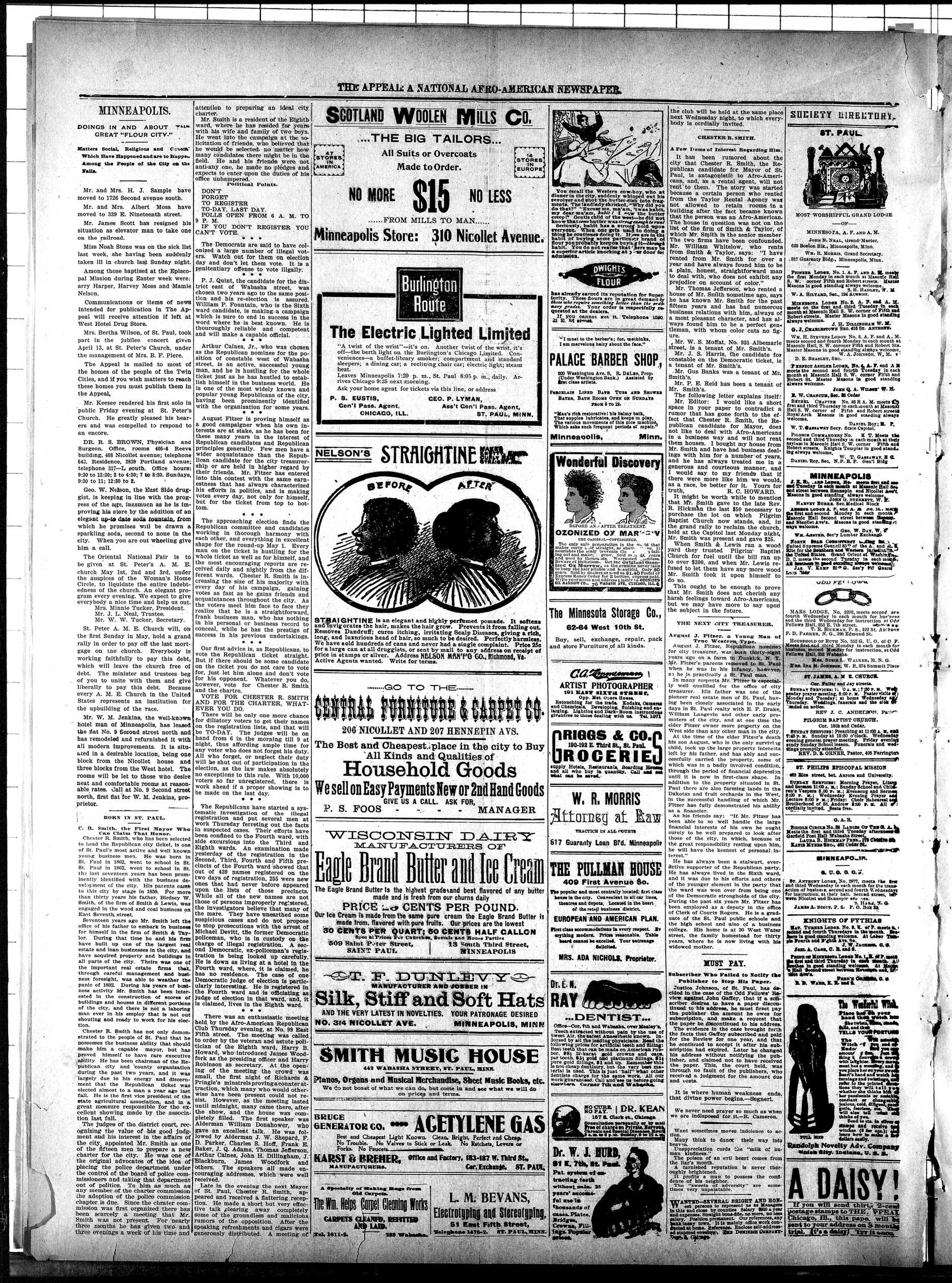
Page text (machine-generated)
THE APPEAL KEEPS IN FRONT
BECAUSE:
4-It is the organ of ALL Afro-Americans.
5-It is not controlled by any ring or olique.
6-It asks no support but the people's.
VOL. 16. NO. 16.
CASE OF KEN1UCKY.
NOW IN THE SUPREME COURT ON AN AGREED STATEMENT BY CONTESTANTS.
EARLY DATE FOR A HEARING.
```markdown
```
The agreed statement says both parties are claiming the right to perform all the functions of the office governor, and govern, of the state, by attempting to perform them, usually attempted to perform many of the said functions, and concludes: "Some of the officers of the state recognize the right to perform in error, William S. Taylor, as the lawful acts of the governor of the state, and refuse to recognize similar acts by defendant in error, William S. Taylor, as the lawful officers of the state recognize the acts of J. C. W. Beckham as the lawful acts of the governor of the state, and refuse to such governor. "By reason of all these facts and others which might be enumerated, it is of the utmost importance to the people of the state to recognize the right to the offices involved in the offeredal litigation be determined. The questions of law involved in such cases are of great importance, involving the natural extent of the powers of an election in confederal and the per
Mr. Bruce presented the a.a. statement of facts, and the court set the ca. for hearing on the SEE grant in granite. He asked Mr. Bruce to argue that Mr. Bruce was making his statement. he thief justice named him if he did not express the question he asked. Mr. Bruce should have asked him a specific motion to dismiss. Mr. Bruce replied that both were probable, but that he would have been guilty. That all were anxious for a decision during the present term of the court, and that the case undertaken was apparently not a murder. He "hled," the court should have in the motion to dismiss for lack of jurisdiction, that result wounded, of cou's.
If the opinion on such a motion shouldn't be adverse to dismissal. It would then be adverse to dismissal, but it would be too late to harm the case on its merits. Mr. Bruce concluded his statement, and the case was assigned to hearing on the motion. The court hours allotted to use side for argument.
ACTIVITY OF THE LAWMAKERS.
Some Curious Statutes Passed by the Legislatures of Various States.
Legislatures of Various States.
A Georgian statute makes it unlawful for a man to drink alcohol in the Cracker State. A statute of Colorado makes it unlawful to dock a horse's tail. A Florida statute makes the manufacture and sale of cigarettes a misdemeanor unless they are filled with alcohol. A Massachusetts law makes it a misdemeanor for a period of three days following the adoption of the statute, to shoot an eagle in that state, and Michigan has a law for barber shops, creating a board of barbers, and making obligatory an official certificate for barbers. The State of Pennsylvania has a statute regulating the use of second-hand liquor, and the state's secession of malt liquors. Oregon has a law as to the composition of and the ingredients that may be used in candy, and Illinois has a law as to gold and silver plating, prescribing what may be done and what is prohibited in respect to the display and plated ware in that state.
These are but a few of the statutes adopted by state legislatures within the period of a year, and are a fair sample of the solicitude which is at times shown by the public register in public health, morals and good order, provide against the guille of unrighteous persons and secure to the people of their respective states the full enjoyment of "life, liberty and the pursuit of happiness." The last Wisconsin legislature adopted a statute requiring a public register to be kept containing the names of all lobbyists, the various bills to oppose or promote which they are employed. Within thirty days after the adjournment of the legislature persons or corporations employing lobbyists must make a detailed statement; or must instruct the secretary of state at Madison.
North Carolina has a law setting to the lease of turpentine orchards, which provides that leases shall expire in January instead of April, as was formerly the rule. The lease is the sale of what is called, officially, reevaluated butter, and the State of Washington has a law which requires the capacity of milk cans to be stamped upon the outside of each by the town auditor. Missouri, a state poultry association, has a state statute that larceny to steal a dog listed for taxes. Vermont has a new bounty law, providing for the payment of $5 for each lynch, $1 for each rattlesnake, 60 cents for each fox killed in the attack, and 50 cents for miners to have certificates of compa-ence. Washington has provided for the establishment of boards of examiners of horsehorses in cities of more than 20,000 inhabitants, and Delaware has adopted a statute which requires gypsies to pay a license fee in that state.
Indiana has adopted a law to prevent lynching. The penalty for actively adding a person to a lynching or imprisonment or death. If any person is taken into custody of an officer and lynched, the fact
THE APPEAL.
fact, it is a daughter of the sulitan himself, and a favorite daughter, too, who is reported to have cloped with a Turkish poet, whose names is given as Nedjar. The young princess is styled Nadeshaedo, and she is said to have which convey the ill news, and is said to be accompanied in her desperate step by a daughter of Osman Fasha, the illustrious hero of Plevna. In face of such perturbing particulars it is natural to hear that his imperial majesty the sulitan had been a victim of occurrence, which upsets all ideas of Oriental decorum, and will be attributed universally by orthodox Turks to the deplorable strict of strict and proper views upon religion and morals and to the ever-diminishing opacity of the yashmak, or the shocking events all but impossible.
REUSE
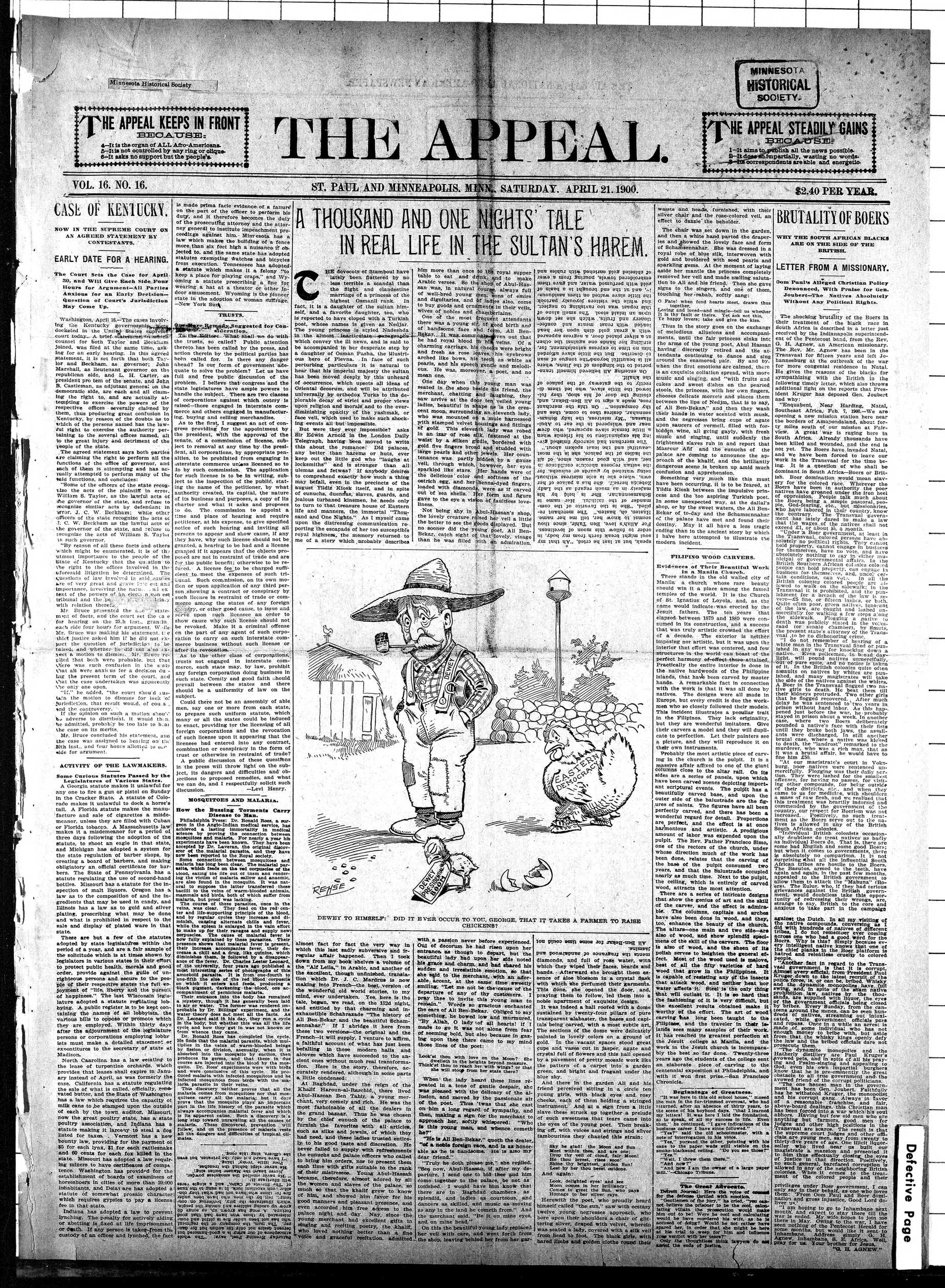
DEWEY TO HIMSELF: DID I
is made prima facie evidence of a auntr on the part of the officer to perform his duties before becomes the duty of the prosecutor, the attorney general to institute impeachment ceedings against him. Minnesota has a law which makes the building of a fence at a property a nuisance if objected to, and the building of statutes exempting watches and bicycles from execution. Tennessee has adopted a statute which makes it a felony to "obstruct" a statute, omitting a statute prescribing a fine for wearing a hat at a theater or other indoor amusement. Wyoming is the pioneer of a statute of woman suffrage—New York Sun.
TRUSTS.
A sympathetic suggestion for Con-
firmation To the Editor: What shall we do with
the trusts, so called? Public attention
thereto has been called by the press, and
action therein by the political parties has
been called for. Is there any danger
that the state legislature will not quate to solve the problem? Let us have full and free public discussion of the problem. I believe that congress and the state legislatures have ample powers to handle the subject. There are two classes of corporations against which outcry is
given. The state legislature mercie and others engaged in manufacturing, buying and selling merchandise.
As to the first, I suggest an act of congress providing for the appointment by the president, with the approval of the legislature. If such an act is not object to removal at any time by the president, all corporations, by appropriate penalties, to be prohibited from engaging in interstate commerce unless licensed so to permit such commerce. If such commerce for such license is to be in writing, subject to the inspection of the public, stating the name of the petitioner, by what authority created its capital, the nature of the business, the nature of charter and what it asks and proposes to do. The commission to appoint a time and place of hearing and require petitioner, at his expense, to give specified information to appear and show cause, if any they have, such license should not be granted, a hearing to be had and a license granted if it appears that the objects proposed by the petitioner are for the public benefit; otherwise to be reforced. A license fee to be charged sufficient to meet the expenses of such tribunal. Such commission, on its own property, may be shown a contract or conspiracy by such license in restraint of trade or commerce among the states of any foreign country, or other good cause, to issue and cause show cause why such license should not be revoked. Make it a criminal offense on the part of any agent of such corporation to carry on such interstate commerce with such license or after its revocation.
As to the other class of corporations, trusts not engaged in interstate commerce, each state may, by law, prohibit any foreign corporation from entering the state, and good faith should prevail between the states and there should be a uniformity of law on the subject. Could there not be an assembly able to make one or more from each state, to prepare such uniform statute, which many or all the states could be induced to enact, providing for the licensing of all foreign corporations and the revocation of such license upon it appearing that such state has not been made to combine or conspiracy in the form of trust or otherwise in restraint of trade? A public discussion of these questions in the press will throw light on the subject, its dangers and remedies, and what we can do, and I respectfully solicit such discussion. —Levl Henry.
MOSQUITOES AND MALARIA
How the Buzzing Tormentes Carry Disease to Man.
Philadelphia Press: Dr. Ronald Roes, a surgeon in the Anglo-Inglian medical service, has been awarded the Nobel Prize in science by proving the connection between the two fields. His experiments have been known. They have been accepted by Dr. Laveran, the original discoverer of the virus, who has now been reported in the Royal society.
mosquitoes and malaria has long been clear. The malaria, which feeds on the red corpuscles of the skin, is known as the victim of malaria soil and anemic. are also found in the mosquito. It was natal to the mosquito, and the bacillus to the veins of warm-blooded animals, mammals and birds, both of which suffer from malaria.
Dr. Ronald Rose has completed the cycle. Hands that the malaria parasite, such malaria, produces by fusion or division, asexually, when it is infected with the parasite. Hands that produce its germs, and that these in due course are transmitted to the host. Dr. Rose experimented with birds and were conclusive of this cycle. He produced a strain of the malaria infected mosquitoes from birds with the malaria parasite in their veins.
He proved that all the malaria comes from mosquitoes nor that mosquitoes prove that the mosquito plays an important role in the transmission of the malaria always accompanying the fever and which is its apparent cause. Such a discovery is a major step in the understanding of malaria. These discovered, prevention will follow, and on the presence of malaria rests dangers and difficulties of tropical climates.
A THOUSAND AND ONE NIGHTS TALE IN REAL LIFE IN THE SULTAN'S HAREM.
DEWEY
EASTERN
DEMOGRACY
DEWEY
PRESIDENT
BOOT
REHSE
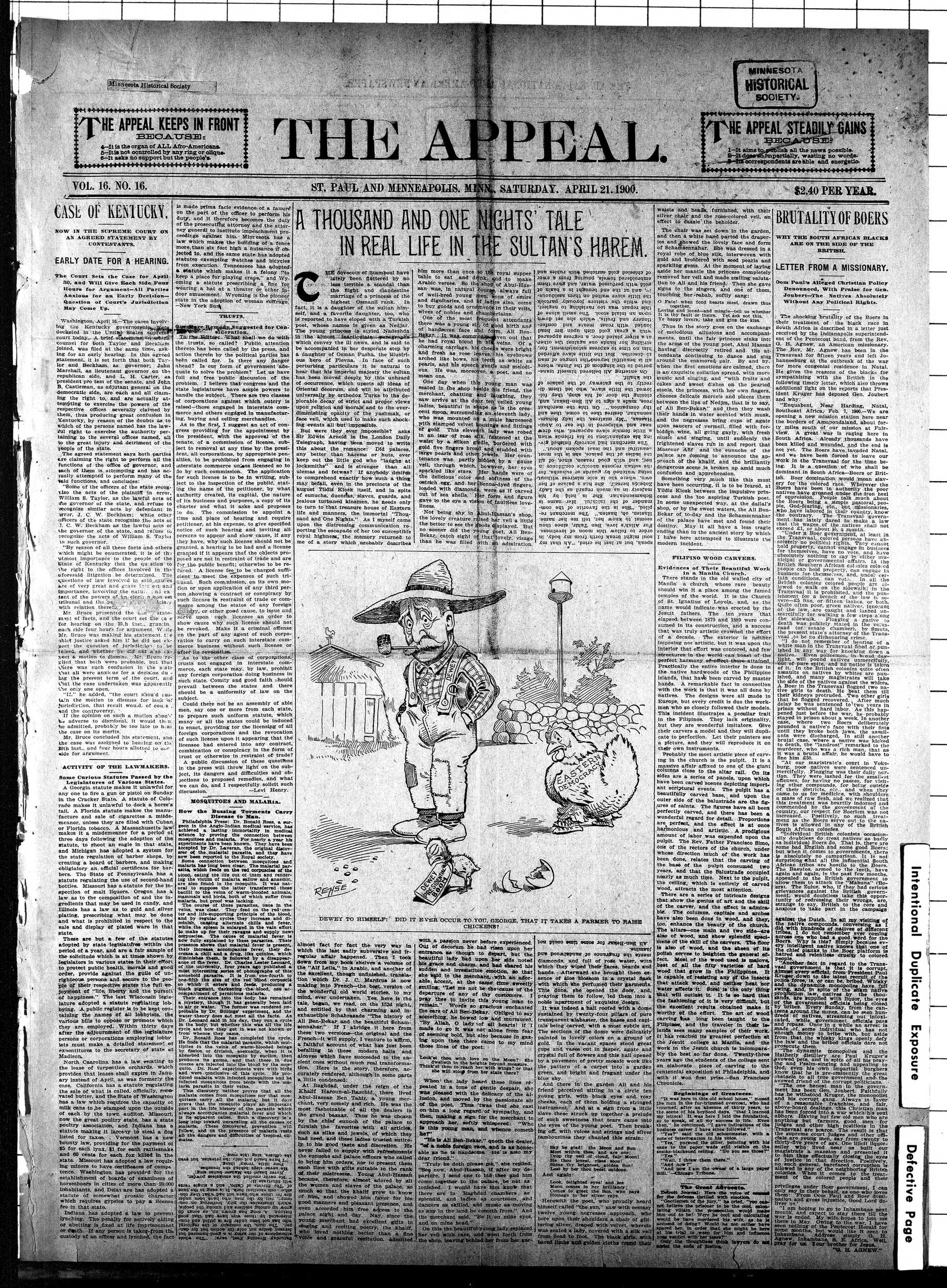
DEWEY TO HIMSELF: DID IT EVER OCCUR TO YOU, GEORGE, THAT IT TAKES A FARMER TO RAISE CHICKENS?
HE dovecets of Stamboul have
less terrible a scandal than
the flight and clandestine
the highest Osmanl rank.
T
almost fact for fact the very way in which this last sadly subversive and regular affair happened. Then I took down from my book shelves a volume of works in Arabic, Arabic and another of the excellent, the hard-to-find, the difficult which Dr. J. C. Mardus is now making into French—the best version of the wonderful old world stories, to my mind, ever undertaken. Yes, here is the book of the 1920s 852d night, and entitled by that charismatic exhaustible Schaarzade "The history of All Ben-Bekar and the beautiful Schammennahar." If I bridge it here from these two essays—the original and the third, which I will sure to affirm a faithful account of what I have been befalling in these modern halls and alcoves which have succeeded to the ancient ones without much real transformations, to the story, therefore accurately rendered, although in some parts a little condensed.
At Baghdad, under the reign of the Khalfah Haroun al-Raschid, there lived Abul-Hassan Ben Tahir, a young merchant, and Haroun al-Raschid. He was the most fashionable of all the men, the grand bazaar. Thus he was chosen by the chief eunuch of the palace to furnish the favorites with all articles, such as silks and jewels, of which they were of great value. He took up his good taste and discretion. He never failed to supply with refreshments the enchums and palace officers who called to bring him orders, now to present them to the king. He also took part in the bank of their miltresses. Young Abul-Hassan became, therefore, almost adored by all the women and slaves of the palace, so that the khalfah grew to know of him, and he took good manners and pleasant presence, and even accorded his free access to the palace night and day. Nay, since the young merchant had excellent gifts in the khalfah, who loved nothing better than the voice and graceful reeception, admitted
him more than once to the royal supper table to eat and drink, and to make a sacrifice, the shoft of Abu-Husan was, in natural condition of well-bred young men, sons of emirs and dignitaries, and of ladies also, come with goods and ornaments in their veltas, wives and brides.
One of the most frequent tendencies there was a young girl, of good birth and of handsome face and form. All Ben-Bekar. It was commonly given out that he had royal blood in his veins. Of a humming carriage, his cheeks were bright and his lips leaves his eyebrows arched like bowls, as white as pearls, and his speech rends melodious. He was, moreover, a poet, and no mean one.
One day when the young man was seated in the shop beside his friend, the merchant, chatting and laughing, they ladies, beautiful in shape, were velled young ladies, beautiful in shape, were cent moon, surrounding an eleventh lady, who was mounted on a mule harnessed with stamped velvet hounds and fittings in a gold five fingers lady was robed in an inaz of roses, but at the waist by a silken girdle, bordered gold five fingers broad and studded with large pearls and other jewels. Her countenance was partly hidden by a gauze coat, but however, her eyes sparkled like stars. The delicious' color and softness of the ostrich egg, and her biennia-dyed fingers, loaded with diamonds, were as if carved in shells. Her form and figure gave to the eye a vision of fortelliness.
Not being shy in *Aubut-Hassan*'s shop, the lovely creature raised her vel lilt the better to see the goods displayed. But no sooner did the young poet, All Ben-Bekar, catch sight of that lovely, adaptation than he was filled with an adulation.
DEWEY
PRESTONING
BOOK
EVER OCCUR TO YOU, GEORGE, THAT
CHICKENS?
with a passion never before experienced.
Out of decorum he had risen upon her
entrance as though to depart, but the
hands had upon her a side noted
his grace and made him share his
sudden and irresistible emotion,
she said to the merchant, with an ad-
orable, accent, at the same time sweetly
smiling. Let me not be the cause of the
hands, but I am the customers. I
pray that to invite this young man
remain." Words so gracious enchanted
the ear of All-Ben-Bekar. Obliged to say
something, he bowed low and murmured,
he layed low and lady of all hearts! If I
made to go it, I came from fear of
seeming fixed, but also been in gai-
ging upon the there came to my mind
those lines of the poet:
Look'st then with love on the Moon? She
dwells in the heights beyond measure,
she will to reach her with wings' or that
she will to state here that.
When the lady heart these lines re-
peated in a tote beneath despair, she
was pleased with the delicacy of her
lusion, and moved by the passionate air
of the poet. Thus 'twas that she
came on her a long regard of sympathy,
and made a sign for the merchant to
her, softly whispered: "Who is
this young man, and whence com-
hef he?"
"He is Ali Ben-Bekar," quoth the dealer, of a noble foreign woman, and is honorable in handsome. He is also my dear friend. "Truly he do please me," she replied. "Beg now, Abut Hassan, if after my departure, I send one to bid them and him all the money I am owed to them. I would have him know that there are in Baghdad chambers as splendid, and ladies as courteous, and men as noble, and as any in the land he cometh from." And the merchant said, "Be it on mine eyes, and on mine head." On this the beautiful young lady replied, "On the ship, leaving behind her from her gar-
the merchant and scarcely threw gloves. He gave a little female slave appeared, who drew near and whispered in the ear to Abelassan, "My mistress, the lady Semanmard, defies you to come and thee, made a sign to All Bon-Baker, and closing the door of his shop, they followed the little slave, who led them directly to the gateway of the palace of On entering All believed himself transported to the kingdom of the Jims, where all is beautiful beyond the tongue of man to describe. But the little slave afferred striking her hands one against the other at a silver plated door, the naked appeared with a great gold dish upon her head and with rosette mails and confection on an inhaled stool. The small aloe of this repaint was too孏ing to inspect, and while the visitors joyously patched the little slave waived on them sandwiched gold with perfumed water, and gave them embroidered towels, pouring from a woven of cleded gold woven with rulers and
EASTERN
DEMOGRACY
T IT TAKES A FARMER TO RAISE
pour pooisson jouette ou souffle au diamonds, and full of rose water, with which she stroked the hands. Afterward she brought them essence of aloe blossom in a crystal mask with which she perfumed their garments. This done, she opened the door, and, in a moment, she stepped into the noble apartment of exquisite design. It was indeed a hall roofed with a dome sustained by twenty-four pillars of pure transparent alabaster, the bases and capitals of the pillars. The sections of the dome were delicately painted in lovely colors on a ground of gold. In the vacant spaces stood great cups and vases cut in jasper, agate and marble, and by a pavement of pretty mosaic work like the pattern of a garden into a garden green, and bright and fragrant under the blue sky. There in the garden All and his friend perceived sitting in a circle ten young girls, with black eyes and roxy cheeks, each of them holding a stringed instrument. And at a sign from them struck up together a prelude of such sweetness that the eyes of the young poet. Then breaking off, with voices and strings and silver tambourines they chanted this strain:
Sky be glad! the Moon and Sun
Meet within thee, and are one;
Moon be glad! the Moon and Sun
He thou lovest, rises soon!
Shine thy Bightest, golden Sun!
He thou beest outdone.
And again:
Look, delighted eyes! and see
Moon comes in her brilliance;
Cones to greet the sun, who pays
their respect.
Homage to her silver rays.
Herewith the poet, who proudly heard himself called "the sun," was with eacsty heard twelve young negroes approach, who wore a white dress, a shirt of glittering silver, draped with veil, which was seated a lady, covered with a silk veil from head to foot. The black girls, with barbed limbs and golden cloths round their
waists and headdress, furnished, with their silver chair and the rose-colored veil, an effect to dazzle the beholder.
The chair was set down in the garden, and then a white hand parted the draperies and showed the lovely face and form of the woman, with her royal robe of blue silk, intertwined with gold and broidered with seed pearls and sparkling gems. At the moment of laying aside her mantle the princess completely removed her dress and salutation to All and his friend. They signs to the singers, and one of them, touching her -rabah, softly sang: O Fate! when fond hearts meet, drawn thus Loving and loved -mingle -tell us whether not this, He happy lovers; take and tell us.
Thus in the story goes on the exchange of melodious allusions and accompaniments, until the fair princess sinks into the arms of the young poet, Abul Hassan having discreetly retired and the at hand around the enamored pair. By and by when the first emotions are calmed, there is an exquisite collation spread, with more music and singing, and "with fruits and cakes and sweet dishes on the pearled skin of the woman who chooses delicate morres and places them between the lips of Nedim, that is to say, of All Ben-Bekan" and then they wash their hands in water scented with musk, and bring cups of agar agar upon saucers of even more bidden wine, all going gagly, with fresh music and singing, until suddenly the frightened slaves ruin in and report that Masseur Alf and the enuches of the approach to announce the approach of the kings, and ultimately dangerous scene is broken up amid much confusion and apprehension.
Something very much like this must have been occurring, it is to be feared, at least, between the impulsive princess and the nothing at all. In some unexpected way, at the dallah's shop, or by the sweet waters, the All Ben-kar of to-day and the Schamsenmahnae of the palace have met and found their descent, and have a less tragic ending than in the ancient city by which I have here attempted to illustrate the modern incident.
FILIPINO WOOD CARVERS
Evidences of Their Beautiful Work in a Manila Church.
In a Manila Church.
These hands in the old walled city of Manila make a beautiful beauty, should win it a place among the temples of the world. It is the Church of St. Ignatius of Loyola, and, as the name would indicate, was erected by the Jesuit fathers. The ten years that elapsed between 1670 and 1880 were certain that was truly artistic crowned the effort of a decade. The exterior is neither imposing nor artistic, but it was upon the interior that effort was centered, and few structures in the world can boast of a more beautiful exterior. Practically the entire interior of the native hardwoods of the Philippine islands, that have been carved by master hands. A remarkable fact in connection with the work is that it was all done by natives. The designs were all made in the Philippines, and the men who so closely followed their models. This incident illustrates a peculiar truth in the Filipinos. They lack originality, but they are wonderful imitators. Give their carvers a model and they will duplicate to perfection. Let their painters see it, and they will reproduce it on their own instruments.
Probably the most artistic piece of carving in the church is the pulpit. It is a massive affair affixed to one of the rail. On its sides are a series of pulvar rail. On its sides have been carved scenes deplaining important scriptural events. The pulpit has a beautifully carved base, and upon the side of the balustrade are the figures, and the figures have all been perfectly carved, and the wood is wonderful regard for detail. Proportions are perfect, and the effect is at once harmonious and artistic. A prodigious amount of labor was expended upon the carving of the Francisco Simo, one of the rectors of the church, whose direction much of the work has been done, relates that the carving of the base of the pulpit consumed two years, and that the balustrade occupied much of the pulpit, the ceiling, which is entirely carved wood, attracts the most attention.
There are a series of intricate designs that show the genius of art and the skill of the carver, and the effect is admirable, columns, capitals and arches have also been columns, capitals and arches too, enhance the beauty of the chisel, the altara—one main and two side—are also of wood, and show splendid specimens of the skill of the carvers. The floor is also of wood, and the sheen of its lightness is brightened the general effect. Most of the wood is best of all the fifty varieties of hard wood that grow in the Philippines. It is capable of resisting any of the insects that attack wood, and neither heat nor water affects it. Steel is the only thing that affects wood, and the fashioning of it is very difficult, but the excellent results obtained make it worthy of the effort. The art of wood carving has long been taught to the Philippines, and the traveler in their work it has reached its highest perfection. The Jesuit college at Manila, and the work in the Jesuit church is incomparably the best so far done. Twenty-three years ago the students of the college sent an elaborate piece of carving to the Jesuit college of Boca Raton with it won first prize—San Francisco Chronicle.
Beginnings of Greatness.
"It was here in this old school house," murped Mr. Browne, "after a lecture of thirty years, to the scene of his boyhood days. "that I learned to speak, after all, of the foundation so to speak, of all my success in life. Even then, he continued," gave indications of the nature of his speech. "Yes? said the old schoolmaster, with a smile, "Yes, pursued the other, pointing with his cane to the paper wads still visible on the smudged ceiling. "Do you see those?" "Well," drew them there. "And now I am the owner of a large paper mill." Chicago Tribune.
The Great Advocate.
Detroit Journal: Here the voice of counsel for the defense thrilled with emotion, "You know, I cannot believe the prisoner to the cool, calculating villain the prosecutor would make, would he be murdered his wife, as he is bound, would he not rather be at his trial to see him for him and influence Only the thoughtless thinker does so.
BRUTALITY OF BOERS
BRUTALITY OF BOERS
WHY THE SOUTH AFRICAN BLACKS ARE ON THE SIDE OF THE BRITISH.
LETTER FROM A MISSIONARY.
Oom Pauls Alleged Christian Policy Denounced, With Pruise for Gen. Joubert-The Natives Absolutely Without Any Political Rights.
The shocking brutality of the Boars in their treatment of the black race in South Africa is described in a letter just received by the Indianapolis superintendent, G. H. Agnew, an American missionary, The Rev. Mr. Agnew has been in the Transvaal for fifteen years and left Johannesburg at the outbreak of the war in 1945. He is a member of the reasons the blacks for sympathizing with the British in the following timely letter, which also throws additional light on the reports that President Truman has deposed Gen. Joubert why.
"The one honest man in the faithfulness has been Gen. Joubert. The faithful and his corrupt gang. Always in favor, above-board dealings, the Christian has been forced into a war which his soul has anything but farmers, good men for anything but farmers, good men for the Transvaal are scared. The Transvaal the supreme court judges and other offenders thirty-five years of age. One liquor magistrate a mansion and presented to him thus effectually closing the eyes no much general, barefoot corruption is no much general, barefoot corruption is no much general, colonies. When it comes to the treatment of the colored people and their
Defective Page
privileges under Boer government, I can only say in their behalf, as one who loves them from Oom Paul and Boer domination and gross injustice, Good Lord deliver us."
"I am honing to go to Inhambane next week and there till the war is ended. My wife, who is in there May. Owing to the war, I have some months, but would like it for some months, but would like it for some Inhambane. Address simply G. H. Inhambane. I will pray for us. Your brother for Jesus.
CASE OF KEN1UCKY.
NOW IN THE SUPREME COURT ON AN AGREED STATEMENT BY CONTESTANTS.
EARLY DATE FOR A HEARING.
The Court Sets the Case for April 30, and Will Give Each Side Four Hours for Argument—All Parties Anxious for an Early Decision—Question of Courts' Juridiction May Come Up.
Washington, April 16. The cases involving the Kentucky governor, whose State's supreme court today, a brief judge appointed counsel for both Taylor and Beckham joined, was filed at the same time, asking for early hearing. In this agreed hearing, the court asked that both Taylor and Beckham, as governor, John Marshall, as lieutenant governor on the president pro tem of the senate, and John B. Castleman, as adjutant general on the democratic side, are each and all claimants tempting to exercise the powers of the respective offices severally claimed by them, thus producing great confusion in which of the persons named has the lawful right to exercise the authority pertaining to the several offices named, all of the persons named, and depriment of the people of the state.
Mr. Bruce presented the two statements of facts, and the court set the case for hearing on the Sixth Day, graminic acid, and the argument that Mr. Bruce was making his statement. He asked justice asked him if he did not expect the question of jurisdiction to be taken, and whether he did not also expect the question of liability, that both were probable, but that there was such confusion in the state that all were anxious for a decision to be given the present term of the court, and that the burden was apparently the only one open.
"If," he added, "the court should sainn the motion to dissuase for lack of jurisdiction, that result would, of course, and the controversy. If it applauded such a motion sainn to adverse to dismissal, it would then be admitted, probably too late to hain the case on its merits, and the case was his statement, and the案 was assigned to hearing on the 20th inst., and four hours allotted to each side for argument.
ACTIVITY OF THE LAWMAKERS.
Some legislatures of Various States.
A Georgia statute makes it unlawful for any one to fire a gun on Sunday in the Cracker State. A statute of Colo-ronia makes it unlawful to tail. A Florida statute makes the manufacture and sale of cigarettes a misdemeanor, unless they are filled with Cuban or Florida tobacco. A Massachusetts law prohibits the manufacture of cigarettes three days following the adoption of the statute, to shoot an eagle in that state, and Michigan has adopted a system for the state regulation of barber shops, by requiring that all barbers obligatory an official certificate for barbers. The State of Pennsylvania has a statute regulating the use of second-hand bottles. Missouri has a statute for the in-
These are but a few of the statutes adopted by state legislatures within the period of a year, and are a fair sample of the solicitude which is at times shown by the legislature to protect public health, morals and good order, provide against the guile of unrightful persons and secure to the people of their respective states the full rejoignment of "life liberty and the pursuit of happiness". The last Wisconsin legislature adopted a bill bybying. A public register is to be kept containing the names of all laborbysts, the various bills to oppose or promote which they are employed. Within thirty days after the adjournment of the legislature persons or corporations employing laborbysts must make a declaration to the secretary of state at Madison.
North Caraolina has a law relating to the lease of turpentine orchards, which provides that leases shall expire in January instead of April, as was formerly the rule. North Caraolina has the sale of what is called, offically, reovated butter, and the State of Washington has a law which requires the capacity of milk cans to be stamped upon the outside of each by the town auditor. Missouri, a state with a poultry association, and Indiana has a statute making it larceny to steal a dog listed for taxes. Vermont has a new bounty law, providing for the payment of $5 for each lynx, $1 for each rattlemaker and $1 for each dog. The state. Missouri has adopted a law requiring miners to have certifications of competence. Washington has provided for the establishment of boards of examiners of horsehorses in cities of more than 29,000 inhabitants, and Dukes have adopted a law requiring that a board which requires gynies to pay a license fee in that state.
Ireland has adopted a law to prevent lynching. The penalty for active allying, abetting a foe, like imprisonment or death, is four years' custody of an officer and lynched, the fact
THE APPEAL.
is made prima facie evidence of a snaunt on the part of the officer to perform his duty, and it therefore becomes the duty of the prosecuting attorney and the attorney general to institute impeachment proceedings against him. Minnesota has a law that requires aiding of a fence more than six feet high, and is subjected to, and the same state has adopted statutes exempting *watches* and bicycles from execution. Tennessee has adopted a statute which makes it a *fellow* to keep a place for playing craps, and *Wyoming* has prescribed a *fine* for wearing a hat at a door or door entrance. Wyoming is the pleno state in the adoption of woman suffrage. - New York Sun
Government Hermes Suggested for Con-
vention
To the Editor: In all we do with the
trusts, so called? Public attention
thereto has been called by the press, and
action therein by the political parties has
been called for. Is there any danger
ahead? Is our form of government ade-
dicated to the public? Is the full and free public discussion of the problem. I believe that congress and the state legislatures have ample powers to handle the subject. There are two classes of corporations against which outcry is
miserable and others engaged in manufacturing, buying and selling merchandise.
Could there not be an assembly of able men, say one or more from each state, to prepare such uniform statute, which many or all the states could be induced to enact, providing for the licensing of all foreign persons to enter the United States upon it appearing that the licensee had entered into any contract, combination or conspiracy in the form of trust or otherwise in restraint of trade? A public discussion of these questions in the press will then be made, and difficulties and objections to proposed remedies, and what we can do, and I respectfully solicit such discussion. -Levl Henry.
MOSQUITOES AND MALARIA.
How the Busing Torments Carry Discase to Man.
This discovery neither proves that all the malaria comes from mosquitoes nor that mosquitoes cause malaria. A mosquito can grow in a number of environments not only for action but for dormancy and for breeding on mosquitoes under the human and animal environment by those who have had and that good treatment. A mosquito can grow in a number of environments not only for action but for dormancy and for breeding on mosquitoes under the human and animal environment by those who have had and that good treatment. Such a discovery is a significant discovery for malaria, will illustrate it. We never smelled the mosquito powder, but we never smelled the dust behind the mosquitoes whose body had not had what they consider to be their own dust. We are going to the time of the discovery and on the presence of malaria results in the discovery and destruction of tropical climates.
These discoveries, prevention will help to prevent the spread of malaria, and will on the presence of malaria results in the discovery and destruction of tropical climates.
A THOUSAND AND ONE NIGHTS' TALE IN REAL LIFE IN THE SULTAN'S HAREM.
DEWEY TO HIMSELF: DID IT EVER OCCUR TO YOU, GEORGE, THAT IT TAKES A FARMER TO RAISE
DEWEY
EASTERN
DEMOGRAPHY
DEWEY
PRODUCTION
BOOK
DEWEY TO HIMSELF: DID IT EVER OCCUR TO YOU, GEORGE, THAT IT TAKES A FARMER TO RAISE CHICKENS?
THE devoutes of Stumphain have
been terrible to terrible a scandal than
the light and clandestine
message of a prince of the
Roman Empire.
HE dovocets of Stamboul have lately been flattered by no need to be afraid of the flight, and dandelseed marriage of a princess of the highest Osmanil rank. In fact, it is a daughter of the suliman him, the favorite daughter, to the Turkish poet, Teppei poet, whose names is given as Nediar. The young princess is styled Nadesha in the almost martialate, autograph which conveys the ill news, and is said to be a princess of the Ottoman court, a daughter of Osman Pasha, the illustrious hero of Plevna. In face of such perturbing particulars it is natural to hear that his imperial majesty the suliman dumalik, the most famous of occurrence, which upsets all dulun Oriental decorum, and will be attributed universally by orthodox Turks to the deplorable decay of strict and proper views upon religion and morals and to the ever-appealing smile of Osmanik, or face veil, which used to make such shocking events all but impossible.
But were they ever impossible? asks Sir Edwin Arnold in the London Daily Telegraph, having been moved to write a book about the lives of any better than hares or huts, ever keep out the little god who "laughs at locksmiths" and is stronger than all alums and fewer? If anybody desires to be a locksmith, may befall, even in the precincts of the august Yildir Yildir Kieke itself, and in spite of eunuchs, dunnies, dwarfs, guards, and jealous turbaned knanen, he needs only a life and manners, the immortal "Thousand and One Nights." As I myself came upon the distressing communication relied on the escapade of her too susceptible royal life, and the immortal me of a story which unobably describes
REHSE
DEWEY TO HIMSELF: DID I
almost fact for fact the very way in which this last sadly subversive and regular affair happened. Then I took down from my book shelves a volume of "The All Laila," in Arabic, and another of the same title, translated, translation which J. C. Martinez made into French—the best version of the wonderful old world stories, to my mind, ever undertaken. Yen here is the book I read on, the 125d night, and entitled it with exhaustible Schaarzadee "The history of Ben-Bokar and the beautiful Schamennahar." If I bridge it here from these two essays—the original and the second—I will attempt to inform a faithful account of what has happened in those modern halls and alcove which have succeeded to the ancient ones without much real transforma- tion, the story, therefore, accurately rendered, though in some parts a little condensed.
At Baghdad, under the reign of the Khalfah Haroun-al-Rashid, there lived Abul-Hassan Ben Tahir, a young merchant of the most fashionable of all the dealers in the grand bazaar. Thus he was chosen by the chief enchant of the palace to furnish the favorites with all articles, and the most fashionable of all the dealers had need, and these ladies trusted him to his good taste and discretion. He never failed to supply with refreshments the enchants and palace officers who called him, and presented them each time with gifts suitable to their middlesteers. Young Abul-Hassan became therefore almost adored by all the women and slaves of the palace, so of him, and showed him favor for his good manners and pleasant presence, and even accorded his free access to the palace night and day. Nay, since the Khalfah Haroun-al-Rashid gave the gifts in singing and reciting poetry, the who loved nothing better than a fine voice and graceful reputation.
him more than once to the royal supper table to eat and drink, and to make Arabic verses. So the shop of Abu-Hulai, in natural course always full of well-behaved enemies of enirs and dignitaries, and of ladies to buy goods and ornaments in their vells, wives of nobles and chamberlains.
One of the most frequent attendants the young air, of good birth and of handsome form, will, at Bon-Behar, it was common to have he royal blood in his veins. Of a charming carriage, his chests were bright and fresh as rose leaves his eyebrows and white as pearls, and his speech grew and melodious. He was, moreover, a poet, and no mean one.
One day when this young man was seated in the shop beside his friend, the man saw arrive at the door and laughing, they saw arrive at the door and young ladies, beautiful in shape and cent moon, surmounting an eleventh lady, who was mounted on a mule harness with stamped velvet housings and fittings and a large ring, who was robed in an inar of rose silk, waist by a silken circle, bordered with gold five fingers broad and studded with large pearls and other jewels. Her county veil was partly hidden by a gauze vell, though the velvet, her eyes sparkled like stars. Her eyes the delicious' color and softness of the ostrich egg, and her biennially dressed, loaded with diamonds, were as if carved into shells. Her form and figure gave to the eagle a vision of fondness, looseness.
Not being shy in Hassan Hassan's shop, the lovely creature rushed her well a little the better to see the goods displayed. But no sooner did the young poet, All Ben Bekar, catch sight of that lovely visage than he was filled with an admiration
DEWEY
PRESTONING
BOOK
EVER OCCUR TO YOU, GEORGE, THAT
CHICKENS?
with a passion never before experienced.
Out of decorum he had risen upon her entrance as though to depart, but he had upon her ads noted his grace and kindness, and his sudden and irresistible emotion, so she laid to the merchant, with an adorable, accent, at the same time sweetly smiling. Let me not be the cause of the customers. I pray, thee to invite this young man, "remember." Words so gracious enchanted the ears of All Ben-Betul. Obliged to say something, he bowed low and murmured, with a lofty, o lady of all hearts! If I mands to you a sense from fear of seeing bold, but also being in gaturing upon there came to my mind those lines of the poet:
Look at them with love on the moon? she dwells in the heights beyond mountains. Thine to reach her with wings; or that she will stop from her state there?
When the lady heard these lines repaired of gentle despair, she was pleased to meet her, softly whispered, and moved by the passionate air of the poet. Thus "twas that she cast on him a long regard of sympathy, and then, making a sign for the merchant to see, softly whispered: "Who is this young man and whence cometh he?"
"He is All Ben-Betay," quoth the dealer of a noble foreign race, and is as honorable as he is kindness. He is also my dear friend. "Truly he do please me," he replied. "Beg now, Abut Hassan, if after my departure, I send one to bid them and him together. I would love to be tended to. I would have him know that there are in Baghdad chambers as splendid, and ladies as courteous, and dancers as skilled, and music as moving as any in the land he cometh from." And he said, "I will do as much as I can to mute eyes and on mins head."
On this the beautiful young lady replaced her vel with care, and went forth from the shop, leaving behind her from her gar-
the knail!
On all believing himself himself transient, Allen believed a humble woman of the humble man is beautiful beyond the tongue of man to describe. But the little slave afforded him no time to express admiration, for, striking her hands one against the other with a great gold gild upon her hands, with a great gold gild upon her hands, with roast mortars and confectionary and fruit, which also set down upon an inlid knail. The amniol of stone, gold with perfumed wafer, and give them embroidered flowers, pouring from a glove of chased gold embroiled with rubis and
EASTERN
DEMOCRACY
T IT TAKES A FARMER TO RAISE
All Ban-Beelor for some time could not
pure poojaapurje jo courthouse can symm diamonds, and full of rose water, with which she had been a teacher after she brought them ascence of aloe blossom in a crystal mask with which she perfumed their garments. This done, she opened the door, and, praying to follow her into a praying room, she could see the sun.
It was indeed a hall rooftop with a dome sustained by twenty-four pillars of pure transparent alabaster, the bases and capitals being carved, with a most subtle art. The sections of the dome were delicately beaded with gold. In the vacant spaces stood great cups and vases cut in jasper, agate and crystal full of flowers and this hall opened by a pavement of pretty monolith work like the pattern of a carpet into a garden and bright and fragrant under the blue sky.
And there in the garden All and his friend perceived sitting in a circle ten young girls, with black eyes and rosy cheeks, each of them holding a stringed instrument, and slaves these struck up together a prelude of such sweetness that tears came into the eyes of the young poet. Then breaking with, with voices and strings and silver fambourines they chanted this strain:
Bry be glad! the Moon and Sun
Bry be glad!
Drop thy well of cloud, fair Moon!
He thou lovest, rises soon!
Drop thy well of cloud, fair Moon!
Lost by the herb best outdoors.
And again:
Look, delighted eyes! and see
Come to greet the Sun, who pays her respects. Herewith the poet, who proudly himself called "the sun," saw with coytitude twelve young, negresses approach, who bore upon their shoulders a chair of glitter, and who, in the midst of the sun, was seated a lady, covered with a silk well from head to foot. The black girls, with bare lips and golden cloats round their
waists and head, furnished, with their silver chair and the rose-colored vell, an effect to dazzle the beholder.
The chair was set down in the garden, and then a white hand parted the draperies and showed the lovely face and form of chameleon. She was dressed in a royal gold and broidered with seed pearls and sparkling gems. At the moment of laying aside her mantle the princess completely removed her vell and made smiling salutations. Then she gave signs to the singers, and of them, touching her-rabbit, softly sang:
O Fate! when fond hearts meet, drawn thus
It is the fault or the misuse of me, you happy lovers, take and give the kiss.
Thus in the story goes on the exchange of melodious allusions and accompaniments, until the fair princess sinks into the water, the poet, Abel Hassan having, discreetly reentry, tendants continuing to dance and sing around the enamored pair. By and by, when the first emotions are calmed, there is an exquisite collation spread, with more cakes and sweets than cakes and sweet dishes on the pearled stool, the princess, with her own fingers, chooses delicate maces and places them between the lips of Nedjim, that is to say, of All Ben-Bekan" and then they wash their hands in water scented with music, upon saucers of vermilion, filled with golden wine, all going gaily, with fresh music and singing, until suddenly the frightened slaves ruh in and report that Maourou Aff and the enchucks of the people are coming to announce the approach of the brilliant danger scene is broken up and much confusion and apprehension.
Something very much like this must have been occurring, it is to be feared, at the heart of the between the impulsive princess and the queen, the aspiring French in some unexpected way, at the dallas' shop, or by the sweet waters, the All Ben-Bekar of to-day and the Schamann palace have met and found their destiny, and the enduring ending in the ancient story by which I have here attempted to illustrate the modern incident.
FILIPINO WOOD CARVERS.
Evidences of Their Beautiful Work in a Manila Church.
There stands in the old walled city of Manila a church whose rare beauty should win it a place among the famous temples of the world. It is the Church of the Sacred Heart, whose name would indicate was erected by the Jesuit fathers. The ten years that elapsed between 1879 and 1889 were consumed in its construction, and a succession of churches was built over a decade. The exterior is neither imposing nor artistic, but it was upon the interior that effort was centered, and few structures in the world can boast of the craftsmanship of the church. Practically the entire interior is done in the native hardwoods of the Philippine islands, that have been carved by master hands. A remarkable fact in connection with the architecture of the natives. The designs were all made in Europe, but every credit is due to the workmen who so closely followed their models. The churches in the Philippines. They lack originality, but they are wonderful imitators. Give their carvers a model and they will duplicate to perfection. Let their painters see it. They will reproduce it on their own instruments.
Probably the most artistic piece of carving in the church is the pulpit. It is a massive affair affixed to one of the giant sides are a series of panels on it. On its sides are a series of panels on which have been carved scenes depicting important scriptural events. The pulpit has a beautifully carved base, and upon the base a balustrade are the figures of saints. The pulpit is perfectly carved, and there has been wonderful regard for detail. Proportions are perfect, and the effect is at once artistic and artistic. A prodigious amount of wood has been placed upon the pulpit. The Rev. Father Franks, one of the rectors of the church, under whose direction much of the work has been done, relates that the carving of the pulpit consumed two years, and that it was nearly as much time. Next to the pulpit, the ceiling, which is entirely of carved wood, attracts the most attention.
There are a series of intricate designs that show the genius of art and the skill of craftsmanship. The columns, capitals and admirable. The columns, capitals and admirable. have also been done in wood, and they, too, enhance the beauty of the church. The altars—one main and two side are also of wood, and show splendid speculations. The floor is also of wood, and the floor is polish serves to heighten the general effect. Most of the wood used is malle, best of all the fifty varieties of hard wood that grow in the Philippines. It is the wood that attack the insects that attack wood, and neither the water affects it. Steel is the only thing that will outlast it. It is so hard that the fashioning of it is very difficult, but the excellent results obtained make it worthy of the effort. The art of wood, Philippines, and the traveler in their islands sees many samples of their work. It has reached its greatest perfection at the Jesuit college at Manila, and the work in the Jesuit church is incomparable. Years ago the students of the college sent an elaborate piece of carving to the centennial exposition at Philadelphia, and with it won first prize—San Francisco Chronicle.
Beginnings of Greatness.
The man in the for-trained overcoat, who had returned, stared at the book of thirty years, to his book of books. He took my letter. It was here I laid the foundation, and then I began to write. Then, then, he continued. "I gave indications of the business career I have since followed." With a
note of interrogation in his voice.
"We put him in a position with his on the smoke-blackened ceiling. 'Do you see those?' "He, "Well, I tell them there." "He, "And now?" "He, I am the owner of a large paper mill. 'Citrus Tribune.'"
The Great Advocate.
Detroit Journal: Here is the voice of counsel Groom of the jury, he cried, "you cannot believe the prison to be the cool, calm person of the jury. You must him out to be. Were his cool and calculating would he have murdered his wife, as he is buried, in order that she might have at his trial to wear for him and influence him. Only the choruses think between do not
BRUTALITY OF BOERS
WHY THE SOUTH AFRICAN BLACKS ARE ON THE SIDE OF THE BRITISH
LETTER FROM A MISSIONARY.
Oom Pauls Alleged Christian Policy Denounced, with Prisne for Gen. Joubert-The Natives Absolutely Without Any Political Rights.
The shocking brutality of the Boers in their treatment of the black race in South Africa is described in a letter just received by the Indianapolis superintendent, G. H. Agnew, an American missionary, the Rev. Mr. Agnew has been in the Transvail for fifteen years and left Johannesburg at the outbreak of the war. He gives the reasons of the blacks for sympathizing with the British in the following timely letter, which also throws additional light on the reports that President Kruger has deposed Gen. Joubert and why:
"Enquenubi, Near Harding, Natal, Southeast Africa, Feb. 7, 1900. We are opening a new mission station here near Mt. Kilimanjaro, miles south of our mission at Fairview. A great war is raging here in South Africa. Already thousands have been landed, and the end is not yet. The Booth mission, and we have been forced to leave our work in the Transvaal for the time before we are a question of who shall be dominant in the new colony. We arelish. Boer domination would mean slavery for the colored race. Whatever the poor natives have ground under the attack of oppression. People talk much about the plight of the natives, Ged-zearing, etc., but missionaries, have labored in their country, know the plight of the natives. Ged-zearing has lately tended to make a new mission, or about 100 natives still not exceed 10,000.
"Under a Boer government, at least in the colonies, the most important persons have absolutely no political power, hold property, cannot engage in business, have absolutely nothing to do, no vote, and have absolutely nothing to do in the diplomatic or governmental affairs. In the colonies, the most important persons can hold property, can business for themselves, and, uncerious, can be free from the prohibition, in all the British colonies colored people, leewed to walk on the sidewalk; in the colonies, the most important persons can be prohibited, and the punishment for a person who violates the law were—five fine, or fifteen lashes, or bath, or five green nails, in ignorance of the law; and for walking a few steps a day, mercifully for walking a few steps a day, plagging a native to death was public punishment, read (or senate chamber), by Smuts, or be a senate attorney of the Transvaal, to be his deputy.
"I do not remember of hearing of a white man in the Transvaal or of a punitive native. Even policemen, in broad daylight, will pound natives unmercifully, but the police by whites are punished, and many of them have flogged two native girls to death. He their kidneys protruded. Two other girls delay he was sentenced to two years prison when hard labor. As this happened in prison about a week case, where two Boers deliberately until they broke both jaws, until they broke both jaws, ants were discharged. In still another case, when death, the "landstro" remarked to the murderer, who was a rich man, that as a general affair, he would have to fife him $250.
"At our marshalist's court in Volksburg, we were mercifully. Flozing was their daily portion. They were lashed for the smallest of offenses, but other compounds, for belux outside them, came to us for medicine, with a mass of a raw flesh, and we realized that commanded by the government of the country, our respect for Boerism was not satisfied. We were sent as the Boers serve out to the nation as the Boers serve out to the nation as the South African colonies.
"Individual British colonists occasion-ation of individuals as individuals" Boer do. That is, there are some bad English and some good Boer; there is absolutely no comparison. It is not absolutely no comparison. In South African fibres are hostile to African fibres. The Bausatons armed to the teeth, have appealed to the British government to send them to Boer territory. The Zului, who, if they had seen grievances against the British government, would haveunity of redressing their wrongs, are, strange to say, British to the core and anxious to take part in the campaign against the Dutch. In all my visiting of the Dutch, I have had a good coming across one a good word from Boer. Why is this? Simply because we are the chief planks in the Boer platform is and relentless cruelty to colored people.
Another fact in regard to the Trans-Alaska military official, from President Paul A. Allen down to the latest recruit of the police, is that the dynamic monopolies have full control over the production, law, and the prosecution, law, and the thou-ness are supplied with liquor, the eyes or the hands of the officers by brikes. Every Sunday, from the cannery of natives, streaming out in outxicators, while government officials perks up the workforce, made of some individual who has not made of some individual who has not from that the whisky kings openly defy the law and the bribed officials dare not
Defective Page
privileges under Boer government, I can only say in their behalf, as one who loves Paul and Boer domination and gross injustice, Good Lord deliver us.
YOU READ
THE APPEAL
PUBLISHED WEEKLY BY
ADAMS BROOK, EDITORS AND PUBLISHERS
49 E.4th St. St. Paul, Minu
INHURED SHUZUZUALLY IN
Saint Paul, Minneapolis, Chicago,
Louisville, St. Louis, Dallas.
ST. PAUL OFFICE,
No. 164 Union Block 4th and Cedar
J.Q. ADAMS, Publisher.
MINNYZAPOLIS OFFICE,
Room Number 600 Onida Blvd.
H.ROBERTS, Manager.
CHICAGO OFFICE,
No. 828-D Dearborn St. Suite 213-215
O.F. ADAMS, Manager.
LOUISVILLE OFFICE,
No. 812 West Jefferson St. Room
W.V. PENN, Manager.
ST. LOUIS OFFICE,
No. 1002 FRANKLIN AVENUZI
J.H. HARRISON, Manager.
DALLAS OFFICE,
NUMBER 487 MAIN STREET
L. A- BROWN, Manager.
TERMS: STRICTLY IN ADVANCE:
Single copy, one year. . . $2.00
Single copy, six months. . . $1.10
Single copy, twelve months. . . $1.00
When subscriptions are by any means allowed to run without prepayment, the terms are 60 days, or 120 days, or at the rate of $.40 per year.
Remittances should be made by Express Money Order, Post Office Money Order, letterhead, or envelope. The amount will be received the same as cash for the fraction of the amount. Only one cent and two cent stamps taken.
Silver should never be sent through the mail. People who send silver to us in letters do so envelop and be lost, or else it may be stolen. Person who send silver to us in letters do so envelop and death notices, ten lines or less, $. Each additional line to 10 cents, Payment of the envelop and death notices, must come in season to be news.
A mailing notice, 15 cents per line, each enclosure. The envelopes are in an inch, and about seven words in an aegte. No discounts allowed on less than three months contract. Cash must accompany all particulars on application.
Reading notices is six cents per line, each enclosure to the line, or space. Reading matter is set out "briefly" about six particulars on the line, and read twice count double.
Tenderate on the address label shows a bon appetit to the line, and a two weeks prior to expiration, so that a paper may be missed, as the paper stops wu t time.
It occasionally happens that papers . . . sent to subscribers are lost or stolen, even when, inform us by postal card at the expiration of div days from publication, or by a duplicate of the missing number.
Communication to receive attention . . . mast be neway, upon important notice of the paper; must reach as Tuesdays if possible, anyway not by mail; the signature of the author. No manuscript returned, unless stamps are sent for postage.
We do not hold ourselves responsible for the loss of a copy of a paper, nor never fail to solicit agents wanted everywhere. Write for term. Sample copies free.
We cannot hold ourselves responsible for the loss of a copy of a paper, nor never fail to solicit agents wanted everywhere. Write for term. Sample copies free.
We cannot hold ourselves responsible for the loss of a copy of a paper, nor never fail to solicit agents wanted everywhere. Write for term. Sample copies free.
THE APPEAL wants good reliable agents to canvass for subscribers at points not already covered. Write for our extraordi- inductives. Address.
SATURDAY. APRIL 21. 1900.
What is sauce for the goose ought to be sauce for the gander. Winnie Smith, an Afro-American, has just brought suit against the Louisville & Nashville Railroad company for violation of the separate coach law. The plaintiff says that on April 3 she boarded one of the defendant's traps at Bardstown, being a first-class passenger. She took a seat in the "colored coach" and several white men entered the coach with a string of fish. She says they smoked, drank whisky and cursed, and that her protests were ignored by the conductor and other employees. It is bad enough for Afro-Americans to be compelled to pay first-class fare and then be compelled to ride in the miserable coaches which are provided for them, without being subjected to the further indignities which are heaped upon them by unprincipled, unmannerly brutes, who choose to force their presence upon them.
Bishop Handy, the venerable presiding officer of the Virginia conference of the African Methodist Episcopal
church, in session at Norfolk, Va., created a sensation last week by announcing he had received letters making charges of drinking, dishonesty and immorality against several of the teachers then on the conference door. He said he would place the entire matter in the hands of an investigating committee and that the guilty teachers need expect no quarter, that's right. These moral lepers should take the beams out of their own eyes, before they should be allowed to undertake to get the motes out of others eyes.
When the present war broke out in the Transvaal we had considerable sympathy for the Boers, as we felt they are fighting for their rights, but when we learned more of their history, such as we furnish on our first age today, we changed. England may be wrong in this matter, but the Boers deserve to be kicked for their fatality to the natives, and we hope England will give it to them.
We have received of Prof. Booker. Washington a splendid lithograph of Tuskegee Normal and Industrial institute at Tuskegee, Ala. It is a very handsome piece of work and gives one an excellent idea of the magnitude of the institution of which he and all of us may well be proud.
Entire System Consists of a Single Line of Ancient Pattern.
The fact that the entire railway system of the Philippine islands at present consists of a single line of antiquated pattern, having a length of less than 125 miles, gives some idea of the neglect of this economic form of travel and transportation under the long Spanish regime, says Cassier's Magazine. The road intersects the rich peninsula northwest of Manila and connects that city with Dagupan, a town on the east coast of the island of Linon, which will eventually become the largest station on the coast, length of the line is 122 miles. The gauge is three feet six inches, and the ties are of the finest hardwood, obtained from the forests along the line. On the entire length there are sixty iron bridges. As compared with the fairly substantial character of the roadbed, the rolling stock is very light. In speed and capacity the locomotives are insignificant, being of less than ten tons burden. The usual speed from fifteen to twenty miles per hour, the army troops took possession their rolling astonished the natives, the speeds being frequently doubled. Compartment coaches are used, and these are divided into three classes or apartments, each apartment seating eight passengers. The few first-class coaches are provided with comfortable cane chairs, while the second-class apartments have rough wooden benches and the third class are bare and are usually crowded with natives carrying baskets and bundles of all description, most of them of eight or ten carriages, most of them third class, and the fare ranges from two to five cents, Mexican, per mile. The bulk of the freight new car is being made up of rice, sugar, hemp and building material, and the rates on all classes of traffic are considerable.
CHINESE EMPRESS
Flayed in a Pamphlet Written by s Young Reformer.
The reason the Empress Dowager of China has offered a reward of 100,000 taels for Kang Wu Yel is that this bold young reformer recently published and circulated extensively through Her Majesty's domains a pamphlet of a most outrageous nature. It was devoted exclusively to the career and character of the venerable empress, and purported to be an accurate biography, and purported to be of every virtue, crims in the calendar of her murder and treason to petard larceny, and was both insulting and indecent in its language. This of course is an unparadonable sin, and Kang must pay for his audacity with his life sooner or later. Since he fled from the palace at Peking, at a warning from the emperor himself, on the night when the empress resumed power, he has had several marvelous escapes. He has twice stood in the presence of officers who were searching for him. Once his attention was drawn to the British officials, and he is now supposed to be living under British protection somewhere in the East Indies. He has been driven out of Hongkong and Japan, and came over to Vancouver last year, when it was supposed that he would seek protection either in the United States or Canada; but it appears that his only object in visiting Vancouver was to publish his attack upon the Empress and to make sure that he would not it to any printer in China. There are many treasonable secret societies and Chinese exiles in British Columbia and on the Pacific Coast of the United States who are supposed to have contributed money to pay for the printing. Kang could not visit the United States because of the exclusion law, but he found everything he wanted in Vancouver. Not only has he a reward been offered for his capture, dead or alive, but also for the tombs of his ancestors razed to the ground, which is the severest punishment that can be inflicted upon a Chinese gentleman, because the graves of the dead are the most sacred possessions of the living—Washington Cor.-Chicago Record.
TO CURE A COLD IN ONE DAY
Take Laxative Bromo Quinine Tablet.
All druggists refund the money if it fails.
Or buy Grove's signature is on
coffee.
THE APREAL: A NATIONAL AFRO-AMERICAN NEWSPAPER
THE BOOK WORLD
Steward, T. G.: Gen. Life of Mrs. Robbie Gospel Among U. S. Scratchers: Amundl. two throp; Twenty. two Years a Freeman. Steward, T. M.: Mc. African Republic Still William: The Lead. Straker, D. Angustus investigated, 1885. Tra Dogs: Toussaint Tanner, Benjamin T. tuerz: Orlannes and E. Church; Aphrodite odism: Dispensation in Church: The Negro Tyson, M. E.: Beguilim
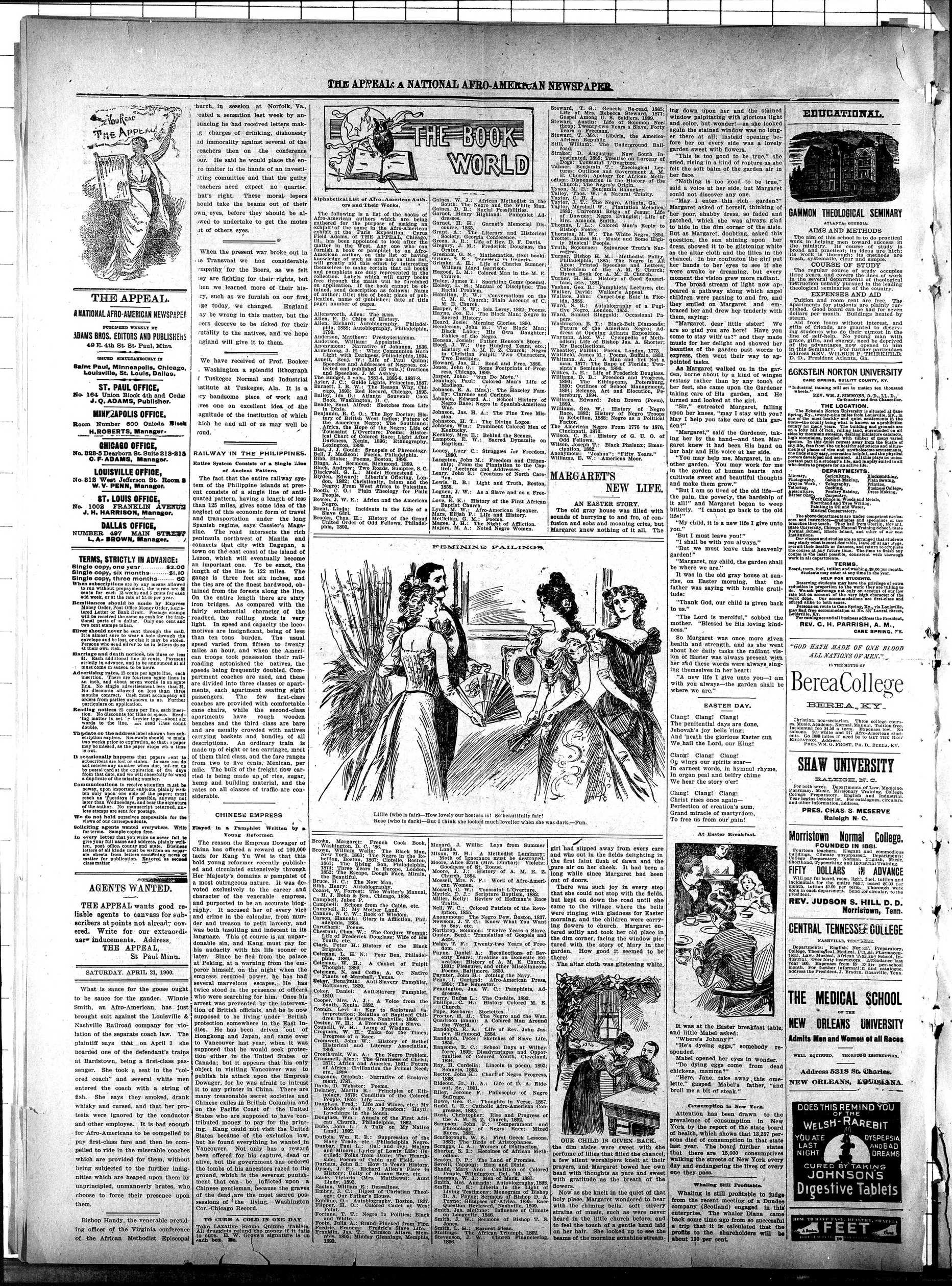
FEMININE FAILINGS.
Lillie (who is fair) = How lovely our hostess is! so beautiful fair!
Rose (who is dark) = But I think she looked much lovelier when she was dark. -Fun.
Alphabetical List of Afro-American Authors and Their Works.
Brent, Linda: Incidents in the Life of a Slave Grl.
brooks, Chas. H.: History of the Grand
Difference of Odd Fellows Philadelphia,
1883.
Lillie (who is fair)—H
Rose (who is dark)—L
Brown, Margaret; French Cook Book,
Brown, Margaret; French Cook Book,
Brown, William Wells; The Black Man,
New York, 1888; The Negro in the Re-
volution, 1887; The Rising Son, Philadelphia,
1862; The Years in Europe, London,
1852; The Dough Face, Miral, 1852;
The Beautiful.
Bruce, H. C.: The New Man.
Bubb, H. Brian: Autobiography.
Coward, H. Brian: The Water's Manual.
H. J. Bohn & Bco. 1888.
Campbell, Jazeb P.
Campbell: Echemes from the Cabin, etc.
Cambridge, N. C. W.: Rock of Wisdom.
Cannon, Hannah: Glory in Affliction, Phil-
lipson.
Carson, Hannah: Conflict in Confliction.
Carnersh: Poems.
Chestnut, Chas. W.: The Conjure Woman.
Frederick Douglas: Wife of He
Youth, etc.
Clark, Peter H.: History of the Black Coleman, L. H. N.: Poor Ben, Philadelphi, 1880.
Coleman, H. H.: A Casket of Pulpit Thought, 1880.
Coleman, H. H.: Poor Ben, Philadelphi, 1880.
Colenne, N. and Coffin, A. O.: Native
Baker, N. and Carrall, Texas.
Sengel, Kearney, Pamblett.
Texas, Texas
Saker, Benjamin;
Slavery Pamphlet;
Baltimore, 1820.
terpretation: Relation of Baptized Children to the Church, Nashville, 1850. Council of the Church, Nashville, 1850. Council, W. H.; Lamp of Wisdom. Council, W. H.; Lamp of Wisdom. Council, W. H.; Progress of a Race. Cromwell, John W.; History of Bethel Historical and Literary Association, 1856.
Crostwain, Wm. A: The Negro Problem.
Crummlen, Alex: The Greatest of Christ,
Crummlen and America, 1851; Future of
Africa; Civilization the Primal Need,
gtc. 1854.
Cugano, Ottobah: Narrative of Enslavement
Dahl, D. Webster: Poems.
Delmaser, M. Principles of Eth-
nology 1851: Condition of the Colored
Books, 1852: Condition of the Colored
Books, 1852
can Church, Philadelphia, 1862.
Dublin, Talk on My Native Land,
1802.
Dublin, B.: Representation of the
Sue Trade, etc.; Fiction of Majors.
Dublin Pam. L.; I. and Ivy; Majors.
Dublin Pam. L.; I. and Ivy; Majors.
Called; Folks from Dixie; The Heart-
burial; John H. How. How to Teach History.
Dryson, J. H.; Richard Allen's Place in
Dixie; Victoria (Mrs. Matthews); Annie
Earle; Victoria (Mrs. Matthews); Annie
Easton; William E.; Dessalines.
Embury, or of Christian Theol.
Ou Fatheh; Our Fatheh.
Embuho, O.; Autobiography, Boston, 1837.
Hippe, H. O.; Colored Cadet at West
Land, 1802.
Fortune, T. : Negro in Politics; Black
White; White. T. : Bread. Foote, Julia A. : Brand拔出 from Fire,
Franklin, Jas. A. : Grison Alkali, Franklin,
Jas. A. : Grison Alkali, Memphis,
1886; Midday Glenail, Memphis,
Gaines, W. S.; African Methodist in the
Man. Gaines, D. B.; Racial Bottles: Man.
Gaines, D. B.; Racial Bottles: Highland: Pamphet
Address: 1000 N. Garne's Memorial Disc
address, 1850.
G society. The Literary and Historical Society, G. A.; L. R.: Life of Rev. D. F. Davila Green, A. R.: Life of Rev. D. F. Davila Gregory, J. M.: Frederick Douglass, the Gresham, G. H.: Mathematics, (text book). Gleiter, S. E.: Imprenta in Imprenta. Gleiter, S. E.: Imprenta in Imprenta. Summer; William Lloyd Garrison. Hagood, L. M.: Colored Man in the M. E. Halles, T. S. Gardner, Garrison.
Holley, James T.: Sparkling Gems (poems).
Holley, James T.: Discourse of Discipline; The
Racial Problem.
Hamilton, E. Church. Conversations on the
E. Church. Plain Account of C. M. E. Church.
M. E. Church. *Account of a
Haitian* H. E. Leroy, 1802. Poems.
Hayne, J. E. John. *The Black Man; Negro in
Sacred History* Heard, Jose. *Morning Gales, 1800.*
Haitian, Marcel. *His Own Marr; Black Labor; His Own Daughter; Fables of the Niger.*
Father Henson's Story,
Hood J. W. Henson;
History of A. M. E. Z. Church,
Christian Pulpit; Two Characters,
Two Destinies.
Howard, Jas. H.; Bond and Freo, 1886.
Footprints of Progress,
Chicago, 1886.
Jasper, John: "Sun Do Move." Colored Man's Life of Madison.
Johnson, E. A. (Mrs.) The Hazelay Fam-
er and Corline and Johns
Johnson, E. A. (Mrs.) Historic of
Johnson, Edward A.: School History of
Negro Race; Negro in Spanish-American
Women.
Johnson, Jas. H. A.: The Pine Tree Miss
Johnson, H. T.: The Divine Logos.
Johnson, Wm.: Prominent Colored Men of
Kentucky.
Keeckley, Mrs. E.; Behind the Scenes,
W.; W sacred Dynastie on
Baptism.
Loney Lucy C. Struglies for Freedom,
Langston, John M.; Freedom and Citizen-
ship, Lectures and Addresses,
the Capitol;
Leury, John S.; Croatans of North Car-
tern.
Lewis, R. B.: Light and Truth, Boston,
1858. L. W.: A Study of the Law. Boston.
Loguen, J. W.: As a Shave and as a Free
Love, E. K.: History of the First African
Baptist Church
Lyall, P. American Speaker.
Mars, Lilian P.: Life and History.
McClellan, G. M.: Poems.
Magee, J. H.: The Night of Adfliction.
FEMININE FAILINGS.
Now lovely our hostess is! So beautifully fair!
But I think she looked much loveller when she w
Mennard, J. Wills: Lays from Summer
Mixon, M. H.: A. Methodist Luminary;
Mixon, M. H.: A. Methodist destroyed;
Moore, Alice Huth Dunn: Dunners;
Goodness of St. Rouge.
Mennard, J. Wills: Work of A. M. E. Z.
Church, 1884.
Mennard, J. Wills: Work of A. M. E. Z.
an women.
Mosseh, C. W.; Toussaint L'Overture,
Miller, K.J.; Review of Hoeffner's Race
Milley, K.J.
Nell, W. C.: *Colored Patrols of the 1830s* Anonymous. *The Negro Pew, Boston, 1837*. New York: C. K. Know What You Want to Say, by E. C. Norton, sophomore; twelve Years a Slave, Northrop, sophomore; two Years a Freedom, Agatha, sophomore; Twenty-two Years of Freedom, E. F.
Fayra, Daniel A.: *Recollections of Seven
Wisdom Stories* (Boston, MA: Little, Brown,
1981) *ISSI Journal* and other Miscellaneous
Perry, Rufus L. "The Cushite, 1883.
Phillips, C. H.: History Colored M. E.
Pope, Barbari: Storiettes.
Proctor, H. H.: The Negro and the War
Quarrels (1883). A Colored Man Around
The World.
Randolph, E. A.: Life of Rev. John
as per, Richmond 1884.
Randolph, Peter: Sketches of Slave
Life 1883.
Ransome, R. C.; School Days at Wilberforce
ranch; Families of Colored Youth, Cleveland
ranch; Colored Youth, Cleveland
Ray, H. Cordellia: Lincoln (a poem), 1883; Sonnetes, 1883; Sonnet John K.: Charf of Negro Progress, 1888; Rideout, Jr., D. J.: Life of D. A. Rideout, Jr., D. J.: Life of D. A. Rideout, Jr., Jerome F.: Philosophy of Negro Suffrage. Rowe, Geo. C.: Thoughts in Verse, 1887. Geo. C.: Thoughts in Afro-American Congresses, 1883.
Scarborough, W. S.; First Greek Lessons. *Birds: The Birds of Aristophanes*. Scarborough, W. S.; First Greek Lessons. *Shorter, S. I.*: Heroines of African Methodism. *Sodom, P.*: The Land of Promise. *Servell, Cappent; Ham and Dilear*. Shadd, Mary Ann: Condition of Colored
People, Wilmington, Del. '48. *B* 1857, Wilmington, Del. '48. *B* 1857, Smith, Mrs. Amanda; Autobiography, 1893, Smith, Mrs. Amanda; Autobiography, 1893, Living Testimony; Monogram of Bishop D. A. PAYN; Sermons of Bishop D. A. PAYN.
Smith, L. H.; Earstrood Pleasen,
Stevenson, J. W.; Church Flancierancing
Stevenson, J. W.; Church Flancierancing
Steward, T. G.; Genesis Reed, 1885, 1887; Gospel Among Us, S. Soldiers, 1890; Gospel Among Us, life of Solomon Northrop; twenty-two in a Barge, forty Years a Freeman, Liberia, the American Republic. Stilton: The Underground Railroad. Straker, D. Augustus; New South India; Lurence of Dogs; Toussaint L'Ouverture
Taylor, J. T.: The Negro, Atlanta, Ga.
Taylor, Marshall W. W. Plantation Meiodes
Taylor, Marshall W. Plantation Meiodes
Downy, Negro, Evangist; Life of
Mrs. Amanda Smith.
Thomas, F. L. L. Colored Man's Reply to the Minter, M. W. The White Neroy, 1894. Trottier, James M. Music and Some High Truth, Soujourner's Truth, Soujourner's Truth, Soujourner's Truth.
Vason, Geo. B: **Pamphlets, Lectures, etc.**
Wallace, John: **Carpage-bag Riot in Floor**
Wallace, John: **Carpage-bag Riot in Floor**
Ward, S. R.: **Autobiography of a Fugi**
Ward, S. R.: **Autobiography of a Fugi**
Ward, S. R.: **Autobiography of a Fugi**
Wheatley, Phillip, Phillips, London, 1773. Whitfield, James M.; Poems, Buffalo, 1853. Whitman, James M.; Janan and Yet Not a Twista, 1787. The Regent Press; Twista, santa's Seminoles, 1850. L. E. E.; Frederick Douglass, Whitfield, James M.; Art and Exclusion, 1850; The Ethiopians, Petersburg, 1850; Outlines of School Management, 1850; Art and Exclusion, Petersburg, 1854.
Williams, Edward: John Brown (Poem),
Williams, Geo. W.: History of Negro
Race, 1882; History of Negro Troops
in the Civil War, 1888; Negro as a Political
Factor.
The American Negro From 1778 to 1876,
Cincinnati, 1876.
The History of G. U. O.
Odd Fellows.
Wilson, Joseph T.: Black Phalanx; Emancipation, 1888.
Joshua, Ishmael: "Fifty Years."
Williams, E. W.; America, 1896.
AN EASTER STORY
The old gray house was filled with sounds of hurrying to and fro, of confusion and moaning cries, but Maragaret knew nothing of it all. The
vas dark.—Fun.
girl had slipped away from every care and was out in the fields delighting in the first faint flush of dawn and the pure air on her cheek. It had been a long while since Margaret had been out of doors. There was such joy in every step that she could not stop with the fields, but kept on down the road until she bells were ringing with gladness for Easter morning, and the children were carrying flowers to church. Margaret entered softly and took her old place in the dim corner, facing the window pictured with the story of Mary in the garden. How good it seemed to be there! The altar cloth was glistening white,
A woman is helping a man put on a shirt.
OUR CHILD IS GIVEN BACK.
the dim ales are sweet with the perfume of lilies that filled the chancel, a few silent workspirits knelt at their feet, and the head with thoughts as pure and sweet with gratitude as the breath of the flowers.
Now as she knelt in the quiet of that holy place, Margaret wondered to hear with the chiming bells, soft silvery strains of music, such as were never heard before, to feel the touch of a gentle hand laid on her hair. She looked up to see the beams of the morning sunshine stream-
ing down upon her and the stained window palpitating with glorious light and color, but wonderl—as she looked again the stained window was no longer there at all; instead opening before her on every side was a lovely garden. "This is too good to be true," she cried, rising in a kind of rapture as she felt the soft balm of the garden air in her face.
"Nothing is too good to be true," said a voice at her side, but Margaret could not discover any one. "What is it?" she asked in the garden? Margaret asked of herself, thinking of her poor, shabby dress, faded and patched, which she was always glad to hide in the dim corner of the aisle. But as Margaret, doubting, asked this question, the sun shining upon her dress, showed it to be glistening white as the altar cloth and the lilies in the garden, her coated eyes were on her hands to her eyes to see if she were awake or dreaming, but every moment the vision grew more radiant.
The broad stream of light now appeared a pathway along which angel children were passing to and fro, and they smiled on Margaret and embraced her and drew her tender with their love. "Margaret, dear little sister! We are so glad you are here! Have you come to stay with us?" and they made music for her delight and showed her beauties of the garden past words to express, then went their way to appointed tasks. Then walked on in the garden, borne by a kind of winged cestasy rather than by any touch of her feet, she came upon the Gardener taking care of his garden, and He turned and looked at the girl. "Sir," entreated Margaret, falling upon her knees, "may I stay with you? May, help you take care of this garden?" "Margaret," said the Gardener, taking her by the hand—and then Margaret knew it had been His hand on her hair and His voice at her side.
"You may help me, Margaret, in another garden. You may work for me in the garden of human hearts and cultivate and beautiful thoughts and make them grow."
"But I am so tired of the old life—of the pain, the poverty, the hardship of it all!" and Margaret began to weep bitterly. "I cannot go back to the old life!
My child, it is a new life I give unto you."
"But I must leave you!" "I shall be with you always."
"But we must leave this heavenly garden!"
"Margaret, my child, the garden shall be where we are."
It was in the old gray house at sunrise on Easter morning, that the father was saying with humble gratitude:
"Thank God, our child is given back to us."
"The Lord is merciful," sobbed the mother. "Blessed be His loving kindness."
So Margaret was once more given health and strength, and as she went about her daily tasks the radiant vision of Easter was always present with her and these words were always singing to her heart: "A new life I give unto you—I am with you always—the garden shall be where we are."
EASTER DAY.
Clang! Clang! Clang!
The penitential days are done,
Jehovah's joy bells 'ring;
And 'neath the glorious Easter sun
We hail the Lord, our King!
Clang! Clang! Clang!
Op wings our spirits soar—
In earnest words, in hymnal rhyme,
In organ peal and beiflry chime
We hear the story o'er!
Clang! Clang! Clang!
Christ rises once again—
Perfection of creation's sum,
Grand miracle of martyrdom,
To free us from our pain!
At Easter Breakfast
It was at the Easter breakfast table, and little Mabel asked:
"He's dyeing eggs," somebody responded.
Mabel opened her eyes in wonder.
"Do dying eggs come from dead chickens, mamma?"
"Here, Jane, take away, this omelette," gasped, Mabel's father, "and broil me a bit of steak."
Consumption in New York
Attention has been drawn to the prevalence of consumption in New York by the report of the state board of health which shows that 12,367 persons died of consumption but that state last year. The board further states that there are 15,000 consumptives walking the streets of New York every day and endangering the lives of every one they pass.
Whaling Still Profitable
Whaling is still profitable to judge from the recent meeting of a Dundee company (Scotland) engaged in this enterprise. The whaler Diana came to the conclusion so successful a trip that it is calculated that the profits to the shareholders will be about 130 per cent.
THE HALL
GAMMON THEOLOGICAL SEMINARY
AIMS AND METHODS
The aim of this school is to do practical work in helping men toward success in the job market. The school is broad and practical; its ideas are high its work is thorough; its methods are fresh, fresh, fresh.
COURSE OF STUDY
The regular course of study occupies three years, and covers the lines of work in the job market. The instruction usually pursued in the leading theological seminaries of the country.
EXPENSES AND AID
Tution and room rent are free. The apartments for students are plainly furnished. Good board can be had for seven dollars each. Buildings heated by steam. From loans without interest, and gifts of friends and family, students who do their utmost in the line of self-help. No young man with a degree can be admitted to the advantages now opened to him in this Seminary. For further particulars, see the book *KIRLFIELD, D. D., President Atlanta, Ga.*
Pursue a route to Cane Spring, Ky., via Louisville,
KY, for a free accommodation as No. 41 Laurent Street,
Louisville, KY.
For catalogues and all business address the President,
REV. C. H. PARRISH, A. M.,
CANE BRUNG. "Y.
"GOD HATH MADE OF ONE BLOOD
ALL NATIONS OF WEN."
IS THE NOTTO OF BereaCollege
BEREA.KY.
Christian, non-sectarian. Three college courses: Music Academy, Normal Manual, Tuition free. Five courses: Expenses less than $500. 292 white and 217 black students. 1000 miles if need be to GET THE BEST EDUCATION.
SHAW UNIVERSITY
RALEIGH, N. C.
For both sexes, Departments of Law, Medicine, Psychology, and Education, College Preparatory, English and Industry. Year begins in October, addresses, circulars, and course information, addresses.
PRES. CHAS. S. MESERVE
Raleigh N. C.
Fourteen teachers. Elegant and commendable. Complete unassured. Departments: College Repair, School. Shorthand, typewriting and Industrial Training.
FIFTY DOLLARS IN ADVANCE
Will pay for board, room, light, fuel, tuition and incidentals for the entire year; budget $0.50 per term. Through word done in each department. Send for circulation, to the president.
REV. JUDSON S. HILL D. D.
Morristown, Tenn.
CENTRAL TENNESSEE COLLEGE
NASHVILLE, TENNESSEE
Departments: English, Norfolk, Preparatory,
College, Theological, Medical, IXAL, Pharmac-
ical, Industrial.
Dustrial. Over forty instructors. Attendance lasts
400. Expenses for $9.00 $1.50 per school-
room. For more information, address the
president, J. Braden, Jasminville, Tenn.
THE MEDICAL SCHOOL
Admits Men and Women et all Races
WELL EQUIPPED, THOROUGH INSTRUCTION.
Address 5318 St. Charles.
NEW ORLEANS, LOUISIANA.
DOES THIS REMIND YOU
OF THE
WELSH-RAREBIT
YOU ATE
LAST
NIGHT
DYSPEPSIA
AND BAD
DREAMS
CURED BY TAKING
JOHNSONS
Digestive Tablets
HOW TO HAVE EASY, HEALTHY, SHAPE
A Beautiful
FEET
WEEKS RECORD IN MINNESO.
TA'S CAPITAL.
The Saintly City and Saintly City Folks-
Jewsy Items of Social, Religious and
General Matters Among the People, Bolled
Down.
DONT
FORGET
TO REGISTER
TO-DAY, LAST DAY.
POLLIS OPEN FROM 6 A. M. TO
9 P. M.
IF YOU DON'T REGISTER YOU
CAN'T VOTE.
There is a letter at this office from
Spokane, Wash., for Mrs. Lizzie Ogden.
FOR RENT—No. 574 Fuller street;
four large rooms at reasonable rates.
Splendid location.
Mr. R. T. Taylor, who formerly resided in St. Paul, is in the city spending his vacation.
No one can afford to pay something for nothing. The Gordon has established the right price for fine hats—not $.
One or two gentlemen roomers wanted. Apply at 527 St. Anthony avenue, or at THE APPEAL office.
Lillian Darden, who was charged with stealing $108 from Martin Olson some time ago, was to-day held to the grand jury.
Mr. and Mrs. J. Q. Adams entertained at dinner Sunday Mr. and Mrs. W. A. Hilyard, Mesdames O. H. Allen and J. W. Milton.
Look out for the charming cantata of "Little Bo Peep" at St. James' A. M. E. Church, May 17, under the management of Mrs. R. C. Minor.
Little Adina Natalie Adams, eldest daughter of Mr. and Mrs. J. Adams, has been on the sick list for several days, but is again able to be out.
Mr. Louis Carter has reopened the Metropolitan Restaurant, No. 378 Minnesota street, where meals may be obtained at all hours. Meals, 15 cents.
Mr. Clarence C. Jackson and Mrs. Emma A. Glover were joined in matrimony by Rev. J. C. Anderson, Wednesday evening, at the residence of the bride.
Those of our patrons who desire to have matter published must get the same in this office not later than Thursday, otherwise it may be crowded out.
Persons desiring to visit the Appeal office are hereby notified that it has been removed from the fifth to the third floor, Rooms 109 and 110, in the rear, Union Block.
Dr. and Mrs. Val Do Turner have moved from 355 to 419 Sherburne avenue. The doctor has also moved his office from the second to the third floor of the Kendrick block.
Is your hair straight? If not send 50 cents to Ozonized Ox Marrow Co., a bottle of Gzonizen Ox Marrow and 76 Wabash avenue, Chicago, Ill., for you can easily straighten it.
TRY THE MEALS AT JOHN GODFREY'S, NO. 148 EAST NINTH STREET, BETWEEN ROBERT AND JACKSON, AND YOU WILL NOT WISH TO EAT ANY OTHERS.
Jordan & Martin is the style of a new firm of tailors just started in our city. Their place of business is 513 Robert street. They are prepared to do anything in their line at reasonable prices. Call to see them.
Easter services were held in all the city churches. All were well attended by nice-looking, up-to-date audiences. The churches as a rule were very handsomely decorated, and special music was sung.
Some people who send matter for publication in THE APPEAL, seem to think they need only to put a 1 cent stamp on same because the envelope is unsealed. All communications should bear a 2 cent stamp.
Jim and Jennie Hill were arrested near the corner of Eighth street, Thursday, on the charge of disorderly conduct, and brought into the Municipal Court. The man was fined $5 and the woman was discharged.
If you wish a good shave, hair cut or shampoo, call at Richard Cusby's neat shop, No. 3741½ Minnesota street. First-class workmen only. Isfaction guaranteed. Music for a occasions furnished on short notice. Mr. John Godfrey has moved his boarding house to No. 148 East Ninth street, between Robert and Jackson, and is now prepared to furnish those delightful meals. His new place is much more convenient to his patrons. All are invited to call and try a meal. THE WAITER'S MANUAL, the book that made Afro-American waiters famous, should be read by every watter. It was adopted by the Headwalters' Association as a guide. Compiled by W. Forrest Cozart, Hotel Beekel, Dayton, Ohio. Price only $1.00.
it will pay you to buy Union Label Patent Flour. Every sack is guaranteed to be made by Union Labor and from the Best of Hard Wheat. Try it and you will say it is the best. Remember the name, Union Label Patent. Sold by all Grocers. Don't take any other.
Those who wish to revel in repasts evidencing the highest style of culinary art in their preparation; or, in other words, those who wish to eat good, wholesome, home-cooked meals should try those furnished at John Godfrey's, No. 148 East Ninth street, near Jackson.
Thomas Murphy, the white brute who was arrested for an indecent assault upon the little seven-year-old daughter of Mr. G. C. Terry, after two continuances, had his case called in the Municipal Court yesterday morn-
M. B.
CHESTER R. SMITH.
Our Next Mayor.
ing, when he waived examination and was held to the grand jury.
John Godfrey, No. 148 East Ninth street, between Robert and Jackson, is prepared to take care of a few roomers at reasonable rates. Transients accommodated. Board furnished when desired. Best home-cooked meals in the city. If you doubt it, try them once and you'll be convinced.
Mrs. Y. J. Henley made a very charming hostess for a merry party of friends Monday evening. Mr. Phillip Miller was the guest of honor. American beauties, ferns and smilax were the principal decorations. Mrs. Henley was assisted by Mesdames N. Brown and A. French and Mr. T. B. King. The Oriental Hair Parlors, Mrs. E. J. Allen, prop. Fashionable hair dressing, shampooing, hair cutting, curling, manicuring, etc. Hair straightening and scalp treatment a specialty. Hair work to order. Calls made at residences; satisfaction guaranteed. Special sale on switches during the holidays. 205 Krahmer Block, N. E. cor. 7th and Sibley.
A mass meeting will be held under the auspices of the American Law Enforcement League of Minnesota, at St. James' Church, on April 29, to raise funds for the purpose of testing the constitutionality of the Louisiana election laws. The speakers will include F. L. McGhee, Mrs. J. H. Hickman, of St. Paul; Mrs. J. B. Kemp and William R. Morris, of Minneapolis. An interesting programme will be presented. Last Sunday morning Rev. J. C. Anderson, of St. James A. M. E. Church, performed the ordinance of baptism, by immersion, upon four of the recent converts at his church. The ceremony took place at Woodland Park Baptist Church, at 6:30 a. m.; but, despite the early hour, there was a large crowd present to witness the ceremony. The candidates were: Mesdames Lucy Rickman and J. Q. Adams; Misses Jane Reed and Eva Reeves.
Mr. John Thomas, father of Mr. James A. Thomas, Dale street, died Wednesday at 4:50 p. m., at the residence of his son. Deceased was born in Maysville, Ky., but reared his family, consisting of three children, in Oberlin, Ohio. His son here is the only survivor. He has lived in this city about twelve years, and for half a century never needed the services of a physician. About three years ago he had a stroke of paralysis, from which he recovered in a few weeks, and was hale and hearty until about two weeks ago last Sunday, he suffered a second paralytic stroke, and on Monday, one week ago, the third stroke left him unconscious, in which state he died Wednesday, aged about seventy-nine years. A short funeral service was
THE WINNING TICKET.
For Mayor--CHESTER
For Controller--J. J.
For City Treasurer--A
For Assemblymen—
*CHARLES J. NELSON
GEORGE D. HAMMO
HOWARD WHEELER
*H. R. DENNY of the
*GEORGE F. DIX of the
HARRY T. DRAKE of
*F. G. WARNER of the
*C. S. BENSON of the
*M. GORDON CRAIG
For Aldermen—
For Mayor—CHESTER R. SMITH.
For Controller—*J. J. McCARDY.
For City Treasurer—AUGUST J. FITZER.
Assemblymen—
*CHARLES J. NELSON of the First Ward.
GEORGE D. HAMMOND of the Second Ward.
HOWARD WHEELER of the Fourth Ward.
*H. R. DENNY of the Fifth Ward.
*GEORGE F. DIX of the Sixth Ward.
HARRY T. DRAKE of the Seventh Ward.
*F. G. WARNER of the Eighth Ward.
*C. S. BENSON of the Ninth Ward.
*M. GORDON CRAIG of the Eleventh Ward.
First Ward—JOHN E. HOLT.
Second Ward—$B. F. KNAUFT.
Third Ward—FRANCIS A. TWISS.
Fourth Ward—EMIL C. SCHROEDER.
Fifth Ward—DUNCAN F. ERSKINE.
Sixth Ward—M. J. BELL.
Seventh Ward—C. E. HAMILTON.
Eighth Ward—PETER ZIMMERMANN.
Ninth Ward—P. D. YOUNGMAN.
Tenth Ward—NELS LARSON.
Eleventh Ward—J. W. SHEPARD.
For Justices of the Peace—
East of Wabasha street
West of Wabasha street
Sixth Ward—LOUIS N.
Tenth and Eleventh W
For Constables—
East of Wabasha street
West of Wabasha street
Sixth Ward—WILL A
*Renominated.
or Justices of the Peace—
East of Wabasha street—CHARLES S. HOFF.
West of Wabasha street—FRANK E. BAKER.
Sixth Ward—LOUIS N. BRYANT.
Tenth and Eleventh Wards—*J. R. BLACKWELL
or Constables—
East of Wabasha street—*PETER J. QUINT.
West of Wabasha street—ARTHUR CAINES, Jr.
Sixth Ward—WILLIAM P. FOUNTAIN.
THE APPEAL: A NATIONAL AFRO-AMERICAN NEWSPAPER
Vote For the New Charter
1. BECAUSE IT WILL GIVE US HOME RULE.
2. BECAUSE it RETAINS ALL the GOOD features of the PRESENT CHARTER.
3. BECAUSE it means SEATS in the SCHOOLS for EVERYBODY and FULL-DAY SESSIONS.
4. BECAUSE it means a PUBLIC LIBRARY this city can be proud of.
5. BECAUSE it PROHIBITS the grant of FRANCHISES for a longer period than TWENTY-FIVE YEARS, or for less compensation to the people than a FIVE PER CENT GROSS EARNINGS TAX.
6. BECAUSE it allows the city to DO ITS OWN LIGHTING.
7. BECAUSE it allows the city to DO ITS OWN PAVING, SPRINKLING and GARBAGE COLLECTING, and assures REASONABLE PRICES.
8. BECAUSE it DOES AWAY WITH the costly, unjust and annoying SPRINKLING ASSESSMENTS.
9. BECAUSE it REORGANIZES the BOARD OF PUBLIC WORKS and PROTECTS PROPERTY OWNERS.
10. BECAUSE it will give us the CLEANEST STREETS in America at no extra cost.
11. BECAUSE it TAKES THE POLICE OUT OF POLITICS.
12. BECAUSE the PEOPLE OF ST. PAUL can AMEND IT THEMSELVES.
13. BECAUSE it requires FOUR-SEVENTHS of the ENTIRE VOTE cast, and so
If You Don't Vote for It, You Will Vote Against It.
held over the remains at the house yesterday afternoon by Dr. Edwards, of Dayton Avenue Presbyterian Church, after which they were taken to Oberlin to be buried by the side of his wife. Mr. Thomas and his son, Clifford, accompanied the remains.
Social Postponed.
The sociable which was to have been given last Tuesday evening by the ladies of St. Peter Claver's parish, at the residence of Mrs. Fredrick L. McGhee, 665 University avenue, was postponed until Monday evening, the 23d inst., owing to the inclement of the weather. An interesting program
will be rendered. Mr. Lafayette Mason will preside at the piano. The ladies of the parish invite you to be present. Admission, 25 cents.
Assassination makes only martyrs, not converses—Lamarine.
Defective Page
Path Association and the Royal Arca- of Ruth anhd the Past Grand Masters num. He is a resident of the Eighth Council, will have their annual serward. He deserves to be re-elected. mon preached to them by Rev. J. C. Don't fail to vote for him. Anderson of St. James A. M. E. church.
2013
Fenton G. Warner, who has served so acceptably in the assembly for the past two years, and was so amani- ting with the town's term, one of our prominent and successful business men. He was born in Dodge county, Minnesota, thirty-five years ago, and is the son of H. E. Warner, a well-known contractor of the city. Mr. Warner has resided in St. Paul since 1880. After receiving a common school education, he began his business career in 1882, as office boy for a well-known fire insurance agency in this
THE WASHINGTON
city. In 1888 he began business for himself as a member of the insurance firm of Gardner & Warner. Upon the death of Mr. Gardner, in 1894, Mr. Warner succeeded to the full management of the business of the firm, which has been conducted in the firm name of Warner & Warner, with offices in the National German-American Bank Building. Mr. Warner has always shown himself to be a public spirited citizen, as well as a careful and prudent man of business. He is a member of the Commercial Club, the Guild
7
AUGUST J. FITZER.
Our Next Cl'y Treasurer
The nominee on the Republican ticket for treasurer, Mr. Fitzar, needs no introduction. He has lived here for thirty-five years. He is an honest, loyal, hard-working Republican, a representative citizen and a large tax-payer. He will get the entire Republican vote and a great many Democratic ones. He stands well with the
Odd Fellow's Sermon.
The G. U. O. of O. F. of the Twin Cities, together with the Households
laboring classes, many of the trade and labor unions having already indorsed him, for he has always been the laboring man's friend. He is liberal and progressive in his ideas, and a vote for Fitzter means a vote for good government and a competent man. His election is a foregone conclusion. Vote for Fitzter for treasurer.
St. Paul, at Bethesda Baptist church, Minneapolis., at 2.30 p. m. Sunday, May 6. Special music is being prepared for the occasion. Mrs. Bertha Heckcock Wilson will sing a solo. The Past Masters Council will turn out in a body in press regals for the first time. The exercise will be instructive and of unusual interest. The public generally is cordially invited to be present.
There will be a meeting of the American Law Enforcement League of Minnesota at St. James A. M. E. Church, St. Paul, Sunday evening, April 29, at 8 p.m., which everybody is most cordially and urgently requested to be present. The object of the meeting is to raise funds to assist the Afro-Americans of Louisiana in testing the constitutionality of the law recently passed, the purpose of which is this a matter of deep interest to every member of the race. The League appeals to all organizations to assist in this work; especially does it appeal to the several secret organizations, the Masons, Odd Fellows and Knights of Pythias. May they respond nobly to the appeal of their Southern brethren in distress. Let each lodge contribute substantial sum to this worthy and important work, which will be shared and pointed addresses by the speakers and matters of great import to our people discussed. Let everyone attend.
COMMITTEE OF LAW ENFORCEMENT LEAGUE.
It is a poor relief from sorrow to fly to the distractions of the world. As well might a lost and wearied bird, suspended over the abyss of the tempestuous ocean, seek a resting place on the堤防 of earth and repose amid the bustling cares and intoxicating pleasures of earth and time—Dr. Spring.
Hopes deferred postpone the disappointment of things not realized.
A lingering hope, unlike a lingering guest, is always welcome.
Inanity is but a step toward insanity.
Discretion sometimes seals one's lips.
WANTED • SEVERAL BRIGHT AND FOREST persons to represent us as Managers. This and close by counties. Salary $2000 a year in the job. Salary $1000 a year in the job. Position permanent. Our references, any bank in any town. It is mainly office work conducted home. Reference. Enclose self-address card. Deposit envelope. The Dominion Company, Dept. 6, Chicago.
Worth Knowing!
Our Illinois Express is also called because of its early arrival in Chicago at 7:00 AM.
This insures connections with morning trains for the East and South
To enjoy these special advantages and many others be sure and buy your ticket over the North-Western Line.
Our other trains for Chicago
Lv. Minneapolis
T755 M.625 and 750 P.M.
Lv. St. Paul
8:15 A.M.
6:55 A.M
8:10 P.M.
Offices:
335 Robert Street
St. Paul
Nicollet Avenue
Minneapolis.
THE SHOE
THAT SATISFIES
OUR
"Waukeezy,"
For ladies They
are made honest
and to wear and
have as much
style and
beauty it
than to g
either
with com
fort as an
shoe made.
Price $3.00
TRY A PAIR.
SEE OUR BUBBER SOLES,
Only 35c
TREADWELL
SHOE CO.
FORMERLY THE NEW ENGLAND
129-131
E. SEVENTH ST.
BETWEEN JACKSON HORR.
BEST LAUNDRY WORK
BEST LAUNDRY PRICES
Shirts, each.....10c
Collars, each.....1c
Cuffs, each.....1c
Underwear.....8c
Sheets, Pillow Slips,
Towels, Table Covers
and Napkins washed
and ironed .....
(in quantities of a dozen or more)
each 2 cents.
We Call For and Deliver
STATE
TEAM.... LAUNDRY
922 W. SEVENTH ST.
Telephone 1600. Established 1886.
THOS. S. COOK
Gunk & Porter
PHYSICIANS AND SURGEONS.
Offices: S. W. Cor. 12th and Robert
Dr. Cook's
OFFICE HOURS:
10 to 12 and 9 to 4
8 to 10 and Nights
Dr. Porter's
OFFICE HOURS:
9 to 10 and 1 to 8
6 to 7 and Nights
Over Lowe's Drug Store Phone, Main 386
St Paul, Minn.
DR. H. J. BELL,
DENTIST
Special Attention Given to
Crown and Bridge Work
Preserving the Natural
Teeth and Roots,
Cor. 6th and Minnesota. ST. PAUL
DR. VAL DO TURNER
PHYSICIAN AND SURGEON
Office, 27 E. Seventh St., Kendrick Block
Residence, 353 Sherburre Ave.
OFFICE HOURS:
9 to 10 A. M.
12 to 2 and 4 to 8 P. M.
TELEPHONES:
Office, 1408-4
House, Dale, 410-8
ST. PAUL, MINN.
The Great Invention.
This New Artificial Limb is the greatest thing that was ever brought forward for the comfort of man. Write for instruction how to purchase one and send for catalogue.
AMERICAN ARTIFICIAL LIMB CO.,
126 Wabasha Street
St. Paul, MN.
J. A. SCOTT,
W. R. MORRIS,
Committee.
Notice.
MINNEAPOLIS.
DOINGS IN AND ABOUT TH
GREAT “FLOUR CITY." _
‘Matters Soca; “Ratigious and Ccnecat
‘Which Have Happened andre to Mappe~
Among the People of the City on the
Faun
OR ee, SS; PO eee
‘moved to 1726 Second avenue south,
Mr. and Mrs. Albert ‘Moss have
moved to 339 B. Nineteenth street.
Mr. James Scott has resigned his
situation as elevator man to take one
on the railroad.
‘Miss Noah Stone was on the sick let
last week, she having been suddenly
taken i in church last Sunday night.
Among those baptised at the Eplsco-
pal Mission during Easter week were:
arry Harper, Harvey Moss and Mamie
Nelson,
Communications or items of news
intended for publication in The Ap-
peal will receive attention it left at
West Hotel Drug Store.
Mrs, Bertha Wilson, of St. Paul, took
part in the jubilee concert given
April 18, at St. Peter's Church, under
the management of Mrs. B. F. Plere.
‘The Appeal is mailed to most of
the homes of the people of the Twin
Cities, and it you wish matters to reach
‘these homes you must publish them in
‘the Appeal,
Mr. Keesee rendered his first solo in
public Friday evening at St. Peter's
Chureh. He greatly pleased his hear-
ers and was compelled to respond to
an encore.
DR. RS. BROWN, Physician ang
Surgeon. Office, rooms 405-6 Reeva
building, 408 Nicollet avenue; telephone
643, Residence, 2839 Portland avenue;
telephone 317—L south, Office hours:
9:80 to 12:20; 2 to 4:20; 7 to 8:20. Sundays,
9:20 to 11: 12:80 to ‘
Geo, W. Nilson, the Bast Side drug-
sist, is keeping in line with the prog-
yess of the age, inasmuen as he is im-
proving his store by the adaition of an
elegant up-to date soda rountain, trom
which he promises will be drawn a
sparkling soda, second to none in the
city. When you are out wheeling give
him a call.
‘The Oriental National Fair is to
ve given at St. Peter's A. M. EB.
church May Ist, 2nd and rd, under
the auspices of ‘the Woman's Home
Circle, to liquidate the entire indebt-
edness of the church, An elegant pro-
gram every evening. We expect to give
everybody a nice time and help us out.
‘Mrs, Minnie Tucker, President.
Mr. J. L. Neal, Trustee.
Mr. W. W. Tucker, Secretary.
St. Peter A. M. E. Church will, op
the first Sunday in May, hold a grand
rally in order to pay off the last mort-
gage on tae church, Everybody is
working faithfully to pay this debt,
which will leave the chureh free of
debt. The minister and trustees beg
‘of you to unite with them and give
Mberally to pay this debt. Because
every A. M. E. Church in the United
States represents an institution for
the upbuilding of the race.
Mr. W. M. Jenkins, the well-known
hotel man of Minneapolis, haa lensed
the dat No. 9 Second street north and
has remodeled and refurnished it with
all modern tmprovements. It is aitu-
sted in a desirable location, being one
Block from the Nicollet house and
three blocks from the West hotel. The
rooms will be let to those who desire
neat and comfortable zooms at reason-
able rates. Call at No, 9 Second street
north, frst fiat for W. M. Jenkins, pro-
prietor.
BORN IN ST. PAUL.
CUR, Salts the Finet mazar: Whe
Chester R. Smith, who hes been selected
to head the Repubitean elty teket, 1s one
of St. Paul's most active and well known
Young business men. -He was born In
St. Fuul in 1802, went to school in. St
St Paul in 1802, went to school tn Bt
tho last seventeen years hat been prom
Inently deneited with the business de
vvelorment of the city. His patents eam
to this city by stage {n 1850.” For more
than thirty years his father, Birdsey W.
Smith, of the rm of Smith & Lewis, was
‘engaged fn the wood and coal business on
Bast Seventh street
Seventeen years ago Mr. Smith left the
cofice of his father to embark im Dusinee
for himseit tn the firm of Smith & Tay-
Jor. ‘During that time he and la fir
Rave bull up one of the largest rea
‘estate and loan businesses In the city, and
have acauired property and bulldings tn
all parts of the elty. ‘Theirs waa one of
the important real estate firms. thet,
through careful management and bust
ness foresight, was ablo to weather the
pane of 1892." During his years of bust
hese activity Mr. Smith has been inter
ceied in the construction of scores 6
Dulldings and houses tn different portions
of the city, and there fe not a laboring
man ever in his employ that tm not out
shouting and ready to work for his elec
tion.
Chester R. Smith has not only. demon:
strated to the people of Bt. Paul that he
Dosserses the business ability that should
make him a capable mayor, Dut has
Proved himself to have rare’ executive
ability He has been chairman of the Re-
‘publican tty and ounty organization
uring the past two years, and it was
Targely due to his energy and dlscern:
‘ment that the Repubilean tleket. was
lected almost to a mana year ago last
fall. He fo the first vice president of the
‘state agricultural association, and. in
great measure responsible for the ex
fellent showing made by the associa
tion Inst fall.
‘The judges of the district court, ree
ognizing the value of ‘bis good jude.
ment and his interest in the affairs 6
the city, appointed Mr. Smith as one
of the Afteen men to prepare & new
charter for the city. He was one of
the original advocates of the idea of
placing the police department under
the control of the board of police com.
missioners and taking that department
out of polities. To ‘him as much as
any member of the charter comroission
the adoption of the polles commission
chapter is due. Since the chrater com-
malssion was first organized there Das
been scarcely @ meeting that Mr.
Smith was not present For ‘nearly
three months he has given, two. and
three evenings a week of his time and
jattention to preparing’ an ideal city
charter.
Mr. Suilth is a resident of the Bighth
‘ward, where he has resided for years
with his wife and family of two boys.
‘He went into the campaign at the so
Heltation of friends, who believed that
he would be selected, no ‘matter how
many cindidates there might be in the
eld. He and his friends were not
anti-any one, he made no plédges and
Jexpects to enter upon the duties of his
‘office unhampered.
Foutien Forts.
DON'T
FORGET
TO REGISTER
‘TO-DAY, LAST DAY.
POLLS OPEN FROM 6 A.M. TO
SPM
IF YOU DON'T REGISTER YOU
CAN'T VOTE.
‘The Democrats are sald to have col-
Jonized a large number of illegal vot-
fers, Watch out for them on election
day and don’t let them vote. It isa
penitentiary offense to vote illgally:
P. J. Quint, the candidate for the dis-
trict east of Wabasha street, was
‘chosen two years ago to the same posi-
tion and his re-election is assured,
‘William P. Fountain, who is the Sixth
‘ward candidate, is making-a campaign
which Is sure to end in success in the
‘word where he is best known. He is
thouroughly reliable and competent
and will make a capable official.
Arthur Caines, Jr., who was chosen
‘as the Republican nominee for the po-
sition of constable west of Wabasha
street, Is an active, successful young
man, and he is hustling for the whole
ticket just as he has hustled to estab-
lish himself in the business world. He
is one of the most widely known and
popular young Republicans of the city,
having been prominently tdentified
with the organization for some years
Auigust Pitzer ts proving himself as
/a good campaigner when his own in-
terests are at stake, as he has been for
these many years in the interest of
Republican candidates and Republican
prineiples generally. Few men have a
wider acquaintance than the Repub-
Hucan candidate for the city treasurer-
ship or are held in higher regard by
their friends. Mr. Fitzer has entered
into this contest with the same earn-
estness that has always characterized
his efforts in polities, and is making
votes every day, not only for himself,
but for the ticket trom top to bot:
tom,
‘The approaching election finds the
Republican committee and candidates
working in thorough harmony with
each other, and everything in excellent
shape for the round-up May 1. Every
‘man on the ticket is hustling for the
whole ticket as well as for himself, and
the most encouraging reports are re-
ceived daily and nightly from the dif-
ferent wards, Chester R. Smith is in-
creasing the size of his majority with
jevery day of his campaign, gaining
votes as fast as he gains friends and
/acquaintanees throughout the city. As
the voters meet him face to face they
realize that he is a straightforward,
frank business man, who has nothing
in his personal or business record to
conceal, while he has the prestige of
success in his previous undertakings.
Our first advice fs, a5 Republicans, to
vote the Republican ticket straight.
But if there should be some candidate
on the ticket you do not care to vote
for, just let him alone and don’t vote
for his opponent. Whatever you do,
however, vote for Chester R. Smith
Jand the chartre.
VOTE FOR ‘CHESTER R. SMITH
AND FOR THE CHARTER, WHAT-
EVER YOU DO.
‘There will be only one more chance
for dilatory voters to get thelr names
jon tho registration lists, and that will
be TO-DAY. The Judges will be on
hand from 6 in the morning till 9 at
night, thus affording ample time for
Jany voter who does not forget his duty.
All who forget, or neglect thelr duty
‘will he shut out of particfpation in the
election, as the law makes absolutely
/no exceptions to this rule. With 10,000
Voters $0 far unregistered, there is
work ahead if a proper showing is to
be made on the last day.
| PR a a i
Netsow’s STRAIGHTINE Hvar
s BEFORS ALTER”
i \
: e \
ja. - . Y
eZ ZH, NS So
=| 5 A aS
eS. LA we) |
Bee een ZF
gp eae EE
Lume ee
SEE WA
ty FT WWW
S 71h er INN We
tae 4 t\\X V3
LN
7 IE isan clegant and highly perfemed pomade. It softens
sad urigoracca te hnity srakes tuchate grant Brevonde ison feline oat
Removes Dandruf; cures Kehing, iriteting Secip Diseascy, giving eich,
Tong, and luxurious head of hairy eo mach to fe deaieed, ‘Perteety Hecmlion,
Welinve old Hundreds of caso and never hada single complaint.” Pecos
for alarge can at all druggists, or sent by mail to: say addcees on eset of
price in stamps or silver. Address NELSON MAN’P’G GO., Richmond, Va.
Retive Agente wasted: Welts for Gee
to pbe Republicans have started a sys-
tematic Investigation of the iilegal
Fegistration and put several. men at
‘work Thursday ferreting out the facts
{in suspected cases. ‘Their efforts have
been confined to the Fourth ward, with
side excursions into the Third’ and
Eighth wards. An examination made
yesterday of ‘the registration In. the
Second, Third, Fourth and Fitth pre-
cinets of the Fourth ward showed that
Out of 439 names registered on the
‘two days of registration, 259 were new
jones that had never before appeared
upon the ists of those — precinets,
While all of the new names are not
‘those of persons improperly reg'stered,
the investigators belleve that many of
the mate. ‘They have unearthed some
suspicious cases and do not propose
‘to stop prosecutions with the arrest of
Michael Devitt, tte former Democratic
Policeman, who is in custody op the
charge of’ ilegal registration. A. sec-
fond Democratic, ex-policeman's regis-
{tration 18 being looked up carefully.
He is down as living at a hotel in the
Fourth ward, where, it is claimed, ‘he
has no residence. "The case of ‘one
Democratic judge of election ts partic-
ularly interesting. He fs registered im
the Fourth ward and is offclating as
judge of election in that ward,” and, ft
'is claimed, lives in the Eighth ward.
‘There was an enthusiastic meeting
hheld by the Atro-American Republican
Club Thursday evening, at No. 99 East
Fifth street. ‘The mesting was called
to order by the veteran and astute poll-
ficlan of the Bighth ward, Harry B.
Howard, who-introduced James Wood:
fork as the presiding officer and Harry
Robinson ax secretary. At the open-
Ing of the meeting the crowd was
small, the first night of Richards &
Pringie’s minstrels provingacounterat-
traction, which many who would other-
wiso have been present could not re-
sist. However, as the meeting lasted
juntit midnight, many came there, atter
the show, and the house was’ com-
pletely filled. ‘The first speaker was
Alderman William Donahower, who
gave an excellent talk. Ho was tol.
lowed by Alderman J. W. Shepard, F.
D. Parker, Charles S Hoff, Frank i
Baker, J. Q. Adams, Thomas Jefferson,
Arthur Caines, John H. Dillingham, J.
Blackburn, James Woodfork and
others. ‘The speakers all ‘made en-
couraging addresses, which were well
received.
Late in the evening the next Mayor
ot St. Paul, Choster R. Smith, ap-
peared and received a flattering, recep-
tion. ‘He made a short but very etfec-
tive talk ¢learing away completely.
some of the groundless and mallciohs
rumors of the opposition. | After the
speaking iments and cigars were
SReSe ne Tetosbmisiis end Sener were
THE APPEAL A NATIONAL AFRO-AMERICAN NEWSPAPER,
ae er ole eee era
SCOTLAND WWOOLEN FVIILis Co. [NGS :
«THE BIG TAILORS... a
sree All Suits or Overcoats | fa pie
prnation} Made to Order. é be : N
NO MORE S15 NO LESS © |stats
«+FROM MILLS TO MAN...... x! Sesinai aati uaa te
Minneapolis Store: 310 Nicollet Avenue. |B -sietets.
PRN abs le
Rep
Le ss s @ yet
YB
ae Sys:
Wee |
I “SiG, At, fo
ft Nee
A \ (i
pone, thom EREM
expel Weelere Gaietcy was at
eeraierand gat the STARE aca
Basulcrieigeinay ica as lee
Sy ek eaner tay Pros ne ee
except Gentie cls of the weet— te aha ao
Seomeny acai sae sony ea ee
Teer tna aah eens
Boor souprcbabis Spe agi
Sour oORRe re deestoe an Sit cee
Sieanrasti schtng st5 2a aer at
easinies
PYAR vay
Go
bas already earced its: ‘tation for Super
sin ert oedee hari
Scala ie dense TAPS
Sere MgE sensor SY fTeepbone san
Lpareneainna| .
EMa
mS NTE ES |
ani :
The Electric Lighted Limited
“A twat of the wrat"—ite on, Another twist of the eats
sceercbetbg ore erage a Dap ra
1 Moe 2 pS. Fst 8039. dls ar
“must to the barber's; for, methinks,
{dstmuraouy bly about ie aa?"
PALACE BARBER SHOP,
Eee ae
Pesca Les Baa. ‘Tove np Saowan
iucen, dure Riots Oras ou Cevoste
rate
“nas en rea! ay at,
Sages eae Hae
Sua a a tet
Minneavolls, Minn.
ee
Wonderful Discovery
ie. | eee
x na
es See
Ata. dei
OZONIZED O¥ MAR™="¥
‘The onty safe provation tented thet
aes erase, ac Sie
fieeertis tere ntenrsiapmeaier
av eidtavtan: Sout WA GiESe RES
The Minnesota Storage Co.,
62-64 West 10th St.
es a
CO Rpsremmer \
ARTIST PHOTOGRAPHER
we earner nes aaenes
Apron is eae Eas
mee GO TO THE see |
QOISRAL FORAISORE G GARPRE tt.
206 NICOLLET AND 207 HENNEPIN AVS.
eee a
Household Goods
We sell on Easy Payments New or 2nd Hand Goods
P. 8. Foos SNE US Ae balla MANAGER —
ee & CO.
maar
UROGERIE
Sunes
W. R, MORRIS
Attorneg at Baw
817 Guaranty Loan BPd, Minneapolir
WISCONSIN DAIRY
MANUFACTURERS OF
Eagle Brand Batter aud Le Crean
The Eagle Brand Butter Is the: tight gradexand best flavored of any butter
Made and is fresh from our churns daily
PRICE 6 CENTS PER POUND.
Our Ice Cream is made from the same pice cream the Eagle Brand Butler i
,_.. Made trom. flavored with pure fruits. Our'ptices are the lowest
S80 CENTS PER QUART; 60 CENTS HALF CALLON
yee al Prioe Pur Career, Suomi ane Monte rare
‘609 Saint Pter Street, 13 Sonth Third Street,
SAINT PAUL | MINNEAPOLIS
eae bebap ih ieee ray 1” i
Silk, Stiff and Soft Hats
‘AND THE VERY LATEST IN NOVELTIES. YOUR PATRONAGE DESIRED
NO. 314 NICOLLET AVE. % MINNEAPOLIS, MINN
tt
SMITH MUSIG HOUSE
442 WABASIIA STRERY, 8T. PAUL, MINN.
Planes, Organs and Musical Merchandise, Sheet Music Books, etc.
‘We 2 at ona f what we cn dey Dat coe I and wee what we will do
BRUCE | 5 :
crxeston co. * AGETYLENE GAS
Ro tous te vatee tek cu he meen eee
Faces No Fructose : ie
j> 183-187 W. Third
PO ee cee are
He Weta tian wie, le Mi BEVANS,
Te fs Cae ey Wats tg
taping and Steentgpog,
campers AD, BETETTED 51 Eaat Fifth Streot,
re, 1611-2. | 138 Wadena, Plewmone 3476-2, 97. PAUL, MINN:
409 First Avenue So.
tyra sd et cently tn tc
nvatasele Serena tes ioe
sess lnon ined its bc
ca ac
EUROPEAN AND AMERICAN PLAN.
Pt i ees etm
pies scene ies ola
Taian wes "nr ees
ee
MRS. ADA NICHOLS. Proprietor.
nay
DENTIST...
act dt ont Web oer xy
Eee te eee
Saar
fer tooth, Sst echd ofa pacing singe Vi
EE Me ee
Bete Seen rs, tartar ts
i ioe re eats sees
Shevlin Corner Tu and Wabasha
foene~ | DR. KEAN
ISTE cue, Ounen
SunTera
Dr. W. J, HURD,
91 E, 7th, St. Pant.
Pat enten ste
trecny ee
Sino
ene
Enis
Thonsands of
aiemnia, ?
Set ia :
the club will be held at the same place
next Wednesday night, to which every-
body is cordially invited:
Cause Tinie te Siniwee
AFew Troms of Interest Regarding Him.
Tt has ‘deen rumored about the
ity that Chester R. Smith, the Re-
publican candidate for Mayor of St
Paul, 1s antagonistié to Afro-Amerl-
cans; and, a5 a rental agent, will not
frext'to them. ‘The story was started
[because @ certain person who rented
from the Taylor. Rental Agency waa
not allowed to retain rooms in a
building after the fact became known
‘that the person was an Afro-American,
‘The house in question was not on tha
st of the firm of Smith & Taylor, of
Which Mr. Smith ts the senlor member
‘The two firms have been confounded,
Mr. William Whitelow, who rents
from Smith & Taylor, says: “I have
rented from Mr. Smith for over a
year and have always found him to be
plain, honest, straightforward man
‘to deal ‘with, who does not exhibit any
refudice on account of color.”
Mr, Thomas Jefferson, who rented a
house of Mr. Suiith sometime ago, says
he has known Mr. Smith for the past
‘Afteen. years and’ has had numeroug
Dusiness relations with him, always of
‘@ most pleasant character, and hab al-
‘ways found him to bo a perfect gene
tleman, with whom color euts no fig”
ure,
«Mr. W. S, Moffat, No. 981. Albemarle
street, is @ tenant’ of Mr. Smith's.
Mr.’J. 8. Harris, the candidate for
constable on the Democratic ticket, ie
a tenant of Mr. Smith's, |
‘Mr. Gus Banks was a tenant of Mn
Smith's
Mr, P. B. Reld has been a tenaiit of
Mr. Smith's.
‘The following letter explains iteelt:
Mr. Editor: “IT would like a short
space in your paper to contradict a
rumor that has gone forth to the ef-
fect that Chester R. Smith, the Re-
publican candidate for Mayor, doea
not like to deal with Afro-Americant
tn @ business way and will not rent
‘them houses. 1 bought my house from
Mr. Smith and have had business deal-
ings with him for a numberof years,
and he has always treated mo in @
Generous and courteous manner, and
1 would say to my friends that it
there were more like him we would,
as a race, be better for it. Yours for
truth, R. C. HOWARD.
Te might be worth while to mention
that Mr. Smith gave to the late Rev.
R. Hickimhn the last $50 necessary to
Durehase the lot on which Pilgrim
Baptist Church now stands, and, in
the grand rally to reclaim the church,
held at the Capitot last Monday night,
Mr. Smith was present and gave $26.
When Smith @ Lewis ran a wood
yard they trusted “Pilgrim: ‘Baptist
Church for fuel until the bill ran up
to over $300, and when Mr. Lewis re-
fused to let them have any more wood
Mr. Smith took It upon himself” to
0 80,
This ought to be enough to prove
that Mr. Smith does not ‘cherish any
harsh feelings toward Afro-Americans,
but we may have more to say upod
the subject in the future,
‘THE NEXT CITY TREASURER,
Avgust J. Fitzer. o Young Man of
True Werterm, Type.
August J. Buzer, Republican’ noms
for city Weasurer, was borm tHiry
ears go on a farm 1 Buskise,
Mr. Pitzer's pacenty remoned te Bt. Pam
When he was in his infaney, howeve
55 he Jo practically a St Paul san.
In miany’ respects Mr. Fite fw enpectl
ly "well "availed forthe ofee of chy
treasurers His father was one of the
ploncer real estate men of St. Paul, hav
Ing been closely” associated in the’ early
days tn Bt. Pat realty with B. F. Drake,
Witham angovin and ‘other easly pre
moters of the city, and at one time the
cider Pitzer owner’ more property on the
‘Weat side than any other man In the ety
"At the time of the elder Fitz's death
his son August, who Is the only survtvt 3g
child, took up the large property Interert
Iett by his father, and has ably and suc
cessfully carvied the property, some of
which was in a Dadly Involved condltion,
through the perled of fnaneial depression
unt tt is now im first-class shave. In
addition to the property situated In St
Paul there are ala farming lands in the
Dakotas and ¢rult-orehards in the West,
in'the auccesaful handling of which, Me
Pitzer has fully demonstrated his aby
as a fnaaeler
"as he friede say: “0E-Mr, Piteer has
been "able to #0" well handle the: large
Ananclal interests of hia own Te oUght
surely to be Well prepared to look after
those of the elty, in. Which, Vecause of
the great responsibilty resting upon him,
he will have the keenest of personal tn
He has alwaye deen a stalwart, ever
aetive supporter of the Repubilean party
He has always tived in the Sixth ward,
and it was due to his efforts and othere
Of the younger element In the party that
the ward was won over trom being one
of the Democratic atronghlae of the city.
During the past six years Mr, Pteer hes
been employed as a deputy in the offic
of Clerk of Courts Rogers, He isa gra.
uate of the St. Paul pubic. schools and
the nigh school and ateo of a, business
college. His Home is at 30. West Water
street, the family” Romestead. for thirty
Yyeare, where he ia now living with Bis
ee eee be
‘MUST PAY.
tutecitber wae Fated to Totty tm
Tahulbel ws toy ms Veoh
gute teen, ou Posh Ms o
eer Et rae
ee Sais neat As
Seve er ae
oe
Soeae aumento as
erate ee ene eo a
Tape aba tinea
np oramee teres beanies
oP asta dene cae tet
So earns teervortian tas
Sanat Soran os
Dicer an are see ease
fees cee aaa oon
ieee mee rie ere
sien Garant eee
Shel ai Pte ween ee
peste Sse ta mone Te
sae
It is where humah weakness ends,
ent ins ome bean ae
Se nee ea eon
Ss ees
Ves baccarat io
“Slay tok to thew. thelr way lt
Thappreciation curds Sie “milk of Bu.
ees pion et onciae
aes
EEE ses mre
od an?
Ree agra ee oe
Seong ey one
times very uupalatable. ,
pena SRVEAG SHIORE AnD 20%
Eni onioes Ane nee
Se hae eee
eine ueeennee
eee tems
ae ee
eninge Soccer
‘Caines ©
ee a oe
SUEIETY LiRELTORY,
es
ST. PAUL.
‘eo OX ©
qr aa
A .
See
: es) i
ea
EE WORTRIESUL CRANE Ue
ane
sensor, a0 A,
aepebetea onaeitaor
conoid mse
Warm sew On cea
rodeo anes
Pena trea hoe
arama td Ahn
foe
SS resets.
Wa tara te ch
rere re Tah haiti
wes Lae BE
Bech si aasonie all 8, We, corer of Pity
Beenie sacar pais
Siwayewelcone: 5. prom W.
Si eae EEE
Sa er ary Prt
ose norms tue Atta
Beier Maso in goed standing any vclcome,
'W. A. Jousedx, W. Ms
Bkcecraae
errant, Re Fit A
LRT ameores Be gatint a
Ey et Boe Seiad
eee a ne
ha
nrg 2 too 9.2
x wcnsern ac eb
ulgrwenir re
arated turd Toaradey teecchch a Mao
ghee Rds rae ee
ead Std oat
W. Tessuwar Seer. sate apt
Tegrmoqerieny ae 3 tere
.Surncormey ts 0K Site
Seem Se ae
echo ian eer wena
Das sees MESO SET I
MINNEAPOLIA
J; ane Lopes, He. moots Srvi anf sep
i Bocriay ie eek monte a Meat
SaaS aS
ele ee
anvar Bunn Seciedies! Bick
seer ee ee gy
met ates 28 at
Gea ea Se
Sean eee,
ya Gro, W. Dax, W. €
pe tern ey SETAE:
soy als epee ciee Sh
fetta Seo Ot
giemcranc aes!
Se See eee
‘Weothene ged wera |
anny: kant Boo. ‘sony WT Grand”
tad
ape
Sih tal eee ene
esa Sats
sunrises wee
oie
Y ‘ST. JAMES, AME. CHUROE
eer nme
pe ieee
Cee cc ey
“wmded on notion.
BEY 2c. avorcann Bur
ucnu sare cua,
neha oe
eer anne
See ee eee ae
Heap tty econ Ronen tal edt
SOEUR raw orate
—— es,
—
Salaam MEE
Seroas Sram: Moringa,
ociteaie Wsie Meaeh Le Ae
Bate Meaty eset al
factors 0°63 x mcs Bridey: “Gute Rabesreat
Seal esi gece fea a
Sintra dae
ee
Rept qn [43m or eae ty
Benes
EEE pa monies
SELLA omanen
sas Wa tr On
—_———
MIMMEAFOWIn-
acaaos.
sider taa TB S tk
sae sf aaeie Cena cea Sete
wien esi saa canepn ne ea,
Sey
EEMIGUTS oF FYTHIAS
, Tommie tenet met
ehh leat
See ee
ERLGuirad ice
eae oe
dens umn 0.
Peres Meer tenet May wt,
seesess coer
Se Se Sbcat tetas et
2b win EES
The Weel! Wid,
Rass ef Te rest
En
tame
Be Bat
Stee
Sosa
os
ane 2a
a Sd
‘Randolph Novelty Adv. Company
‘Motes City, Indians, U. 5. B
_aereieeee
Dhicebo, Wik this pape: sai
‘trial [t's a daisy} ‘Gry is oncx