Metropolis Weekly Gazette
Friday, May 18, 1917
Metropolis, Illinois
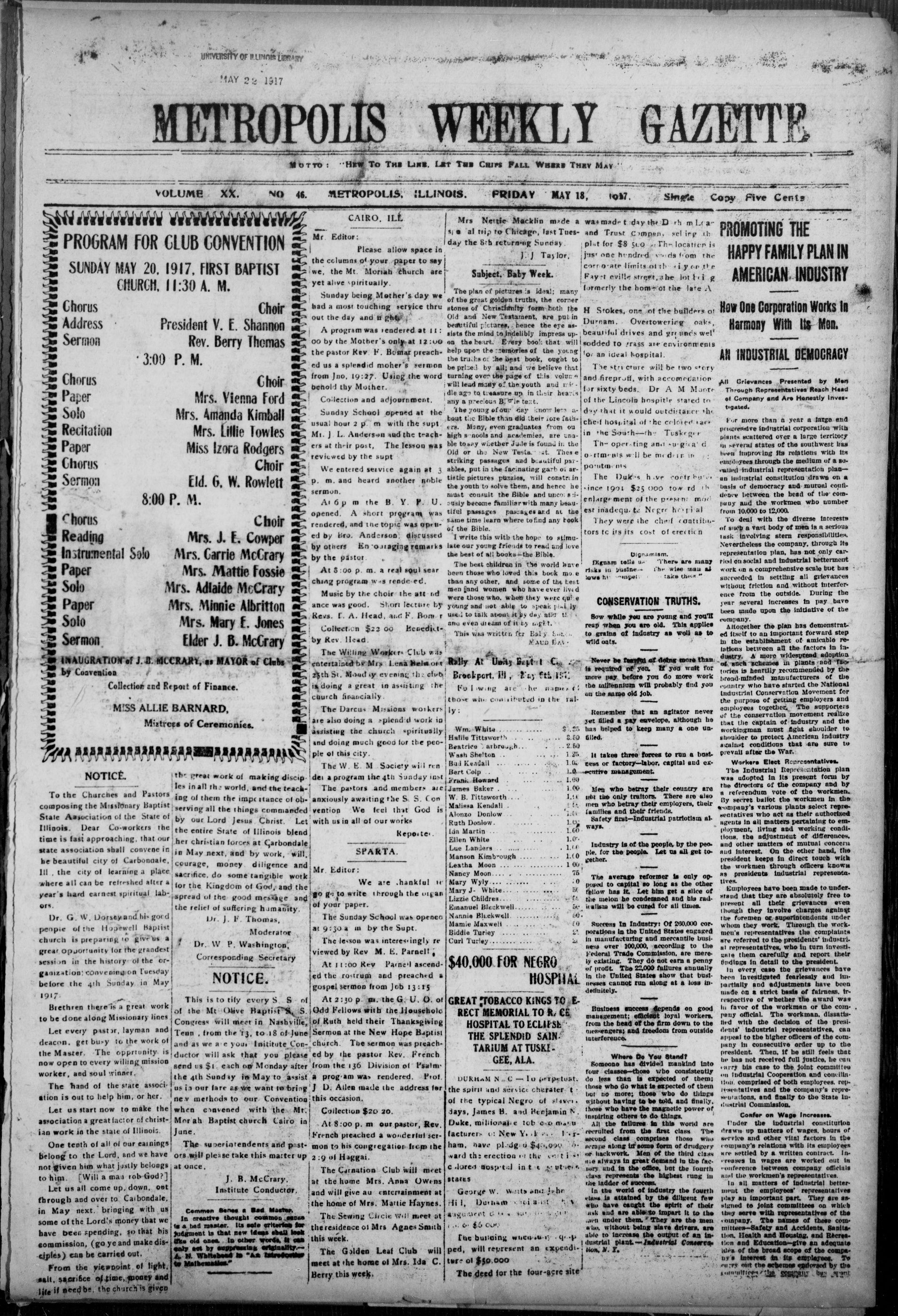
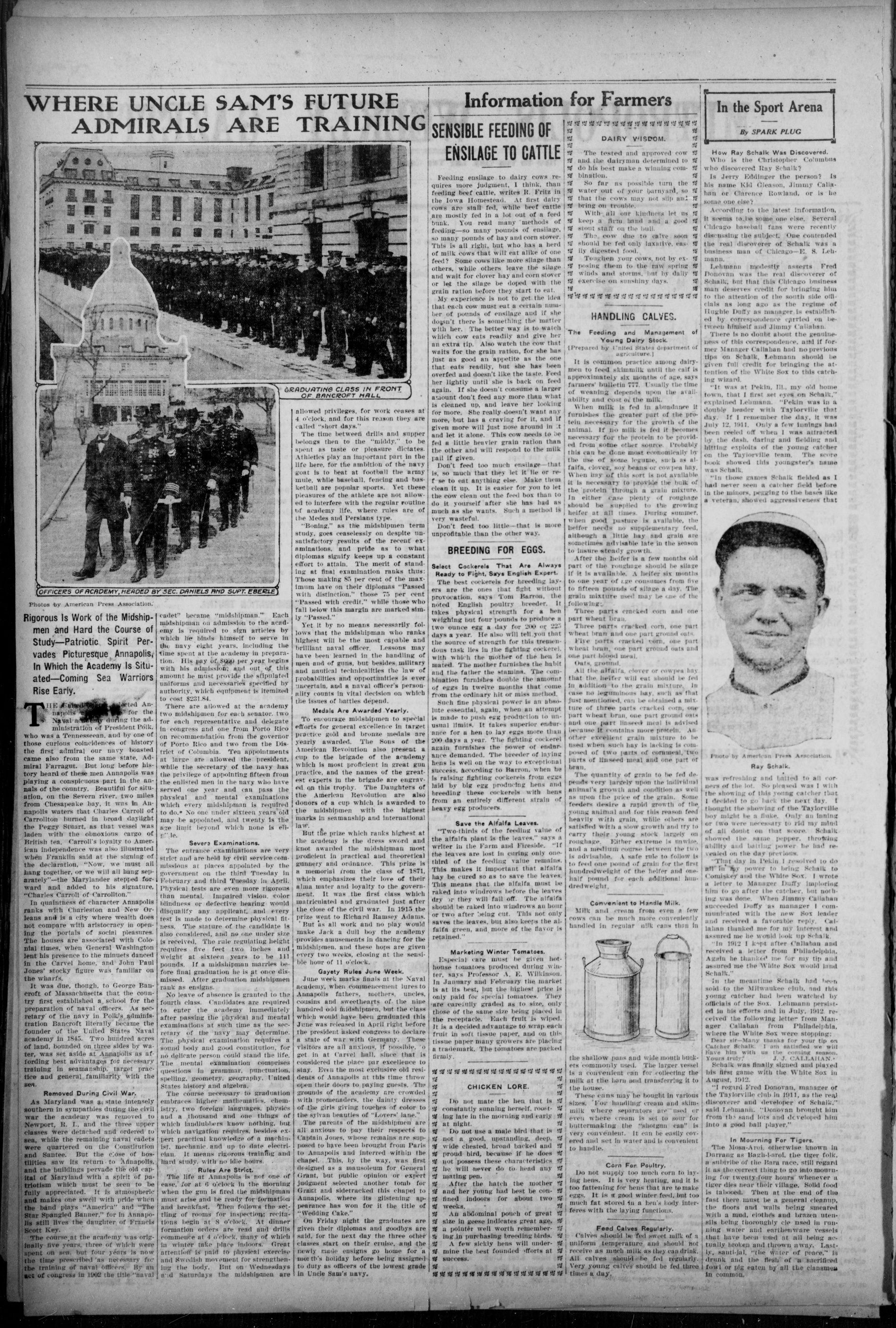
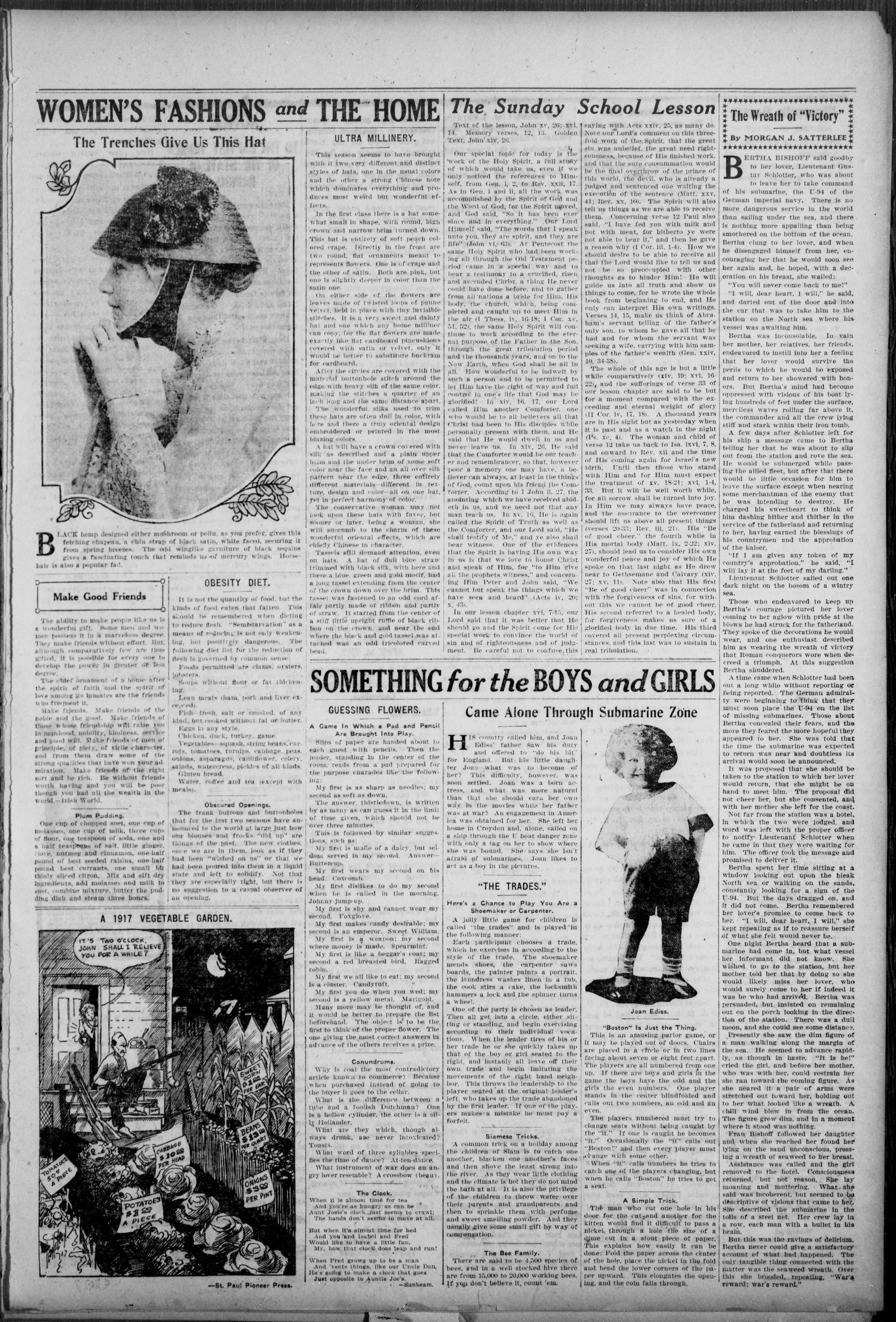
Page text (machine-generated)
METROPOL
VOLUME XX. NO 46.
FOR CLUB CONVENTION
20, 1917, FIRST BAPTIST
BURCH, 11:30 A. M.
PROGRAM FOR CLUB CONVENTION
SUNDAY MAY 20, 1917, FIRST BAPTIST
CHURCH, 11:30 A. M.
Chorus Choir
Address President V. E. Shannon
Sermon Rev. Berry Thomas
3:00 P. M.
Eld. G. W. Rowlett
8:00 P. M.
J. B. MCCRARY, as MAYOR of Clubs on and Report of Finance.
ALLIE BARNARD,
Mistress of Ceremonies.
INAUGRATION of J. B. MCCRARY, as MAYOR of Clubs
---
Dr. J. F. Thomas,
Moderator
Dr. W. P. Washington,
Corresponding Secretary
is given
Chorus
Paper
Solo
Recitation
Paper
Chorus
Sermon
Chorus
Reading
Instrumental Solo
Paper
Solo
Paper
Solo
Sermon
INAUGRATION of J. B. MCC
by Convention
Collection and R
MISS ALLIE
Mistre
NOTICE.
To the Churches and Pastors composing the Missionary Baptist State Association of the State of Illinois. Dear Co-workers the time is fast approaching, that our state association shall convene in the beautiful city of Carbonnale, Ill. the city of learning a place where all can be refreshed after a year's hard earnest spiritual labors.
Dr. G. W. Dorsey and his good people of the Hopewell Baptist church is preparing to give us a great opportunity for the grandest session in the history of the organization; convening on Tuesday before the 4th Sunday in May 1917.
Brethren there is a great work to be done along Missionary lines
Let every pastor, layman and deacon, get busy to the work of the Master. The opprtunity is now open to every willing mission worker, and soul winner.
The hand of the state association is out to help him, or her.
Let us start now to make the association a great factor of christian work in the state of Illinois.
One tenth of all of our earnings belong to the Lord, and we have not given him what justly belongs to him. [Will a man rob God?]
Let us all come up, down, out through and over to Calbondale, in May next, bringing with us some of the Lord's money that we have been spending, so that his commission, (go ye and make disciples) can be carried out.
From the viewpoint of light, salt, sacrifice of time, money and life if need be, the church is given
METROPOLIS WEEKLY GAZETTE
MAY 22 1917
Choir
Mrs. Vienna Ford
Mrs. Amanda Kimball
Mrs. Lillie Towles
Miss Izora Rodgers
Choir
Choir
Mrs. J. E. Cowper
Mrs. Carrie McCrary
Mrs. Mattie Fossie
Mrs. Adlaide McCrary
Mrs. Minnie Albritton
Mrs. Mary E. Jones
Elder J. B. McCrary
the great work of making disciples in all the world, and the teaching of them the importance of observing all the things commanded by our Lord Jesus Christ. Let the entire State of Illinois blend her christian forces at Garbondale in May next, and by work, will, courage, money, diligence and sacrifice, do some tangible work for the Kingdom of God, and the spread of the good message and the relief of suffering humanity.
NOTICE.
This is to tify every S. S. of of the Mt. Olive Baptist S. S. Congress will meet in Nashville, Tenn. from the 13, to 18 of June and as we are your Institute Conductor will ask that you please send us $1. each on Monday after the 4th Sunday in May to assist us in our fare as we want to bring new methods to our Convention when convened with the Mt. Morah Baptist church Cairo in June.
The superintendents and pastors will please take this matter up at once.
Common Genes a Bad Master.
In creative thought common sense is a bad master. Its sole criterion for judgment is that new ideas shall look like old ones. In other words, it can only act by suppressing originality.—A. N. Whitehead in "An Introduction to Malformation."
MOTTO : HEW TO THE LINE. LET THE CHIPS FALL WHERE THEY MAY.
Please allow space in the columns of your paper to say we, the Mt. Moriah church are yet alive spiritually.
Sunday being Mother's day we had a most touching service thru out the day and night.
A program was rendered at 11:00 by the Mother's only at 12:00 the pastor Rev. F. Bomar preached us a splendid mother's sermon from Jno, 19:27. Using the word benold thy Mother.
Collection and adjournment.
Sunday School opened at the usual hour 2 p. m with the supt. Mt. J. L. Anderson and the teachers at their post. The lesson was reviewed by the supt.
We entered service again at 3 p. m. and heard another noble sermon.
At 6 p.m the B. Y. P. U. opened. A short program was rendered, and the topic was opened by Bro. Anderson, discussed by others. Encouraging remarks by the pastor.
At 8:00 p.m. a real soul searching program was rendered.
Music by the choir the attendance was good. Short lecture by Revs. F. A. Head, and F. Bomer.
Collection $22.00 Benedict-by Rev. Head.
The Willing Workers Club was entertained by Mrs. Lena Belmort 25th St. Monday evening the club is doing a great in assisting the church financially.
The Dareus Missions workers are also doing a splendid work in assisting the church spiritually and doing much good for the people of this city.
SPARTA
Mr. Editor:
We are thankful to go to write through the organ of your paper.
The Sunday School was opened at 9:30 a.m by the Supt.
The lesson was interestingly reviewed by Rev M. E. Parnell.
At 11:00 Rev Parnell ascended the rostrum and preached a gospel sermon from Job 13:15.
At 2:30 p. m. the G. U. O. of Odd Fellows with the Household of Ruth held their Thanksgiving Sermon at the New Hope Baptist church. The sermon was preached by the pastor Rev. French from the 136 Division of Psalm a program was rendered. Prof. J D. Allen made the address for this occasion.
Collection $20 20.
At 8:00 p. m our pastor, Rev. French preached a wonderful sermon to his congregation from the 2:9 of Haggai.
The Carnation Club will meet at the home Mrs. Anna Owens and will give au entertainment at the home of Mrs. Martie Haynes.
The Sewing Circle will meet at the residence of Mrs Agnes Smith this week.
The Golden Leaf Club will meet at the home of Mrs. Ida C. Berry this week.
Mrs Nettle Macklin made a
al trip to Chicago, last Tuesday
the 8th returning Sunday.
Subject. Baby Week.
The plan of pictures is ideal; many of the great golden truths, the corner stones of Christianity form both the Old and New Testament, are put in beautiful pictures, hence the eye assists the mind to indelibly impress upon the heart. Every book that will help upon the memories of the young the truths of the best book, ought to be pitted by all; and we believe that turning over the page of this volume will lead many of the youth and middle age to treasure up in their hearts any a precious Bible text.
The young of our day know less about the Bible than did their fathers. Many, even graduates from our high schools and academies, are unable to say whether Jude is found in the Old or the New Testament. These striking passages and beautiful parables, put in the fascinating garb of artistic pictures puzzles, will constrain the youth to solve them, and hence he must consult the Bible and unconsciously become familiar with many beautiful passages passages and at the same time learn where to find any book of the Bible.
I write this with the hope to stimulate our young friends to read and love the best of all books—the Bible.
The best children in the world have been those who loved this book more than any other, and some of the best men and women who have ever lived were those who, when they were quite young and not able to speak properly used to talk about it by day after the ano even dream of it by night.
This was written for Bally Sons.
MAUD DAV.
Rally At Unity Baptist C.
Brookport, Ill., May 6th, 1851.
Following are the names of those who contributed in the rally:
Wm. White $1.25
Hallie Tittsworth 3.50
Beatrice arbrough 2.50
Wash Shelton 1.25
Bul Kendall 1.05
Bert Colp 1.01
Frank Howard 1.00
James Baker 1.00
W. B. Tittsworth 1.00
Malissa Kendall 1.00
Alonzo Donlow 1.00
Ruth Donlow 1.00
Ida Martin 1.00
Ellen White 1.00
Lue Landers 1.00
Manson Kimbrough 1.00
Leatha Moon 1.00
Nancy Moon 75
Mary Wyly 40
Mary J. White 50
Lizzie Childres 50
Emanuel Blackwell 50
Nannie Blackwell 50
Mamie Maxwell 60
Biddie Turley 25
Curl Turley 25
$40,000 FOR NEGRO HOSPAL
GREAT TOBACCO KINGS TO ERECT MEMORIAL TO R. CE HOSPITAL TO ECLIFSE THE SPLENDID SAIN TARIUM AT TUSKL-
GEE, ALA.
DURHAM N. C. — To perpetuate the spirit and service character of the typical Negro of slave days, James B. and Benjamin N. Duke, millionaire tobacco manufacturers of New York. Durham, have plunged $40,000 toward the erection of the centric colored hospital in the southern states.
George W. Worts and John Hill, Durham solicitor, argument of $6,000.
The building when built equipped, will represent an expenditure of $50,000.
The deed for the four-acre site
was made today the D. rhm Lcarn and Trust Compan, seling the plat for $8 500. The location is just one hundred yards from the corporate limits of the city on the Fayet eville street, the lot being formerly the home of the late A.
H Stokes, one of the builders of Durham. Overtowering oaks, beautiful drives and grounds well sodded to grass are environments for an ideal hospital.
The structure will be two story and fireproof, with accommodation for sixty beds. Dr A M Moore of the Lincoln hospitie stated today that it would outdistance the chief hospital of the colored face in the South—the Tuskegee.
The operating and surgical departments will be modern in pointments.
The Duke's have contributed since 1901 $25 000 toward the enlargement of the present modest inadequate Negro hospital They were the chief contributors to its its cost of erection
Dignam tells us "There are many risks in business. The wise man as lows in compel take these."
CONSERVATION TRUTHS.
Sow while you are young and you'll read when you are old. This applies to grains of industry as well as to wild outs.
Never be fearful of doing more than is required of you. If you wait for more pay before you do more work the millennium will probably find you on the same old job.
Remember that an agitator never yet filled a pay envelope, although he has helped to keep many a one unfiled.
It takes three forces to run a business or factory—labor, capital and executive management.
Men who betray their country are not the only traitors. There are also men who betray their employers, their families and their friends.
Safety first—Industrial patriotism always.
Industry is of the people, by the people, for the people. Let us all get together.
The average reformer is only opposed to capital so long as the other fellow has it. Let him get a slice of the melon he condemned and his radicalism will be cured for all times.
Success In Industry: Of 260,000 corporations in the United States engaged in manufacturing and mercantile business over 100,000, according to the Federal Trade Commission, are merely existing. They do not earn a penny of profit. The 22,000 failures annually in the United States show that businesses cannot run along at a loss indefinitely.
Business success depends on good management; efficient loyal workers, from the head of the firm down to the messengers; and freedom from outside interference.
Where Do You Stand?
Someone has divided mankind into four classes—those who consistently do less than is expected of them; those who do what is expected of them but no more; those who do things without having to be told, and finally, those who have the magnetic power of inspiring others to do things. All the failures in this world are recruited from the first class. The second class comprises those who scrupe along in some form of drudgery or backwork. Men of the third class are always in great demand in the factory and in the office, but the fourth class represents the highest rung in the ladder of success. In the world of industry the fourth class is attained by the diligent few who have caught the spirit of their task and are able to impart it to the men under them. They are the men who, without being slave drivers, are able to increase the output of an industrial plant. —Industrial Conservation N.Y.
---
ETTE
copy Five Cents
PROMOTING THE
HAPPY FAMILY PLAN IN
AMERICAN INDUSTRY
PLAN IN
INDUSTRY
How One Corporation Works In Harmony With Its Mon.
AN INDUSTRIAL DEMOCRACY
All Grievances Presented by Men Through Representatives Reach Head of Company and Are Honestly Investigated.
For more than a year a large and progressive industrial corporation with plants scattered over a large territory in several states of the southwest has been improving its relations with its employees through the medium of a so-called industrial representation plan—an industrial constitution drawn on a basis of democracy and mutual confidence between the head of the company and the workmen who number from 10,000 to 12,000.
To deal with the diverse interests of such a vast body of men is a serious task involving stern responsibilities. Nevertheless the company, through its representation plan, has not only carried on social and industrial betterment work on a comprehensive scale but has succeeded in settling all grievances without friction and without interference from the outside. During the year several increases in pay have been made upon the initiative of the company.
Allogether the plan has demonstrated itself to an important forward step in the establishment of amicable relations between all the factors in industry. A more widespread adoption of such schemes in plants and factories is heartily recommended by the broad-minded manufacturers of the country who have started the National Industrial Conservation Movement for the purpose of getting employers and employees together. The supporters of the conservation movement realize that the captain of industry and the workingman must fight shoulder to shoulder to protect American industry against conditions that are sure to prevail after the War.
Warkera Elect Representatives
The Industrial Representation plan was adopted in its present form by the directors of the company and by a referendum vote of the workmen. By secret ballot the workmen in the company's various plants select representatives who act as their authorized agents in all matters pertaining to employment, living and working conditions, the adjustment of differences, and other matters of mutual concern and interest. On the other hand, the president keeps in direct touch with the workmen through officers known as presidents industrial representatives. Employees have been made to understand that they are absolutely free to present all their grievances even though they involve charges against the foremen or superintendents under whom they work. Through the workmen's representatives the complaints are referred to the presidents' industrial representatives, who in turn investigate them carefully and report their findings in detail to the president.
In every case the grievances have been investigated fearlessly and impartially and adjustments have been made on a strict basis of fairness, irrespective of whether the award was in favor of the workman or the company official. The workman, dissatisfied with the decision of the presidents' industrial representatives, can appeal to the higher officers of the company in consecutive order up to the president. Then, if he still feels that he has not received full justice, he can carry his case to the joint committee on industrial Cooperation and conciliation, comprised of both employees, representatives and the company's representations, and finally to the State industrial Commission.
Confer on Wage Increases.
Under the industrial constitution drawn up matters of wages, hours of service and other vital factors in the company's relations with its employees are settled by a written contract. Increases in wages are worked out in conference between company officials and the workmen's representatives. In all matters of industrial betterment the employees' representatives play an important part. They are assigned to joint committees on which they serve with representatives of the company. The names of these committees—Safety and Accidents, Sanitation, Health and Housing, and Recreation and Education—give an adequate idea of the broad scope of the company's interest in its employees. To carry out the schemes enforced by the committees the company has spent
WHERE UNCLE $AM’S FUTURE :
ADMIRALS ARE TRAINING
ee ies a £
(ies se ca ee ;
| yee os ‘ia oe “B.
| oie
> ht AS poe — ee
eet ae aay p
ae we 2 ts
| Sie te: 2 ee
a A forse meni i ei rd e me re we ; :
ON : Mat cee é i suey tia
ety er pee a = ee Ee ll "
apt Bache ect i oe ae
| oy Cres ae Smee |
ee a ca ees
4 feo oe sy oy
e a: satis Tags tar ete ciel
+ (aes
/] eee See
| aa
ih 2 pe é 4
f- a L ai et
\ te Vere "CO
Ae pi ‘4 alll S
(QFFICERS OF ACADEMY, HEADED BY SEC. DANIELS AND SUPT. EBERLE
Photos by American Press Association.
Rigorous 1s Work of the Midship-|©alet” became “midshipman. 1
midshipman on admission to the 8
men and Hard the Course of}emy is required to sign articles
& inti sn which We binds himself to serve
Study—Patriotic. Spirit Per-| G0 savy eight years, including
vades Picturesque, Annapolisy|time spent at the academy in pret
; ‘ 4 { tion. His pay OSM) per year be
In Which the Academy Is Situ-| yi, nis Mimisclone ant out at
ated—Coming Sea Warriors] snount he must provide the sfipol
uniforms and necessaried specifies
Rise Early. ~ authority, whieh equipment is item
Vto cost $231.84
HE. fed An-| ‘Phere are allowed at the acad
E anol for the] two midshipmen for each senator
Naval Maveing the ad-| go. coach representative and dele
ee oe
“Who was a Tennessean, and by one of
‘those curious coincidences of history
‘the first admira! our navy boasted
‘eame also from the same State, Ad-
‘miral Farragut. But long before his-
heard of these men Annapolis was
ying a conspicuous part in the an-
pals of the country. Beautiful for situ-
, on the Severn river, two miles
Chesapeake bay, it was in An-
“Rapolis waters that Charles Carroll of
errotteon burned in broad daylight
“the Peggy Smart, as that vessel was
aden witlr the obnoxious cargo of
British ten, Carroll's loyalty to Amer.
fean independence was also illustrated
When Franklin said at the signing of
‘the declaration, “Now, we must ail
hang together, or we will all hang sep-
”. Marylander stepped for-
and added to his signature,
“Charles Carrol! of Carrollton.”
~ In quaintness of character Annapolis
iks with Charleston and New Or-
and is a city where wealth does
“hot compare with aristocracy in open-
the portals of social pleasures
houses are associated with Colo-
‘pial times, when General Washington
‘his presence to the minuets danced
“the Carvel home, and John Paul
stocky figure was familiar on
“the wharfs.
"It was due, though, to George Ban-
of Massachusetts that the coun-
try first established a. school for the
: tion of nayal officers. As sec-
gtary of the navy in Polk's admints-
“Mration Bancroft literally became the
Founder of the United States Naval
eademy in 1845. Two hundred acres
“of land, bounded on three sides by wa
“ter, was set aside at Annapolis as af.
“ording best advantages for necessary
“fraining in seamanship, target prac:
tice and genera}, familiarity with the
Removed During Civil War,
As Maryland was 4; state intensely
guthern in sympathies during the civil
@r the academy was reuoved to
New! R, I. and the three upper
isses Were detached and ordered to
j, While the remaining naval cadets
fe quartered on the Constitution
Santee. But the cose of hos.
fties saw its return to ‘Afnapolis,
Lt! jptitinss pervade tite old cap-
ol land with a spirit of pa-
sm which must be seen to be
“appreciated. It is atmospheric
aakes one swell with pride when
“band plays “America” and “Phe
Spangled Banner,” for n Annapo-
MM lives the daughter, of Francis
course.at the academy was orig-
Ave years, three of Which were
oh wen, Wut four yéars is now
rexcribed ‘ax necessary for
ng of naval Officdrs. By an
fess in 1002 the title “naval
ee rr a ee ne
cadet” became “midshipman.” Each
midshipman on admission to the aead-
emy is required to sign articles by
which He binds himself to serve in
the navy ‘eight years, including the
time spent at the academy in prepara
tion. His pay Of. Suyy per year begins
with his Suen Sats af thls
amount he mist provide the séipulated
uniforms and necessarie’ specified by
authority, whieh equipment is Itemized
to cost $231.84.
‘Phere are allowed at the academy
two midshipmen fyr each senator. two
for each representative and delegate
fn congress and one from Porto Rico
‘on recommendation from the governor
of Porto Rico and two from the Dis-
trict of Columbia. ‘Ten appointments
at large are allowed the: president,
while the secretary of the navy has
the privilege of appointing fifteen from
the enlisted men in the navy who have
served one year and can pass the
physieal and mental examinations
which every midshipman is required
to do.* No one under sixteen years 61d
may be appointed, and twenty 4s the
size limit beyond which none is ell
ple.
Severs Examinations.
‘The entrance examinations are very
strict and are held by elvil service com-
missions at places appointed by the
government on the thint ‘Toesday in
February and third ‘Tuesday in, April,
Physical tests are even more rigorous
than mental, Impaired vision, color
Wlindness or defective hearing: would
Aisqualify any applicant. and. every
test is made to determine physical fit-
ness, ‘The stature of the candidate Is
also considered, and no one under size
is received, ‘The rule regulating height
requires. five feet two inches and
weight at sixteen years to be 111
pounds, If a midshipman marries be-
fore final graduation he is at once dis-
missed. After graduation midshipmen
‘rank as ensigns. i;
No leave of absence is granted to the
fourth class. Candidates are required
to enter the academy immediately
after passing the physical and mental
examinations at stich time as the sec-
retury of the navy may determine.
The physical examination requires a
‘sound body and good constitution, for
‘no delicate person could stand the life,
‘The mental examination comprises
questions in grammar, punctuation,
spelling, geometry. geography, United
States history and algebra,
‘The course necessary to graduation
embraces higher mathematics, chem-
istry, two foreign languages. physies
aud a thousand and one things of
which lindlubbers know nothing. but
which navigation requires, besides ex-
pert practical knowledge of a machin-
ist. mechanic, and up to date electri-
clan. It means rigorous trainfig and
Tard study. with ne idie howrs.
; . Rules Are Strict.
‘Phe life at Annapolis ix not one of
ease, for ut 6 o'elock In the morning
when the gun is fired the midshipman
imnst arise and be ready for formation
and breakfast, ‘Then follows the set-
tling of rooms! for inspection; recita-
tions hegin at 8 o'clock, At dinner
formation orders ate read and drills
commente at 4 o'clock, thany of whieh
in winter take place indoors: Great
attentiof 18 pald to physical exercise
and Swedish movement for strengthen-
jug the body. But on’ Wednesdays
aid Saturdays the midshipmen are
GRADUATING CLASS IN FRONT
OF BANCROFT HALL
allowed privileges, for work ceases at
4 o'clock, and for this reason they are
called “short days.”
‘The time between drills and supper
belongs then to the “middy,” to be
spent as taste or pleasure dictates
Athietles play an important part in the
life here, for the ambition of thé navy
goat 1s to heat at football the urmy
mule, while baseball, fencing and bas-
ketball are popular sports, Yet these
pleasures of the athlete are not allow-
ed to interfere with the regular routine
wf academy life, where rules are of
the Medes and Persians type.
“Honing,” as the midsbipmen term
study, goes ceaselessly on despite un-
satisfactory results of the recent’ ex-
aminations, ‘and pride as to what
diplomas signify keeps up a constant
effort to attain, ‘The merit of stand-
ing at final examination ranks thus:
‘Those making S5 per cent of the max-
imum have on thelr diplomas “Passed
with distinction.” those 75 per cent
“Passed with credit.” while those who
fall below this margin are marked sim-
ly “Passed.”
Yet it by no means necessarily fol-
lows that the midshipman who ranks
highest will be the most capable and
brilliant naval officer, Lessons may
have been learned in the handling of
men and of guns, but besides, military
and nantical technicalities the law of
Probabilities and opportunities is ever
sincertain, and a naval officer's person-
ality counts in vital dectsion on which
the issues of battles depend.
Medale Are Awarded Yearly.
"To encourage midsbipmen to special
efforts for general excellence in target
practice gold and bronze medals are
|yearly awarded, ‘The Sons of the
‘American Revolution also present a
cup to the brigade of the academy
which 1s most proficient In great gun
practice, and the names of the great-
est experts in the brigade are engray-
‘ed on this trophy. The Daughters of
the Amerlean Revolution are also
donors of a cup which is awarded to
the mldshipmen with the highest
marks In seamanship and international
law.
| But the prize which ranks highest at
| the academy js the dress sword and
[knot awarded the midshipman most
| proficient in practical aud. theoretieat
/gunnery and ordnance. ‘This prize is
|x memorial from the class of 1871,
| which emphasizes their love of their
| alma mater and loyalty to the govern-
| ment. It was the first class which
| matriculated and graduated just after
the close of the eivil war. In 1915 the
prize went to Richard Ramsey Adams.
“But ts all work and no play would
| make Jack a dull boy the academy
| provides amusements in dancing for the
midshipmen, and these hops are given
every two weeks, closing at the sensl-
ble hour of 11 o'clock,
Gayety Rules June Week.
June week marks finals at the Naval
academy, when commencement lures to
Annapolis fathers, mothers, uncles,
cousins and sweethearts of. the nine
hundred odd fhidshipmen, but the class
which would have been gradnated this
June was released In April right before
the president asked congress to declare
a state of war with Germany. ‘These
visitors are all anxious, if possible. ‘0
get in at Carvel ball, since that is
considered the place par exeelience to
stay. Even the most exelusive old resi-
dents of Annapolis at this time throw
open their doors to paying guests, ‘Phe
grounds of the academy are crowded
with promenaders, the dainty dresses
of the girls giving touches of eolor to
the sylvan beauties of “Lovers lane.”
The parents of the midshipmen are
all anxious to pay their respects to
Captain Jones, whose remains are sup-
posed to have been brought from Paris
to Annapolis and interred within the
chapel. ‘This, by the way, was first
designed ay a mausoleum for General
Grant, but public opinion or expert
Judgment selected another tomb for
Grant and sidetracked this chapel to
Annapolis, where its glistening ap-
pearance has won for it the title of
“Wedding Cake.”
‘On Friday night the graduates are
| given their diplomas and goodbys are
sald, for the next day the three other
classes start on their ernise, and the
paaly nce, ontlan. 5a. hake for u
‘month's holiday before being assigned:
to duty as officers of the lowest grade
in ‘Unde ‘Sam's uavy.
Te Oe abd, Hk svi
Information for Fi ‘armers
SENSIBLE FEEDING OF |:""*""""es"<"""
ENSILAGE TO GATTLE 2 2% tester sna apis
Feeding ensilage to dairy cows re-
quires more Judgment, 1 think, than
feeding beef cattle, writes K. Fritz in
the lowa Homestead, At first dairy
cows are stall fed, while beef cattle
ave mostly fed in a lot out of a feed
bunk, You read many “methods of
feeding—so many pounds of ensilage,
so many pounds of bay and corn stover.
This is all right, but who has a herd
of milk cows that wilt eat alike of one
feed? Some cows like more silage than
others, while others leaye the silage
and wait for clover hay and corn stover
or let the silage be doped with the
grain ration before they start to eat
My experience Is not to get the idea
that exch cow must eat @ certain num
ber of pounds of ensilage and it she
dogsn't there Is something the matter
with her, ‘The better way is to.wateh
which cow eats readily and give her
an extra tip. Also wateh the cow that
waits for the grain ration, for she has
Just @s good an appetite as the one
that eats readily, but she has been
overfed and doesn’t like the taste, Feed
her lightly until she is back on feed
again. If she doesn't consume a larger
amount don't feed any more than what
is cleaned up, and leave her looking
for more, She really doesn't want any
more, but bas a craving for it, and if
given more will just nose around in :t
and let it alone. ‘This cow needs to de
fed a little heavier grain ration than
the other and will respond to the milk
pail if given
Don't feed too much ensilage—that
is, so much thut they let it He or re
f'se to eit anything else. Make them
clean it up. It is easier for you to let
the cow clean out the feed box than to
do it yourself after she has bad as
much as she wants, Such a method 18
very wasteful,
Don't feed too little—that is more
unprofitable than the other way.
BREEDING FOR EGGS.
Select Cockerels That Are Always
Ready to Fight, Says English Expert.
‘The best cockerels for breeding lay-
ers are the ones that fight without
provocation, says ‘Tom Barron, the
noted English poultry breeder, It
takes physical strength for a hen
weighing but four pounds to produce «
two ounce egg a day for 200 or 225
days a year. He alxo wil tell.you that
the source of strength for this tremen-
dous task Iles Iu the fighting cockerel,
with which the mother of the ben I
mated. The mother furnishes the habit
aud the father the stamina. The com-
Dination furnishes double the amonnt
of eggs In twelve months that come
from the ordinary hit or miss method,
Such fine physical power ix an ubso-
lute essential, again, when an attempt
is made to push egg production to un-
usual limits, It takes superior endur-
ance for a hen to lay eggs more than
200, days a year. The fighting cockerel
again furnishes the power of endnr-
ance demanded. ‘The breeder of laying
hens is well on the way to exceptional
success, according to Barron, when be
fs raising fighting corkereis from exis
laid by big egg producing hens and
breeding these cockerels with bens
from an entirely different strain of
heavy egg producers
Deen the Aibiiie tenes,
“Two-thirds of the feeding value of
the alfalfa plant is the leaves,” says a
writer iu the Farm aud Fireside, “If
the leaves are lost in curing only one-
third of the feeding value remains.
‘This makes it important that alfalfa
hay be cured so as to save the leaves.
‘This means that the alfalfa must be
raked into windrows before the leaves
dry or they will fall off. The alfaifa
should be raked into windrows an hour
or two after deing cut. This not only
saves the leaves, but also keeps the al-
falfa green, and more of the Mayor Is
retained.”
Marketing Winter Tomatoes.
Especia) care must be given hot-
house tomatoes produced during win-
ter, says Professor 4, E, Wilkinson.
In Janwary and February the market
Is at Its best, but the highest price is
only paid for special tomatoes. They
rare careinily graded as to size, only
those of the same size being placed in
the receptacle. Bach frult is wiped.
It is a decided advantage to wrap each
fruit in soft tissue paper, and on this
tissue paper Many growers are placing
# trademark, ‘The tomatoes are packed
firmly.
* CHICKEN LORE. a
% — ES
% Do not mate the hen that is %
% constantly sunning herself, roost- 4
% ing late in the morning and early 4
“% at night *
% ~~ Do not use a male bird that ix %
%$ not a good, upstanding, deep, %
% wide chested, broad backed and ‘%
% proud bird, because if he does %
% not possess these characteristics %
% he will never do to head any %
“% mating pen, 3 wi
% After the hatch the mother %
# and her young had best be con-
% fined indoors for about two 4
% weeks, * ”
“% Af abdominal pouch of great %
% size in geese indicates great age, %
% a polntér well worth remember- %
% ing in purchasing breeding birds. %
#2 A few sickly hens will under- 4
4 mine the best founded forts at %
% success. ”
ra i ‘ cult aot
ag one ag os vag cag ae ig ata ae eae ae a
Sot etn ee ere ae
ne
Me DAIRY wistom. 8
us Pr "
‘The tested and approved cow %
¥ and the dairyman determined 10 #
¥ do his best maken winning com- 1%
%€ bination. %
So far as possible tam the
m water out ofsour barnvaml,no,
% that the cows may not slip and i
“bring on trouble, c
“With all ont Kindness tet ty 1
keep a firme band and a good 1%
Mf stout staf on the bull M8
% Tho, cow due to enlve soon %
4 should be fed only laxative, ens:
lly digested food. "
4% — Toughen your cows, not by ex: M%
“ posing them to the faw spring #
t¢ winds and storms. bnt by daily #
exercise on sunshiny days. E
f ”
me ME OE a ne rr eo
HANDLING CALVES.
The Feeding and Management of
Yeung Dairy Steck.
(Prepared by United States department of
agriculture}
It is common practice among dairy-
men to feed skimmilk until the calf is
approximately six months of age, says
farmers’ bulletin 777, Usually the time
of weaning depends upon the avail-
ability and cost o¢ the milk.
When milk is fed in abundanee it
furnishes the greater part of the pro-
tein necessary for the growth of the
animal. If no milk is fed it becomes
necessary for the protein to be provid-
ed from sote other source. Urobably
this can be done most economically by
the use of some legume, sich as al-
falfa, clover, soy beans or cowpea hay,
When ity of this sort ix not available
it ts necessary to prowile the bulk of
the ‘protein through a grain mixture,
In either Case plenty of roughage
should be supplied to the growing
heifer at all times. During summer,
when good pasture ix available, the
hetfer needs no supplementary teed,
although @ Jittle hay and grain are
sometimes advisable late in the season
to lustre steady growth,
After the heifer is a few months old
part of the roughage should be silage
A it fs avalinble, A heifer six months
to one year of ize cousames from five
‘to fifteen pounds of silage a day, The
grain mixttire used may be one of the
following
‘Three parts cracked cor ani one
part wheat Brau.
‘Three parts cracked corn, one part
wheat bran and one part ground oats
Five patts craked wen, ove part
Wheat bran, oue part groud outs and
one part blood meal,
Oats, grotind.
All the alfalfa, clover or cowpea bay
that the heifer will eat should be fed
tn, addition “to the grain mixture, In
case no legiminows hay, suet as that
fust mentioned, can be obtained a mix
ture of three parts cracked com, one
part wheat bran, one part ground onte
aud one part linseed meal ts advised
heranseiiligontaine moreipiaisit: "an
other exelent grain mixture to be
used when such hay Is lacking 1s com-
posed of two parts of comment, “two
parts of Hnseed meal and one part ot
bran,
‘The quantity of grain to he fed de.
pends very largely upon the individual
animal's growth and condition ax well
as upon the price of the grain, Some
feeders desire a rapid growth of the
young animal and for this reason feet
heavily with grain, whille ethers are
satisfied with a slow growth and tty to
carry theje. young stock largely on
roughage. Bither extreme is nnwise,
and a mediurh course between the two
is advisable, A safe rule ta follow ts
to feed one pound of grain for the first
hundredwetht of the heifer and one-
haif pound for each additional tin:
dredweight,
Convenient to Handle Milk.
Milk and cream from even a few
cows can be much more conveniently
handled in regular ollk cans thon fn
id li
| k
b A bg
ct i Iie
the shallow pans and wide mouth buck-
etx commonly used. ‘The larger vessel
is a convenient ean for collecting the
milk at the barn aud transferring it to
the Louse. s
‘These cans may be houghit in various
sizes. “For handling’ cream and skim-
milk where separators are” used or
even where cream Is set to sour for
Duttermaking the “shotgnn an” is
very convenlent. It can be easily cov-
ered anil set fn water and is convenient
to handle,
Carn Bas Bauléry.
Do not supply too much corn to lay-
ing hens. It is very heating, and it ts
too fattening for hens that are tomake
eggs. It is # gooil winter feed, Int too
much fat stored 4n a hen's body inter-
feres with the laying functions,
Feed Cal larly.
cared agit ail ots
uniform temperarure and should’ not
receive a8 much milks as they can drink,
All. calves nines fed ‘Sets
Very young calves’ should be fed three
timesgaday, >
In the Sport Arena
‘By dade PLUG
How Ray Schalk Was Discovered.
Who is the Christopher Columbns
who discovered Ray Schalk?
Is Jerry Eddinger the person? Is
his name Kid Gleason, Jimmy Calia-
han or Clarence Rowland, or is he
some one clsey
According to the Jatest information,
it Seems toe some one else, Several
Chicago baseball fans were recently
discussing the subject, One contended
the real discoverer of Sehalk was a
business man of Chieago—E. 8. Leh-
mann, ,
Lehmann modestly asserts Fred
Donovan was the real discoverer of
Schalk, bnt that this Chicago business
mat deserves cvedit for bringing Wim
to the attention of the south side offi.
clals as long ago as the regime of
Hughie Duffy as manager, ts establist-
ed by correspondence carried on be-
treeen hitiself and Jimmy Caliaban.
‘There ts no doubt about the genuine
ness of this correspondence. artd if for-
mer Manager Callahan had no previous
tips on Schalk, Lehmann should be
given full credit for bringing the at-
tention of the White Sox to this eatch-
ing wizard,
“It was at Pekin, TL, my old home
town, that [ first set eyeg.on Schmit,”
explained Leimann. “Pekin was tn a
double header with Taylorvitie that
day. If 1 remember the day, it was
duly 12, 1911, Only @ few tunings bad
heen reeled off when 1 was attracted
by the dash, daring and flelding and
hitting exploits of the young eateher
on the Taylorville team. ‘The score
hook showed this youngsters name
was Sebalk,
“in those games Schalk fekled as I
had never seen a catcher field before
in the minors, pegging to the bases like
@ veteran, showed aggressivences that
ee Se
fur, a
Nice” 5
pt ae
was refreshing and batted to all cor-
ners of the lot. So pleased was I with
the showing of this young catcher that
1 decked to go back the next day, f
thought the showing of the Taylorville
boy might be a fluke, Only ao toning
or (wo were necessary to rid my mind
of ali doubt on that score Schalk
showed the same pepper. throtdag
ability and batting power be had re
vealed on the day previous.
~That day in Vekin | resolved to do
ai Tn "Wyy power to bring Schalk to
Comiskey and the White Sox, | wrote
a letter to Manager Duffy imploring
tim to go after the cateher, but noth.
ing was done, When Jimmy Callahan
succeeded Duffy as manager | com-
munteated with the new Sox leader
und received a favorable reply, Cal-
Jalan thanked me for my Interest and
assured me he would look up Schalk,
“in 1912 1 kept after Calaban and
received a letter from Philadelphia.
Again he thanke? me for my tip and
assured me the Wiite Sox would bend
Schalk.”
in the meantime Schalk had heen
sold to the Milwaukee eiob, and this
young catcher had been watebed by
officials of the Sex. Lehmann persivt-
e@ jn his efforts and in July, 1912 res
ceived the following letter from Man-
ager Callaban from Philadelphia,
where the White Sox were stopping:
Dear si¢—Many thanks for your tip on
Catcher Schalk. Tom satiated we’ will
Have him with us the coming season.
Yours truly? J. 3. CALLATAN.*
Schalk was finally signed and played
bis fitst game with the White Sox in
August, 1912.
“I regard Fred Donovan, manager of
the Taylorville club in 1911, as the reat
discoverer and developer of Schaiic.”
said Lehmann, “Douovan brought him
from ths sand lots and developed hint
into a goed ball player,”
In Mourning For Tigers.
‘The Mosa-Arei, otherwise known in
Darrang as Bagh-Larol, the tiger folk,
a subtribe of the Bara race, still regard
It as the correct thing to go into mourn-
ing for twenty four hours whenever a
tiger dies near their village. Solid food
is tabooed. Then at the end of the
fast there must be a general cleanup,
the floors and walls being smeared
With a mud, clothes and brazen uten-
sils being thoroughly cle nsed in run-
ning water and earthenware vessels
that have been used ot all being ac-
tually broken and sigan aweay. Lan
Jy, santi-Jal, “the water of peace,” 19
drunk and the flesh’ of “a sacrificed
or vig eaten, by all the clansmen
fOEC* big. sptey, by si) the clan
WOMEN'S FASHIONS and THE HOME
B LACK hemp designed either mushroom or poli, as you prefer, gives this fetching chimpau, a chin strap of black satin, white faced, securing it from spring breezes. The old winglike garniture of black sequins gives a fascinating touch that reminds us of mercury wings. Horse-
Make Good Friends
The ability to make people like us is a wonderful gift. Some men and women possess it in a marvelous degree. They make friends without effort. But, although comparatively few are thus gifted, it is possible for every one to develop the power in greater or less degree.
The chief ornament of a home after the spirit of faith and the spirit of love among its inmates are the friends who frequent it.
Make friends. Make friends of the noble and the good. Make friends of those whose friendship will raise you in manhood, nobility, kindness, service and good will. Make friends of men of principle, of piety, of virtue character, and from them draw some of the strong qualities that have won your admiration. Make friends of the right sort and be rich. Be without friends worth having and you will be poor though you had all the wealth in the world—Irish World.
One cup of chopped suet, one cup of molasses, one cup of milk, three cups of flour, one teaspoon of soda, one and a half teaspoon of salt, little ginger, clove, nutmeg and cinnamon, one-half pound of best seeded raisins, one-half pound best currants, one small bit thinly sliced citron. Mix and soft dry ingredients, add molasses and milk to suet, combine mixture, butter the pudding dish and steam three hours.
A 1917 VEGETABLE GARDEN.
IT'S TWO O'CLOCK,
JOHN. SHALL I RELIEVE
YOU FOR A WHILE?
SWEET CORN
$1.00
PER EAR
TOMATOES
$0.50
A PIECE
CABBAGE
$1.00
PER HEAD
BEANS
$1.00
PER QUART
POTATOES
$0.50
A PIECE
ONIONS
$0.50
PER PINT
Plum Pudding.
OBESITY DIET.
It is not the quantity of food, but the kinds of food eaten that fatten. This should be remembered when dieting to reduce flesh. "Semstarvation" as a means of reducing is not only weakening, but positively dangerous. The following diet list for the reduction of flesh is governed by common sense: Foods permitted are clams, oysters, lobsters. Soups without flour or fat thickening. Lean meats diam, pork and liver exceeded. Fish-fresh, salt or smoked, of any kind, but cooked without fat or butter. Eggs in any style. Chicken, duck, turkey, game. Vegetables—squash, string beans, carrots, tomatoes, turnips, cabbage, peas, onions, asparagus, cannflower, celery, salads, watercress, pickles of all kinds. Gluten breed.
Water, coffee and tea (except with meals).
Obscured Openings
The trunk buttons and buttonholes that for the last two seasons have announced to the world at large just how our blouses and frocks "old up" are things of the past. The new clothes, once we are in them, look as if they had been "wished on us" or that we had been poured into them in a liquid state and left to solidify. Not that they are especially tight, but there is no suggestion to a casual observer of an opening.
SWEET CORN
$1.00
PER EAR
BEANS
$1.00
PER QUART
ONIONS
$3.00
PER PINT
—St. Paul Pioneer Press.
SOMETHING for the BOYS and GIRLS
ULTRA MILLINERY.
This season seems to have brought with it two very different and distinct styles of hats, one in the usual colors and the other a strong Chinese note which dominates everything and produces most weird but wonderful effects.
In the first class there is a hat somewhat small in shape, with round, high crown and narrow brim turned down. This hat is entirely of soft peach colored crape. Directly in the front are two round, flat ornaments meant to represent flowers. One is of crape and the other of satin. Both are pink, but one is slightly deeper in color than the satin one.
On either side of the flowers are leaves made of twisted loops of pane velvet, held in place with tiny invisible stitches. It is a very sweet and dainty bat and hat which any home milliner can copy, for the flat flowers are made exactly like flat cardboard pincushions covered with satin or velvet, only it would be better to substitute buckram for cardboard.
After the circles are covered with the material buttonhole stitch around the edge with heavy silk of the same color, the stitches make a quarter of an inch long and the same distance apart.
The wonderful silks are used to trim these hats are often dull in color, with here and there a truly oriental design embroidered or printed in the most blazing colors.
A hat will have a crown covered with silk as described and a plain upper brim and the under brim of some soft color near the face and an all over silk pattern near the edge, three entirely different materials different in texture, design and color—on one hat, yet in perfect harmony of color.
The conservative woman may not look upon these hats with favor, but sooner or later, being a woman, she will succumb to the charm of these wonderful oriental effects, which are chiefly Chinese in character.
Tassels still demand attention, even on hats. A bat of dull blue straw trimmed with black silk, with here and there a blue, green and gold motif, had a long tassel extending from the center of the crown down over the brim. This tassel was fastened to an odd cord affair partly made of ribbon and partly of straw. It started from the center of a stiff little upright rattle of black ribbon on the crown, and near the end where the black and gold tassel was attached was an odd tricolored carved bead.
GUESSING FLOWERS.
A Game In Which a Pad and Pencil Are Brought Into Play.
Slips of paper are handed about to each guest with pencils. Then the leader, standing in the center of the room, reads from a pad prepared for the purpose charades like the following:
My first is as sharp as needles; my second as soft as down.
The answer, thistledown, is written by as many as can guess it in the limit of time given, which should not be over three minutes.
This is followed by similar suggestions, such as:
My first is made of a dairy, but seldom served in my second. Answer—Buttercup.
My first wears my second on his head. Coxcomb.
My first dislikes to do my second when he is called in the morning. Johnny-jump-up.
My first is shy and cannot wear my second. Foxglove.
My first makes candy desirable; my second is an emperor. Sweet William.
My first is a weapon; my second where money is made. Spearmint.
My first is like a beggar's coat; my second a red breasted bird. Ragged robin.
My first we all like to eat; my second is a cluster. Candytuff.
My first you do when you wed; my second is a yellow metal. Marigold.
second is a yellow metal. Marygold.
Many more may be thought of, and
it would be better to prepare the list
beforehand. The object is to be the
first to think of the proper flower. The
one giving the most correct answers in
advance of the others receives a prize.
Conundrums.
Why is coal the most contradictory article known to commerce? Because when purchased instead of going to the buyer it goes to the cellar.
What is the difference between a tube and a foolish Dutchman? One is a hollow cylinder, the other is a silly Hollander.
What are they which, though always drunk, are never intoxicated? Toasts.
What word of three syllables specifies the time of dance? At-ten-dance.
What instrument of war does an angry lover resemble? A crossbow (beau).
The Clock.
When Aunt Joe's almost time for bed
And you and Isabel and Fred
Would like to have a little fun,
My, how that clock does leap and run!
When Fred grows up to be a man
And 'vents things, like our Uncle Dan,
He's going to make a clock that goes
Just opposite to Aunt Joe's.
The Sunday School Lesson
Came Alone Through Submarine Zone
Text of the lesson, John xv, 26; xvi,
14. Memory verses, 12, 13. Golden
Text, John xiv, 26.
Our special topic for today is the work of the Holy Spirit, a full study of which would take us, even if we only noticed the references to Himself, from Gen. i, 2, to Rev. xxii, 17. As in Gen. i and ii, all the work was accomplished by the Spirit of God and the Word of God, for the Spirit moved, and God said, "So it has been ever since and in everything." Our Lord Himself said, "The words that I speak unto you, they are spirit, and they are life" (John vi, 63). At Pentecost the same Holy Spirit who had been working all through the Old Testament period came in a special way and to bear a testimony to a crucified, risen and ascended Christ, a thing He never could have done before, and to gather from all nations a bride for Him. His body, the church, which, being completed and caught up to meet Him in the air (1 Thess. iv, 16-18; 1 Cor. xv, 51, 52), the same Holy Spirit will continue to work according to the time purpose of the Father in the Son, through the great tribulation on the thousands years and on the New Earth, when God shall be all in all. How wonderful to be indwelt by such a person and to be permitted to let Him have the right of way and full control in his life that God may be glorified! In xiv, 16, 17, our Lord called Him another Comforter, one who would be to all believers all that Christ had been to His disciples while personally present with them, and He said that He would dwell in us and never leave us. In xiv, 26. He said that the Comforter would be our teacher and remembrancer, so that, however poor a memory one may have, a believer can always, at least in the things of God, count upon his friend the Comforter. According to I John ii, 27, the anointing which we have received abelth in us, and we need not that any man teach us. In xv, 16. He is again called the Spirit of Truth as well as the Comforter, and our Lord said, "He shall testify of Me," and we also shall bear witness. One of the evidences that the Spirit is having His own way in us is that we love to honor Christ and speak of Him, for "to Him give all the prophets witness," and concerning Him Peter and John said, "We cannot but speak the things which we have seen and heard" (Acts iv, 20; x, 43).
In our lesson chapter xv1, 7:15, our Lord said that it was better that He should go and the Spirit come for His special work to convince the world of sin and of righteousness and of judgment. Be careful not to confuse this.
HIS country called him, and Joan Ediss' father saw his duty and offered to "do his bit" for England. But his little daughter Joan—what was to become of her? This difficulty, however, was soon settled. Joan was a born actress, and what was more natural than that she should earn her own way in the movies while her father was at war? An engagement in America was obtained for her. She left her home in Croydon and, alone, sailed on a ship through the U boat danger zone with only a tag on her to show where she was bound. She says she isn't afraid of submarines. Joan likes to act as a boy in the pictures.
"THE TRADES."
Here's a Chance to Play You Are a Shoemaker or Carpenter.
A jolly little game for children is called "the trades" and is played in the following manner:
Each participant chooses a trade, which he exercises in according to the style of the trade. The shoemaker mends shoes, the carpenter saws boards, the painter paints a portrait, the laundress washes linen in a tub, the cook stirs a cake, the locksmith hammers a lock and the spinner turns a wheel.
One of the party is chosen as leader. Then all get into a circle, either sitting or standing, and begin exercising according to their individual vocations. When the leader tires of his or her trade he or she quickly takes up that of the boy or girl seated to the right, and instantly all leave off their own trade and begin imitating the movements of the right hand neighbor. This throws the leadership to the player seated at the original leader's left, who takes up the trade abandoned by the first leader. If one of the players makes a mistake he must pay a forfeit.
Siamese Tricks.
A common trick on a holiday among the children of Siam is to catch one another, blacken one another's faces and then shove the least strong into the river. As they wear little clothing and the climate is hot they do not mind the bath at all. It is also the privilege of the children to throw water over their parents and grandparents and then to sprinkle them with perfume and sweet smelling powder. And they usually give some small gift by way of compensation.
The Bee Family
There are said to be 4,500 species of bees, and in a well stocked hive there are from 15,000 to 20,000 working bees. If you don't believe it, count 'em.
saying with Aets xxiv, 25, as many do. Note our Lord's comment on this threefold work of the Spirit, that the great sin was unbelief, the great need righteousness, because of His finished work, and that the sure consummation would be the final overthrow of the prince of this world, the devil, who is already a judged and sentenced one waiting the execution of the sentence (Matt. xxv, 41; Rev. xx, 10). The Spirit will also tell us things as we are able to receive them. Concerning verse 12 Paul also said, "I have fed you with milk and not with meat, for hitherto ye were not able to bear it," and then he gave a reason why I (Cor. iii, 1-4). How we should desire to be able to receive all that the Lord would like to tell us and not be so preoccupied with other thoughts as to hinder Him! He will guide us into all truth and show us things to come, for he wrote the whole book from beginning to end, and He only can interpret His own writings. Verses 14, 15, make us think of Abraham's servant telling of the father's only son, to whom he gave all that he had and for whom the servant was seeking a wife, carrying with him samples of the father's wealth (Gen. xxiv, 10, 34-28).
The whole of this age is but a little while comparatively (xiv, 19; xvi, 16-22) and the sufferings of verse 33 of our lesson chapter are said to be but for a moment compared with the exceeding and eternal weight of glory (II Cor. iv, 17, 18). A thousand years are in His sight but as yesterday when it is past and as a watch in the night (Iis, xc, 4). The woman and child of verse 12 take us back to Isa. (xvi, 7, 8) and onward to Rev. xii and the time of His coming again for Israel's new birth. Until then those who stand with Him and for Him must expect the treatment of xv. 18-21; xvi, 14-33. But it will be well worth while, for all sorrow shall be turned into joy. In Him we may always have peace, and the assurance to the overcomer should lift us above all present things (verses 20-33; Rev. iii, 21). His "Be of good cheer," the fourth while in His mortal body (Matt. ix, 2-22; xiv, 27), should lead us to consider His own wonderful peace and joy of which He spoke on that last night as He drew near to Gethsemane and Calvary (xiv, 27; xv, 1). Note also that His first "Be of good cheer" was in connection with the forgiveness of sins, for without this we cannot be of good cheer. His second referred to a healed body, for forgiveness makes us sure of a glorified body in due time. His third covered all present perplexing circumstances, and this last was to sustain in real tribulation.
Joan Ediss.
This is an amusing parlor game, or it may be played out of doors. Chairs are placed in a circle or in two lines facing about seven or eight feet apart. The players are all numbered from one up. If there are boys and girls in the game the boys have the odd and the girls the even numbers. One player stands in the center blindfolded and calls out two numbers, an odd and an even.
The players numbered must try to change seats without being caught by the "it." If one is caught he becomes "it." Occasionally the "it" calls out "Boston" and then every player must change with some other.
"When it" calls numbers he tries to catch one of the players changing, but when he calls "Boston" he tries to get a seat.
A Simple Trick.
The man who cut one hole in his door for the cat and another for the kitten would find it difficult to pass a nickel, through a hole the size of a dime cut in a stout piece of paper. This explains how easily it can be done: Fold the paper across the center of the hole, place the nickel in the fold and bend the lower corners of the paper upward. This elongates the opening, and the coin falls through.
By MORGAN J. SATTERLEE
BERTHA BISHOFF said goodbye to her lover, Lieutenant Gustav Schlotter, who was about to leave her to take command of his submarine, the U-94 of the German imperial navy. There is no more dangerous service in the world than sailing under the sea, and there is nothing more appalling than being smothered on the bottom of the ocean. Bertha clung to her lover, and when he disengaged himself from her, encouraging her that he would soon see her again and, he hoped, with a decoration on his breast, she wailed:
"You will never come back to me!"
"I will, dear heart, I will," he said, and darted out of the door and into the car that was to take him to the station on the North sea where his vessel was awaiting him.
Bertha was inconsolable. In vain her mother, her relatives, her friends, endeavored to instill into her a feeling that her lover would survive the perils to which he would be exposed and return to her showered with honors. But Bertha's mind had become oppressed with visions of his boat lying hundreds of feet under the surface, merciless waves rolling far above it, the commander and all the crew lying stiff and stark within their iron tomb.
A few days after Schlotter left for his ship a message came to Bertha telling her that he was about to slip out from the station and rove the sea. He would be submerged while passing the allied fleet, but after that there would be little occasion for him to leave the surface except when nearing some merchantman of the enemy that he was intending to destroy. He charged his sweetheart to think of him dashing hither and thither in the service of the fatherland and returning to her, having earned the blessings of his countrymen and the approbation of the kaiser.
"If I am given any token of my country's approbation." he said, "I will lay it at the feet of my darling."
Lieutenant Schlotter sailed out one dark night on the bosom of a wintry sea.
Those who endeavored to keep up Bertha's courage pictured her lover coming to her aglow with pride at the blows he had struck for the fatherland. They spoke of the decorations he would wear, and one enthusiast described him as wearing the wreath of victory that Roman conquerors wore when decreed a triumph. At this suggestion Bertha shuddered. A time came when Schlotter had been out a long while without reporting or being reported. The German admiralty were beginning to think that they must soon place the U-94 on the list of missing submarines. Those about Bertha concealed their fears, and the more they feared the more hopeful they appeared to her. She was told that the time the submarine was expected to return was near and doubtless its arrival would soon be announced.
It was proposed that she should be taken to the station to which her lover would return, that she might be on hand to meet him. The proposal did not cheer her, but she consented, and with her mother she left for the coast. Not far from the station was a hotel, in which the two were lodged, and word was left with the proper officer to notify Lieutenant Schlotter when he came in that they were waiting for him. The officer took the message and promised to deliver it.
Bertha spent her time sitting at a window looking out upon the bleak North sea or walking on the sands, constantly looking for a sign of the U-94. But the days dragged on, and if did not come. Bertha remembered her lover's promise to come back to her. "I will, dear heart, I will," she kept repeating as if to reassure herself of what she felt would never be.
One night Bertha heard that a submarine had come in, but what vessel her informant did not know. She wished to go to the station, but her mother told her that by doing so she would likely miss her lover, who would surely come to her if indeed it was he who had arrived. Bertha was persuaded, but insisted on remaining out on the porch looking in the direction of the station. There was a dull moon, and she could see some distance.
Presently she saw the dim figure of a man walking along the margin of the sea. He seemed to advance rapidly, as though in haste. "It is he!" cried the girl, and before her mother, who was with her, could restrain her she ran toward the coming figure. As she neared it a pair of arms were stretched out toward her, holding out to her what looked like a wreath. A chill wind blew in from the ocean. The figure grew dim, and in a moment where it stood was nothing.
Frau Bishoff followed her daughter and when she reached her found her lying on the sand unconscious, pressing a wreath of seaweed to her breast.
Assistance was called and the girl removed to the hotel. Consciousness returned, but not reason. She lay moaning and muttering. What she said was incoherent, but seemed to be descriptive of visions that came to her. She described the submarine in the toils of a steel net. Her crew lay in a row, each man with a bullet in his brain.
But this was the ravings of delirium. Bertha never could give a satisfactory account of what had happened. The only tangible thing connected with the matter was the seaweed wreath. Over this she brooded, repeating, "War a reward; war's reward."
Metropolis Gazette
PUBLISHED ON PRINT BY
THE GAZETTE PRINTING CO.
GETROPOLIS, . . . . . ILL.
WRS. M. J. MOCRARY, MANAGER.
J. B. MOBRARY, EDITOR
FRIDAY MAY 18, 1917.
Office 9th and Pearl Streets, Metropolis, Illinois.
Interested as second-class mail matter, at Metropolis, Illinois, Postoffice.
Address all communications to J. B. MOBRARY, Box 107 Metropolis, Illinois.
The names and addresses of contributors must be known to us in every instance, in order to secure publication. We want the news of your vicinity each week.
TERMS OF SUBSCRIPTION:
One Year.....$1 00
ix Months.....75
Three Months.....40
Single Copy.....05
In Advance.
You must mail copy on Mondays to secure publication.
NOTICE.
Each Auxiliary in the Mount Olive District is expected to raise the amount of 75c each and send said amount to the pres. Mrs. M. J Blake, at Unity Ill., for represenation fee and delegates expense to the State General Association to meet in Carbondale, on Tuesday before the 4th Lord's day in May with Hopewell Baptist church.
Done by order of the Board.
M. J Blake.
President.
Willie Greer.
Secretary.
Secretary.
One dark, stormy day there was born to otherwise happy and respectable parents an embryonic legislator. He made his debut in the midst of a thunder-clap. This fact may or may not have been prophetic, but in after life he manifested a decided fondness for applause.
With no connivance on his part, the infant Solon was named Thomas Jefferson Monroe Miller. His mother did the naming, while his father, a successful retail butcher, stood by in mute protest, thinking of the day when his son should learn the meat business from the bottom up. Thomas Jefferson Monroe, the elder Miller knew, would find the delivery baskets heavy enough without carrying any excess baggage in the way of a name. But the maternal "boss" had decided that her son was cut out for better things than constant association with steaks and chops and, in the end she had her way, thus depressing the world of another perfectly competent butcher. At the age of eighteen Thomas Jefferson Monroe Miller began to feel that his mother's confidence in him was more than justified. The vista of his ambition included a front elevation of the Presidential chair.
During his college course, the prospective statesman was so busy setting the affairs of the nation in oratorical contests and debates that he had no time to spend on the problems of trigonometry. At the end of four years he had developed a magnificent rush of words to the face and, although he was somewhat pumy in mathematics, the faculty decided that the best way to get rid of him was to hand him his sheepskin.
By this time our future legislator had grown a wonderful crop of backhair that curled gracefully over his collar, and had acquired the habit of posing for his photograph with a corrugated look about his brow and his right hand in the breast of his coat. By comparison with the most authoritative portraits, he was every inch a statesman, so he returned to his native State and offered his services to the "boss" of the Party in Power.
The hard-hearted political czar would have none of him, however, and Thomas Jefferson came to the conclusion that the Party in Power was corrupt. Therefore, he joined the ranks of the Reform Party and lent the crushing weight of his oratory in an effort to convince the "plain peepul" that the Predatory Players in office had stolen everything but the brass hinges on the Capitol door.
After several years of incessant oratory, the promising youth was sent to the legislature on the Reform Ticket. He soon instant recognition by propos-
Waterproof.
Mother—"In all the wild storm your sister Maggie went out with her throat all bare and exposed." Brother —"Kain won't hurt her. She's got a rubber seek."--Life.
.
$100 Reward, $100.
The readers of this paper will be pleased to learn that there is at least one dreaded disease that science has been able to cure in all its stages, and that is catarrh. Hall's catarrh cure is the ooly positive cure now known to the medical fraternity. Catarrh being a constitutional disease, requires a constitutional treatment. Hall's catarrh is taken internally, acting directly upon the blood and mucous surfaces of the system, thereby deutroying the foundation of the disease, and giving the patient strength by building up the constitution and assisting nature in doing its work. The proprietors have so much faith in its curative powers that they offer One Hundred Dollars for any case that it fails to cure. send for list of testimonials.
Address F. J. cHENEY & cO., Toledo, O.
Maurice Martin, left for Chicago, and Indiana Harbor, Ind., Monday, for an indefinite stay
Rev B. C. Long, of Choat, passed through the city Wednesday enroute to Mayfield, Ky., to attend the Presbytery.
The members of the Ea teru Star of Brookport, of which Mrs. Lu'a Rhodes, was a member, who died there Monday after about 2 years suffie accompanied the body here for burial Wednesday.
The funeral was preached at the Free Baptist church, of which she was a member, by Rev. Daniel Rodgers, of Brookport.
The members of the Eastern Star had charge of the body.
The remains were interred in the Odd Fellows Cemetery.
The husband and relatives have our sympathy.
Peace to her ashes.
The Baptist State Convention will convene with Hopewell Baptist church, Carbondale, next week.
Mrs. Lillie Jamison, of Peoria, State organizer of the Woman's Federation, was in the city Tuesday and organized a body of women Tuesday night at the A. M. E church, with Mrs Mabel Burke Pres, Miss Izora Rdgers, Sec'y. This organization starts off with about 20 members. Much interest was manifested and Mrs. Jamison made a splendid address to the women. She used the same officers that were temporarily organized by Rev. J. B. McCrary, last fall.
We look for results from this band of women
Several of our people are going to the strawberry fields this week.
News reached this city Tuesday of the death of (Doc.) Spencer Hutchinson, of East St. Louis son of Mrs. Laura Hutchinson of this city. G. Blaine Alston, left at once to accompany the body home for burial The funeral arrangements have not been made.
The mother and relatives have our sympathy.
Silver Crown Lodge No. 26, F. & A. M. have just added 16 men to their number mostly young men. We hope they will be an honor to the fraternity. The Club Convention of the 1st Baptist church will begin Saturday morning, and close Sunday night. Dont fail to attend. See program in another column.
The Odd Fellows, and Ruth Lodges of Brookport, observed their annual Thanksgiving last Sunday. They marched in a body from the Lodge room to the Unity Baptist church where the services were observed. Several splendid papers were read and addresses made by members of the order and all expressed themselves as highly pleased. The Baptist choir furnished music Mi- Daisy Long, of Belgrade, was at the organ
Fine Strawberries, Lettuce, Beets, Onions, Beans and New Potatoes Friday night for Satur day morning, at the Grand Leader Cafe.
Fried Fish every day at the Grand Leader Cafe.
Remember our baptizing and rally at Unity Baptist church, Brookport, next Sunday. We would like to raise $100.00 if possible. Come up to the mighty.
That $ day friends, we are not only needy but deserving. Please help us. If you give to the poor you are lending to the Lord.
These words of Jesus rang out in the ears of Peter and the rest of the Apostles, not only while he was with them but long after his ascension and spurred them on to duty in carrying out the Great Commission and embolding them in throwing thunderbolts of gospel truth into the camps of wickness. The love for Christ and his sheep and lambs caused Peter and the rest to lose sight of self and self interest for the church of which He set up while on earth and died to save. Love for Christ constrains love for the church on sheep. No man, (pastor-shepherd) can have love for Christ and his sheep and, divide, dovour or scatter his sheep. Jer. 23:1. "Woe unto the pastors that destroy and scatter the sheep of my pasture! saith the Lord."
Any man who for the sake of a few dollars and cents or for the sake of having his way or carrying out his point in a church and will allow himself to stay at a place just because he has the majority of members or because a few want him, when at the same time he cannot accomplish much good in said church and community does not only injure the cause of the Master but proves his disloyalty and at the same time shows that he is out of harmony with Jesus. God has a field for you if you will let him use you.
Papers were read by Mesdames Ellen White, Nola Sims, and Misses Mary J. White, Mabel Johnson, Addresses by Mrs. Mattie Rogers, Albert Crider, Anderson Bryant Rev Dan Rodgers, delivered the sermon, which was much appreciated.
Eld. Fred Bell, pastor of Greenville, Ky., was in the city Tuesday to see his mother. He says he is doing well in the above named city.
J. B. McCrary, pastor of Unity Baptist church, Brookport, bap-tized last Sunday. It was a high day among the members
We ask that those who owe for the Gazette will please remit at once as we need our money.
Rev. Jones, President of the National Baptist Convention unincorporated) and Boyd, Sec'y, of national Publishing Board, will be at the Baptist State Convention Wednesday and Wednesday night of next week (only)
Dont fail to hear these public spirited men and champions of the Baptist cause.
Rev. J. B. McCraay, took $inner at the home of Mr. and Mrs. Wm. Tittsworth, of Brookport, last Sunday.
There are several vacant churches in Southern Illinois, and good pastors are very much in need, especially in the Mt. Olive District. We need broad men, men who are able to construct and reach the unreached and unsaved. We need and must have a good sound gospel minister in the Mt. Olive District for Missionary. Who will it be? It will require an able man, of exceptional qualifications one apt to teach, pray for the work and that God will send more laborers into this vineyard. Where are the license ministers? of our churches? Have the churches been making and encouraging young men to prepare for the ministry to take the places of those who have passed into their reward, and others who will shortly do so? We must have recruits to fill the places made vacant or soon the Baptist pulpits and churches will be lost for leaders The churches and older ministers have made a sad mistake by not encouragifg the younger men. They turned down their own for others and now you are in dire need of men, your own men who should follow in the footsteps of their fathers. The crisis is upon us, turn your eyes upon the harvest and see that the laborers are very few indeed. Will you correct this evil by appreciating your young men. "Take what you have and make what you want," you can make strong preachers if you will
MT. OLIVE BAPSTIST S. S. CONVENTION, CAIRO, ILLINOIS APRIL 15, 1917.
To The S. S. Composing The Mt. Olive Baptist Sunday School Convention.
GREETINGS:
Dear Co-Laborers.
The Thirty-Seventh Annual Session will be held with the Mt. Moriah Baptist S S on Friday before the fourth Sunday in June at Cairo, Ill.
We hope to see every school in the district represented in full.
Let us try and make this year 1917 the banner year, notwithstanding we are on the verge of the World's greatest war, and handicapped with the high cost of living, with God as our leader we will be successful if we trust him
We hope the delinquent school will come prepared to pay their full indebtness to the convention as we need the money for the expenses of the convention.
The convention offers a beautiful banner to the school that send up the largest amount of money. What school will win? There will also be a white dress parade on Sunday June 24th let every delegate come prepared to be in the parade with a white suit.
All schools are requested to elect their delegate not later than the second Sunday in May.
Send one copy to Rev. John Bruin, Mt. Vernon, Ill , one copy to the president. If you fail to comply with this request and your school is not on the program dont blame the committee or the president.
Hoping that we will be spared to meet altogether in June
I am your in the cause of Christ and his Kingdom.
459-15th St. Cairo, Ill.
TO THE BAPTIST WOMEN OF THE STATE OF ILLINOIS.
Dear Co-workers, this has been a severe winter, sickness and death has invaded our ranks to the extent that it has kept us from being as active in our visits as or our pen as we might have been. But those of us whom the Lord has seen fit to spare must do service for Him, and we must be up and doing. We want to achieve many good things in His name this year.
Dear Sisters, the State Association is right at hand, only two months and a few days; so if we have not been busy let us get busy and stay busy. We can accomplish much in that time if we can get the co-operation of the pastors; the greatest pull back we have is from our pastors, who are holding their churches out of the State Association that is why we wave not the women to work with us, they say "Our church is not not in yet." Dear pastors the Lord has sent you to lead the people not to hold them back. Why not loose the women and let them come to our rescue? Advise them to come, lead them in. No you stand in the way and say we will wait and see what they are going to do, instead of saying "come on, let's go up and make the State Association a real thing, let's make it what God wants it to be. Don't you know you are loosing grounds while you are waiting.
You Sisters of the Baptist, cause, get after your pastors entreat them to represent in the State Association which convenes in the beautiful City of Carbondale, Ill., May 22 to 26th, so that you can join in the work of the women.
When the minutes come out with so few names of our good and worthy women, it makes the public wonder if that is all the Baptist women of the State of Illinois. I say, no no no, but the pastors are keeping them at home to work for them and will not give them a chance to come out and do a greater work for the Master. They forget the commission is to "go into all the world and make disciples. We must start with the churches, then the district, then the state, then the nation ectbut, dear sisters, if you cannot get your church and pastor to enlist in this state work, come and join us individually: be so determined that the women's work shall be second to none, that we will become annual members and carry on the work just the same. I* will not hinder your local work but will prepare you for it. We need you, God needs you, and does not intend for man to hinder you from doing His bidding.
Now, let every Baptist woman in the State of Illinois take up arms and say on to Carbondale on May 22nd. Our watchword is, Forward; our motto is, One Lord, one faith, one baptism. I am lying in bed sick writing this letter, and as near as the time is at hand I may not be able to meet you, but the Lord knows best, and just what He wants me to do, and I am striving to do just that; and if it please him to call me in before the meeting, all
will be well; since He will call me off the battlefield and will go in His name.
Now, dear baptist women, please read and consider what I have said and remember that our Saviour is an individual Saviour and wants each one to play his or her part, so do not hide your talent but come and join us, and help do a great work for the Master.
No organization is right if there is not a free play of individualism no organization for church service is worth while if it does not minister directly to co-operation. In the churches individuals have free play and yet cooperate under the law of the Master with his fellow members. The State W. E M. Association is an organization where the individual can work and we as churches must come as quickly as possible to the place where in every enterprise we are prosecuting, every member of the church will be in it according to the measure of his or her ability.
Just as in the battle, ever soldier is to stand in his place and do his part; so in the Illinois State Women's Educational and Missionary Association, every Baptist woman is expected to stand in her place and do her part, and may God help us to do this year.
Do not forget the art and needle work department. Your S.S. class can report, your B. Y. P. U., your young ladies and old ladies Sewing Circle, also your Cradle Roll and Children's Band all can repreent in Carbondale in May from 22nd to 26th.
May the blessings of a Merciful Father rest upon you and directy your way is the prayer of your humble servant.
Bettie Wilkerson, President.
KINKY
Hair
Made to Grow
Long, Soft
and Silky
MARY KINKY says
her hair wasappy
and used Ensterton
and now she can crunch it,
as it is 26 inches long,
and silky.
Don't be fooled all your life by using
money for the preparation which claims
to straighten kinky hair. You are just
fooling yourself by using it. Kinky
hair cannot be made straight. You
must have hair first. Now this
EXELENTO QUININE
POWMADE
is a Hair Grower which feeds the scalp
and roots of the hair and smokes kinky
nappy hair grow long, soft and silky.
It cleans dandruff and stops Falling
Hair once. Prices 35c by mail on
receipt of stamps or coin.
AGENTS WANTED EVERYWHERE
Write for Participants
EXELENTO MEDICINE CO. ATLANTA, GA.
HARRISBURG
Editor Gazette:
Please allow me to say that our S S. is g ting alor g fine.
Mrs. Arizona Barnett, of Carrier Mills, who has been visiting relatives here, is visiting her mother in Marion, Ky.
Tom Hodge, has returned from an extended visit in Missouri.